Celebrating Tea and Queen Victoria

Only in Canada do we look forward to that third weekend in May when we are gifted with a long weekend. Why is that, you might wonder? Is it because after a harsh Canadian winter, we can look forward to summer which is just around the corner, knowing we can finally get outside to clean up winter’s aftermath making room for our transplants, or to open up the cottage? This might be true for most of us these days, but for some it’s an opportunity to celebrate the birth of Queen Victoria who had the distinction of being Britain’s longest reigning monarch… a title she can no longer proclaim since Elizabeth 11 took it over in 2015.

When Victoria died in 1901, our then government decided to make the third Monday in May a statutory holiday to commemorate her birth on May 24, 1819, causing many a raised eyebrow in Britain as well as our neighbour to the south that we should be setting aside this day to celebrate a Queen who was to all extent and purposes a temperamental and dour, old woman who always wore black. However, as we have found out, appearances can be deceiving.

Thanks to her talent and love for writing, we have discovered that Victoria was the exact opposite of that stern image implanted in our brains by our history books and our great grandparents. Present day historians claim that her daily dairies were enough to fill over 700 books beginning with her childhood until her death in 1901. Through them, we have learned that she was a passionate and strong woman who refused to bow to the strict social norms of her time. She not only had a firm grip on who she was as a person, but also on the country she ruled as well as the country she most loved…Germany.

After all, her beloved husband, Albert, was a German and strong personality in his own right who came into her life at the tender age of 19 when she was about to take over the daunting task of Queen. He fulfilled not only the role of her lover, but also provided a strong father figure for her. He was the pillar of strength she needed as she gave birth to their nine children while struggling to keep control of the world’s largest Empire.

Our interest in Victoria has increased over recent years as her descendants have gradually released some of what she wrote. We are learning that this woman had another side which went totally against the acceptable customs of her day especially when it came to her subsequent relationships with men after Albert’s early death. Yes, she suffered from depression which explained her long period of mourning. She never discarded the black dresses, but she refused to stop having fun and being herself when she met a man who understood her, such as her servant John Brown, a rough and ready  Scot who adored her. The same was true for Disraeli one of her Prime Ministers.

Even in her final years after receiving the title of Empress of India, she refused to travel there insisting that India come to her. As a result, a young servant with a wife and mother-in-law arrived to carry out the task of teaching Victoria every thing there was to know about his country Thus, began another close relationship for this woman with an old body at 84 who still had a young heart.

Victoria’s personal life was certainly not a boring one. However, it was a source of concern for her family and many of those who worked with and under here as she fought to lead her Empire through the vagaries of the world at that time. As a head of state and ruler of the vast British Empire, we know she survived numerous attempts to assassinate her. We also know that she really came into her own after Albert’s death becoming extremely popular with her public towards the end of her reign. During her 63 years on the throne, Britain experienced tremendous growth in technology, industry and communication. Underground rail systems, bridges, and roads were built everywhere in attempts to unite the country. Judging by the crowds who came out to see her in her later years, it appears she had indeed matured and finally won her battle to take control without Albert’s influence.

Learning about Victoria as a person has made Victoria Day for me just a little more interesting. What started as a day to have a parade and some fireworks, morphing into a time to clean up the yard and plant some flowers to welcome summer has now  brought us time to reflect on the personal journey of a woman with two very distinct sides to her personality during a time of change in matters of morality and economic growth throughout her vast Empire.

For my Victoria Day Weekend this year, I had the opportunity to do something different: I was asked to be a greeter for the guests who attended a Victorian Tea and Talk at the Lower Granville Hall. Under the capable leadership of Medea and Alan Holtz, new comers to the community of Port Royal, and some hard-working ladies with much experience in holding dinners and teas to raise funds for their hall, this successful tea did a great job of commemorating the Queen’s birthday. What better way to raise some much-needed money for our hall and the Annapolis Heritage Society who will be using our donation to help fix and paint the exteriors of two light houses: the one in Port Royal and the other in Victoria Beach.

Medea and Alan Holtz

Every effort was made to treat all those who attended this fundraiser an authentic Victorian Tea. Not only did the servers don Victorian dresses, headgear, and gloves, but had to walk carefully to avoid tripping on their long skirts. These little touches along with soft parlour music lent an atmosphere of calm and gentility much appreciated by the guests causing some to linger longer than planned.
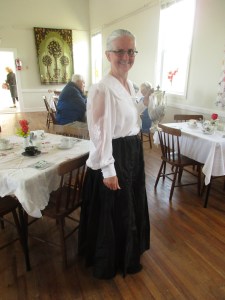
Susan MacGregor

Me, the Greeter

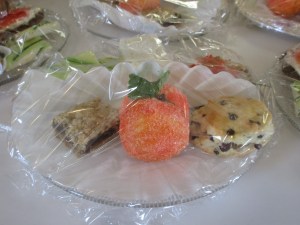
The beautiful table settings, the tea served in silver pots, and the dainty sandwiches and sweets were the main attraction. However, the star of the show had to be the peaches! Why peaches? Well apparently Victoria, when introduced to them on a visit to Italy, fell madly in love with them and every year after that insisted that some be shipped to her in England. Unfortunately, peaches aren’t in season on Victoria Day in Nova Scotia. Instead of serving imports the gals made their own life-like peaches from a secret recipe using ordinary cookie dough.
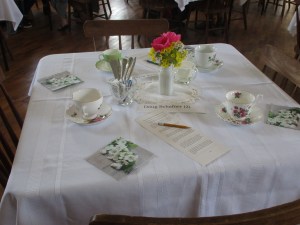
To keep our guests amused a trivia quiz about Victoria’s life as well as the Royals today…especially since this was the day of Harry and Megan’s wedding…was on each table to provide fun and learning for all. What a great way to pull people together.

Our special guest speaker, Barry Moody, a noted local historian, gave an insightful talk on how tea became the favourite drink of the British, and the influence that had on the country’s social norms and economy. Did you know that the first tea was offered in 1658 at a London coffee-house? From there it became the beverage of choice at the Royal Court. It then quickly became an important social occasion giving birth to our famous ‘afternoon teas’. You may have heard of the term ‘high tea’ which was customarily tea served with a meal. With the advent of such social customs came opportunities for the East India Company to import more tea from China. It also provided opportunities for business minded entrepreneurs to start manufacturing such tea essentials as porcelain tea cups and saucers, teapots and even mustache mugs. Barry went on to say that artifacts related to tea drinking have shown up at Melanson’s Settlement, a Historical Site in Granville Beach. He admitted not much else is known about how the ritual of drinking tea influenced the Port Royal area, but noted that it was the French who have given us proof that it existed here in some form. I suspect it was also a popular past time with the Scottish and English Loyalists who settled here. In my own experience, my maternal grandmother was a big fan of ‘afternoon teas’. After my grandfather died, she moved from Halifax to a small farm in Seabright, where she hosted teas every Sunday afternoon for all her friends. Petit fours, shortbreads, Scottish scones made on a griddle, oatcakes with homemade jam were the lure making “Georgie’s” teas very popular.

Like most things today, our rituals and customs are being challenged by the changes occurring in our lifestyles. Tea drinking is losing some of its allure to the rise in our coffee culture. There are still those who prefer their tea because it has less caffeine or none at all if you consider sipping herbal teas possibly for medicinal purposes. Or, it might just be a matter of personal taste. Whatever the reason, our guests and those who organized this event were left with an experience that left us satisfied and wiser about the influence of tea on the British Empire and the Queen who reigned. I am happy to have been involved in this ‘tea’ event which was a hit with all those who attended. Without a doubt, this will become a yearly event on Victoria Day. The Port Royal gals are already looking ahead to next year and planning for it to be held on Monday instead of Saturday.
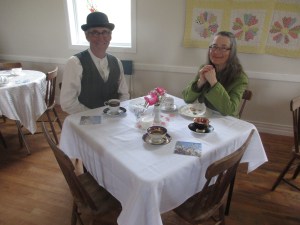
Kamille and Jeff Langstroff


A Memorable Day on Nova Scotia’s South Shore

A subject on the minds of many of us these days is the awareness of how everything in this world is connected…the key word being “everything”. It’s easy to grasp the premise that as human beings living on this planet we are all connected, but how about the idea we are also connected to all living things which would include our trees, plants, animals, insects and whatever else that grows? Now there is food for thought. Lately I have been hearing much about a book entitled The Hidden Life of Trees written by the German author, Peter Wohlleben. Seems this book has impacted many of my friends so I have put it on my immediate list of books to read.

The opportunity to learn more about why this book is capturing so much interest came knocking at my door while visiting a good friend on the South Shore last weekend. On the Sunday, Mother Nature blessed us with a clear day after a good rain the day before. Blue skies with fluffy white clouds and moderate temperatures made for a perfect day at the beach. We chose Hirtle’s Beach, not only because it just happens to be our favourite one, but because on that day the Kingsburg Coastal Conservancy was offering an added bonus: guided nature walks highlighting its rock formations and flora, bird watching, a talk on the history of Kingsburg, a local exhibit of art at Shobac, and boat rides to Ironbound Island where feral sheep reside. What more could we want?
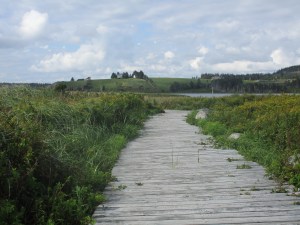
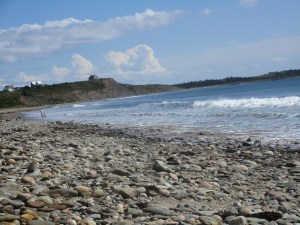
Boardwalk leading to Hirtle’s Beach.

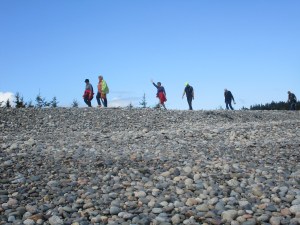
The rocky part of the beach.

I learned that this conservancy is a charitable, non-governmental land trust started in 1995 by a group of volunteers dedicated to protecting and preserving the Kingsburg Peninsula on Nova Scotia’s South Shore for all to enjoy now and into the future.

We arrived at the beach around 11 o’clock just in time for the home cooked lunch of seafood chowder and homemade pie. I have to say I had one of my best lunches ever while sitting on the rocks of the beach, and the best part was that it was all for free.

Yummy lunch on the rocks.

To walk off our lunch, we took a walk along the beach noting numerous sea birds darting here and there. We were delighted to see some plovers in the mix. Several years ago bird watchers noticed that their numbers seemed to be dwindling so a group of concerned citizens took great pains to protect their nesting sites from the beach traffic. Their efforts have paid off as more sightings of these little birds have been noted in the past few years.

Can you spot any plovers?
We noticed that most people were doing what we were doing which was just walking and paddling in the water. The wind was a little too chilly for those of us without wetsuits but not for the surfers. I settled for trying to get some action shots of them as they manoeuvred the waves.

Since Sunday was the last day of this special weekend, we had only two walks to choose from: a walk and talk about fungi or the history of Kingsburg. Without hesitation we both agreed that the fungi walk would be the most interesting. I was actually excited about learning more about how they contribute to a healthy forest. Would this be the opportunity I hoped for to learn about the hidden life of trees? In the meantime with an hour or more at our disposal before the walk got underway, we opted to take a short run over to see the local art exhibit in Shobac.

I discovered this special place several years ago when visiting my husband’s son who had rented a cottage there for his summer holiday. So, what makes it so special?

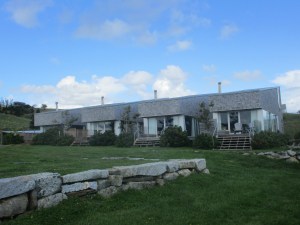
The Shobac of today is an architectural wonder. It’s located on the edge of the Gaff Point Cliffs overlooking the LeHave River estuary. First inhabited by the Mi’Kmaq as a camp ground, then sighted by Samuel de Champlain who named it Shobac, not long after established as an Acadian farming and fishing village, to be later settled by German, Swiss, and French Protestants, mostly abandoned in the mid 20th century except for a few fishing families, the land was finally bought and developed into what it is today by a Brian MacKay-Lyons, a talented Nova Scotian architect.

MacKay-Lyons bought this huge tract of land in 1988 with the vision of re-creating an agricultural village for use by the community and the visitors who come to this part of the South Shore which are many due to its proximity to the three towns of Lunenburg, a Unesco Site, Mahone Bay, and Bridgewater. It is also near three of Nova Scotia’s largest and most popular beaches: Risser’s, Crescent, and Hirtle’s, not to mention numerous smaller ones all around.

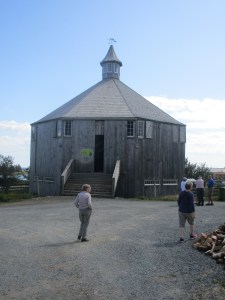
Commonly called a compound, the land has a fabulous north view with Hirtle’s Beach in the distance. The land is dotted with undulating hills called drumlins which are glacial deposits left by the ice age some 15,000 years ago. Waves beating against the cliffs have created lovely sandy beaches below as a result of erosion. Sheep and horses can be found grazing on the grassy hillsides. What makes the scene even more outstanding are the box like cottages and larger buildings all available for rent on a daily, weekly or monthly basis. MacKay-Lyons’ latest acquisition is an old schoolhouse dating back to 1830 which has been restored to incorporate both the old and the new as many of his buildings do. The Troop Barn where we found the art exhibit was found and rescued by him in 2009 near Bridgetown in the Annapolis Valley  This was the last of Nova Scotia’s octagonal barns and was slated for demolition because no one had stepped forth to buy it. Thanks to this man’s money and foresight, it’s been beautifully restored and is now used extensively by the community for all kinds of exhibitions and other community gatherings. Not surprisingly MacKay-Lyons has garnered many awards and much recognition for this architectural wonder so it’s worth a visit and definitely a great place to stay for a vacation.

View of Hirtle’s Beach from Shobac.

Box like buildings blending into the seascape.

Troop Barn where the art exhibit was held.

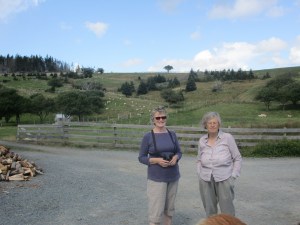
Some drumlins and sheep in the background.

After viewing the art and voting on the one we favoured most, as well as being fortified with some fresh lemonade and homemade cookies for our efforts, we drove back to Hirtle’s Beach for the fungi trek along the Gaff Point Trail Head.

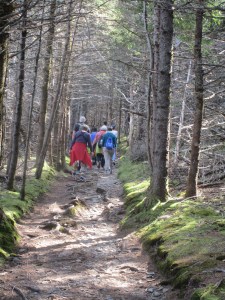
Heading out for our fungi walk.

Into the forest we go,

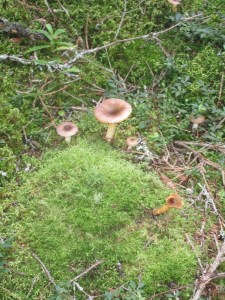
Our guide gave us an excellent explanation of how nature has devised such an intricate system for keeping an old growth forest healthy and vibrant. Who knew that fungi (mushrooms) played such an important role in their health? Who knew that all that green moss we see on walks in the woods where there is an old and new growth of trees harbours a whole network of fungi threads in the soil underneath? Who knew that these fungi supply essential carbon and nutrients to each and every tree? The more fungi or mushrooms the healthier the trees.

This is my simplified version of how it all works. Hopefully I can gain a more scientific and clearer explanation from Wohlleben’s book. Apparently he goes so far as to say that trees have personalities and actually talk to one another by communicating below ground via a ‘woodwide web’. Willows, he claims, are loners and have relatively short lives compared to beeches and oaks which last for thousands of years and act as a family. He adds that trees have emotions and can feel pain. Who knew? Another ‘ah ha’ moment for me was the realization that perhaps all the clear cutting of our forests here in our province could be classified as a criminal act since it kills any new growth and turns old growth forests into dead zones. I think those who work in the Department of Natural Resources should be putting this book on their reading lists.

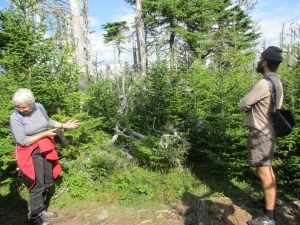
Our guide showing us old and new tree growth.

My memorable day at Kingsburg will stay in my mind for some time. I learned so much and it inspired me to do more reading about how Mother Nature has a clear plan for how all living things can live together harmoniously if every part of her is allowed to fulfill its purpose. As intelligent human beings, we have a responsibility to not only learn how we can fit into this system but also learn how to do this in a sustainable manner. Kudo’s to the Kingsburg Coastal Conservancy for their concern for preserving our beautiful province and for spreading the word to all those who are listening.

Looking out to Ironbound Island from Gaff Point.

The cliff on Gaff Point Trail.

Raising Sheep in Port Royal, Nova Scotia

Can you imagine being suddenly thrust into the role of parenting 80 newborn babies dependent upon you for their livelihood. Could you cope?

This spring Julia Springob and Lou Barta of Port Royal were faced with this surprise when their ewes presented them with this number of very hungry baby lambs, far more than they ever anticipated. The norm for a ewe is to birth one or maybe two lambs so imagine their surprise when many of them birthed three and even four babies. Since motherhood was new to many of their mothers, they simply couldn’t cope with so many offspring at one time. This is where Julia and Lou had to step in, resulting in bottle feedings every two hours. They were literally on call both night and day for those first weeks. Thankfully they were down to three feedings a day when I visited their farm.

Continue reading

Look What’s Happening to Halifax

There are times I wonder if there is anything these days escaping the pursuit of constant change. Don’t get me wrong in thinking I am against change because I definitely am not. Change is good, but I do feel that we need to pursue it with some caution.

Lately there has been much talk about all the changes taking place in my birth city…Halifax… the capital of Nova Scotia. Human nature dictates that changes will result in two opposing sides: those who look to the past wanting to keep things as they are and those looking to the future willing to support any kind of change. Halifax is presently facing this problem, but from what I can tell they might be following another human reaction to change…. that of moving from one extreme to the other. “Let’s join the race to become a world-class city at all costs” seems to be the mantra. This is good, but let’s slow down a bit and try to do it with taste.

Historically, the city has shown an inclination to get stuck in the past right up until the early 1970’s when the urge to move forward began with the beautification of its waterfront. When I was growing up in Halifax, Water Street, down by the harbour, was a place to avoid. I always hated that fishy smell. The street was a series of dilapidated grey warehouses, the naval dockyard, seedy taverns, with some notorious ‘red light’ houses thrown into the mix. Then in the 70’s it all went through a huge metamorphosis resulting in the Historic Properties. Our waterfront suddenly had changed into not only a major tourist attraction, but also became accessible to all Haligonians. It had managed to preserve some of the old fish houses and wharves to produce a nice mix of the old and the new.

Other changes took place at that time and well into the 80’s. Some were good others not so. Spring Garden Road became a major shopping area to the detriment of Barrington Street which always had been. The old Capitol Theatre, which my grandfather helped engineer, was demolished resulting in much hue and cry to be replaced by the Maritime Centre, a large modern complex at the bottom of Spring Garden Road. Many of us kids, and adults too, were upset at how the ‘powers that be’ could have torn down such a unique theatre as the Capitol which resembled the inside of a grand old castle.

Perhaps this flurry of changes was too much for conservative old Halifax because for the next few decades, primarily under the mayoralty of Peter Kelly, the city showed little forward movement. Under his leadership any wise planning and growth had come to a screeching halt. Barrington Street became more derelict as retailers moved out to swanky suburban malls, affordable housing became a scarcity as evidenced by the increasing numbers of homeless on the sidewalks of Spring Garden Rd., and few construction sites and cranes were to be seen anywhere.

However for the past several years, the construction tap has been turned on full blast under the leadership of Mike Savage, Halifax’s present mayor. This began with the regional council’s decision to go ahead with the construction of a new convention centre, after many years of wrangling on whether the city should or shouldn’t take the risk of pumping millions of dollars into a new one when they already had one… albeit a small one. Located in the heart of downtown, the Nova Centre has caused traffic chaos and scores of disgruntled restaurant and store owners. Whole streets have been closed for a year or more as the structure endures one delay after another. To satisfy my curiosity, I just had to go see for myself what all the fuss has been about and have to admit I was blown away by what I saw. It’s stunning and should put Halifax up there on the list of world-class cities. It’s definitely had a ripple effect as nearby buildings in the downtown core are either being spiffied up or torn down to be replaced by more modern buildings. I couldn’t help wondering if this really was the staid old city I was so eager to leave 40 years ago?

On a whim, I decided to wander further down to the south end of Barrington Street where my father lived for most of his adult life, and where I spent my first three. I wanted to see if #315, a stately old house where he had his apartment, was still standing. It was… but barely! A huge sign was posted next to the main door indicating that this house and the one next to it is slated for demolition. But hold on… this decree was issued in 2015 and the house is still there because there was another smaller sign stating that these premises have been declared ‘heritage’ houses. It’s not just for personal reasons I want to see these houses saved, but also because they represent an old style of architecture from Halifax’s past which is too rapidly disappearing. I hope the city councillors will consider this and support the Heritage Society rather than another greedy developer.

As I continued to search out other changes in the city, harkening back to my early years, I decided to pay a quick visit to where once my old high school was located. Queen Elizabeth High (QEH) was demolished ten years ago and been replaced with an unusual project called the Common Roots Urban Farm which supports community and marketing gardening for the purpose of promoting health and wellness in the Halifax Regional Municipality (HRM). This is the acronym used for the city of Halifax and the outer regions including Dartmouth…another change which has occurred since I left. Nevertheless, here is a wonderful example of how a prime piece of land in the midst of one of the busiest parts of the city can be used to introduce some rural living into that of the urban.

In case you are wondering what happened to QEH, well the good news is that a gleaming new high school uniting protestant and catholic students under the same roof now stands nearby. When I was a high school student, St. Patrick’s and Queen Elizabeth were rivals just a few blocks away from each other. St. Pat’s has also faced the wrecking ball, leaving a piece of prime land vacant until a decision is made on what its fate will be. Let’s hope it will be a wise choice that will bring more country into the city and be of benefit to all people.

These days my visits to Halifax invariably end up in a quick stop at the new Central Library. This building has garnered accolades and awards for its architecture from all parts of the world. It’s an environmentally sustainable building which can boast of a rooftop terrace growing native plants, and toilets that are flushed with rain water.  An abundance of windows strategically placed on all levels allows the sun to pour in to control the indoor temperature and help reduce electrical costs. All the materials used in its construction are natural. You can really notice the difference when you spend time in this building. For this reason alone, I could spend days there instead of just a hasty stop for a cup of delicious coffee and a home-baked pastry at the Pavia Cafe on the roof top overlooking the harbour.  This library is truly accessible to all citizens providing cultural activities and small rooms which are rented out for other varied purposes. The acoustics are fantastic because no matter how many people pass through its doors or what is taking place inside, the place still feels and sounds like a library…quiet and peaceful. Halifax can be proud of this building.

Yes, the attitude and the look of my home city has certainly changed for the better. Where once it was conservative and rather dowdy, it’s now bright with a positive vibe prevailing. It is fast becoming a ‘world-class’ city and a more desirable one to live in as far as I can see. My one hope is that it doesn’t become too obsessed with trying to outdo other cities. Having lived in Toronto for many years, I certainly don’t want it to make the same mistake that city did by erecting tall office towers and condos, as well as a hideous express way that not only obscures the view of the lake but also cuts it off from the rest of the city. This has left the best part of the city mainly for the enjoyment of the well-heeled and the tourists when a waterfront needs to be accessible to everyone. Halifax, if you truly want to be a world-class city then learn from the mistakes of others by being a leader for what can be better.

To make a slideshow of these pictures, left click on the first one and follow the arrows.

Thanksgiving in Nova Scotia


Happy Thanksgiving!

I heard this greeting many times over our Thanksgiving weekend … something I had never consciously heard before. Then again, maybe some people have used this greeting in the past, much like we say Merry Christmas in December, but this year for whatever reasons I took notice, and I’m glad I did.

After a half-dozen or more “Happy Thanksgivings”, I was becoming slightly annoyed. However, upon reflection I can honestly say it began to take on more meaning for me, and I suspect many other Canadians. Why? Because as we sat down to enjoy our turkey dinners, many of us must have realised just how much we have to be thankful for.

Sometimes it’s difficult to find a silver lining in what to be thankful for in this crazy world after tuning in to our local, national, and world news. Often our media leaves us with the impression there are few places left on this planet of ours which aren’t in some state of turmoil…except for where we live, of course!

However, I must not be smug about this for ironically our beautiful Cape Breton was unexpectedly hit with the remnants of hurricane Matthew just as many CBer’s were preparing to sit down for their Thanksgiving feasts. Extensive flooding, fallen trees, and no power for two days have run up a tab of millions of dollars. However, the good rising from this devastation was that no lives were lost, thanks to the resilience of the people.

There is nothing like a disaster such as this to pull people together to help those in need. Last weekend was not just Thanksgiving in Cape Breton, but also the beginning of their International Celtic Colours Festival, an annual event drawing a huge influx of visitors from all over the western world. True to form the people in the community of Eskasoni rallied together ensuring that the concert goers in their town would not be disappointed. Not only were they well fed and feted, but somehow had the power restored so they could see the show. But the people of this enterprising community didn’t stop there: they even managed to build a detour road to get the bus loads of visitors back to their hotels so they wouldn’t  have to spend the night in the community hall. What tremendous organization and teamwork this must have taken!

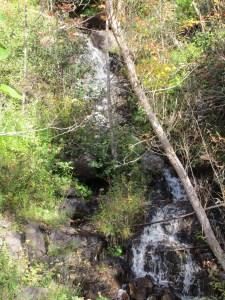
Fortunately here in Victoria Beach, we were relatively unscathed by Matthew’s final hurrah save for leaves and broken branches littering our yards. We were thankful for the rain which was so desperately needed after a summer of drought reported to be the worst on record in some parts of our province.

A small waterfall created by the rain.

A small waterfall created by the rain.

Further reflection upon this past week’s events have left me feeling unusually thankful for my life right now. I am thankful that Hubby and I got to enjoy Thanksgiving with not one but two delicious turkey dinners, none of which I had to cook! Although we were unable to sit down with family members due to the choices of where we all live, we were delighted to share our dinners with friends. Furthermore, I am especially thankful for where I live which has got to be one of the most awesome places in the world. I can still say this despite all the beautiful places I have witnessed in my world travels. Not to bore you with too many more ‘thankfuls’, I will mention only one more….

Found a grand pumpkin right here on our road.

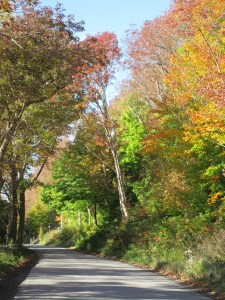
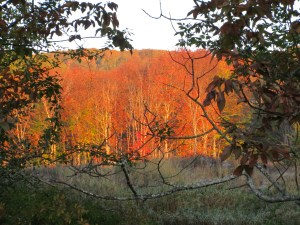
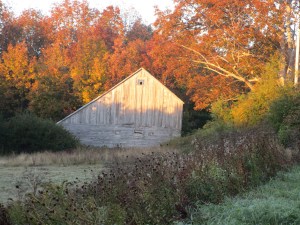
Autumn of 2016 will definitely go down as one huge surprise. Many of us wondered if we would be rewarded with any significant colour this year because of the drought. By mid September our trees were looking old and tired with many of them shedding their withered leaves far too early. But, lo and behold, about two weeks ago those that still had leaves presented us with a glorious range of reds, oranges, and yellows. This transformation seemed to happen overnight. Somehow sensing this might not last forever, I realised I needed to grab my camera to capture the panorama which would in turn spur me on to completing another post for this blog.

However, when Matthew’s unexpected winds came last weekend, I despaired there would be any autumn colours left to capture. Shortly after the storm had passed as I drove into town, I noticed there was still a decent palette of colour miraculously left behind…just enough to provide me with those much-needed pictures.

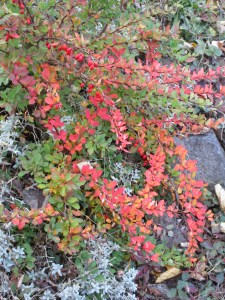
Where did all this colour come from, I wondered? There were so many leaves stripped from their branches littering our road and yards, and yet those vivid colours were still evident. As I looked more closely, I realised much of the colour was produced by the abundance of foliage that lines our road, and not from the trees. Shrubs and other plants were climbing up the trunks of the bare trees and the telephone poles. My guess is that it’s climate change at work. Mother Nature is playing havoc with our maples and birches which we have always relied on for our autumn colours, but perhaps now we must look at the smaller plants and climbing vines as our colour source.

In spite of the changes occurring in our world right now… which for some can be down right scary… there are still rays of sunshine peeking through those grey clouds. Let’s hope that as some things wither and die away there will be other things to replace them.

A good example which has nothing to do with our autumn but is appropo for how change is being handled by folks in Nova Scotia is our main provincial newspaper, The Chronicle Herald.  This paper has been in the midst of a strike between the owners and the workers for almost a year with neither side about to give in. Changes in staffing and working conditions have meant many jobs lost and hurt feelings, but the newspaper carries on despite them. To my mind, those who are left are actually improving the paper. Although much smaller, its content has improved. The viewpoint of the owners is more positive than it ever was before the strike so we are seeing more hope and less gloom and doom. Every day I can count on reading an article or two reflecting the positive changes occurring in our province. I am thrilled to see this new direction of The Herald and am truly hopeful that Nova Scotians will be able to handle any future changes which are bound to come.