La Boca – Another Unexpected Surprise

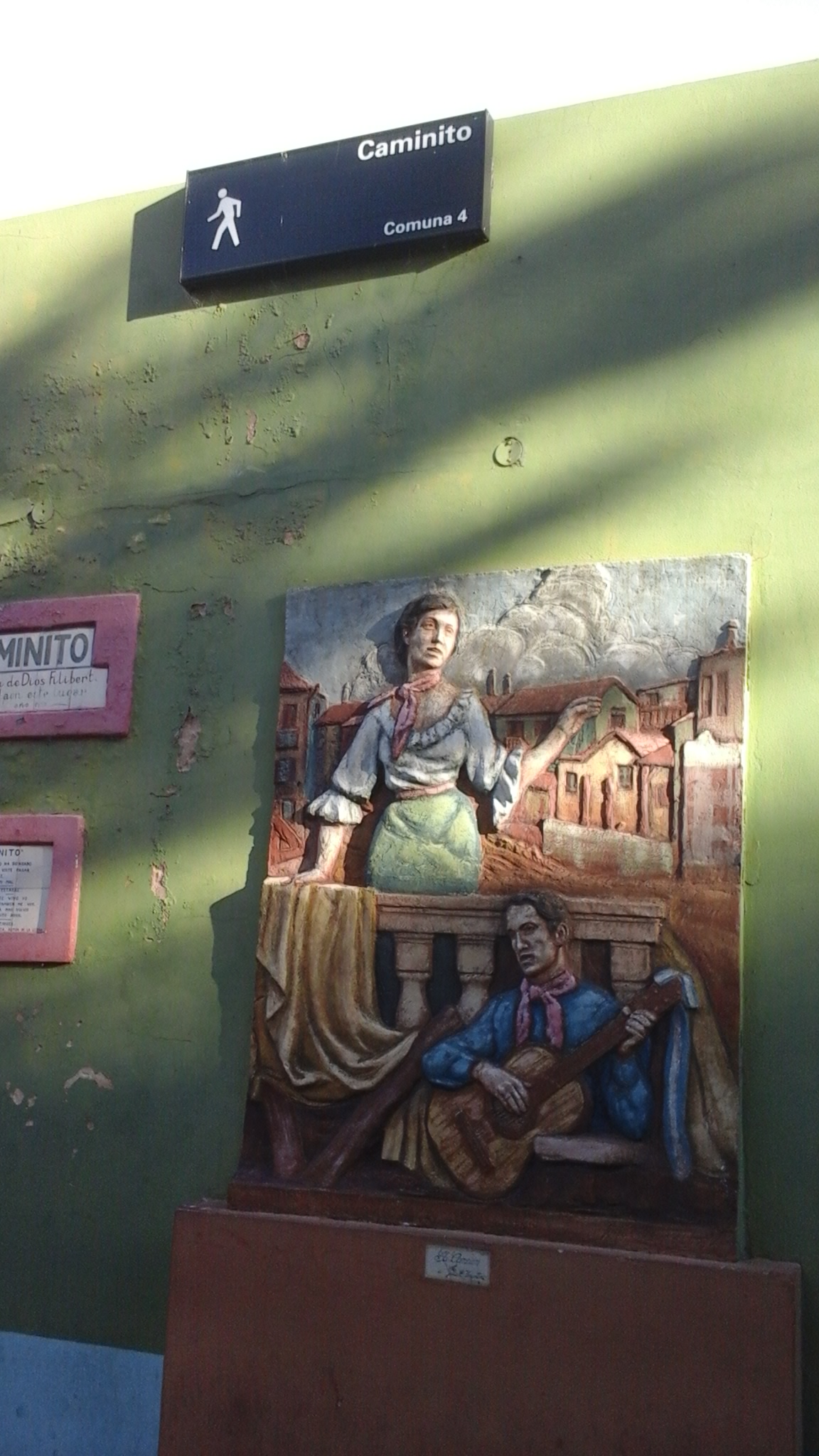
The famous El Caminito in La Boca Buenos Aires.

The famous El Caminito in La Boca Buenos Aires.

If I had always taken the advice of others, chances are I would not be where I am today or done the things I have done. In my travels I have found the same thing to be true. If I had always blindly heeded the advice dished out by travel guidebooks, newspapers, or governments, I probably wouldn’t have had the half the fun or learning that I have had. Experience has proven to me that the best way to decide what I should see and do when travelling is to read and listen with half a mind and then discover the rest for myself.

A day trip to La Boca, one of many areas or barrios in Buenos Aires, last week is a good example. Despite the warnings of it just being another tourist trap albeit an unsafe one at that, Hubby and I decided to go and see for ourselves. The obvious question for me was if it was so unsafe, how could it have become one of BA’s most popular places to visit? There had to be more than brightly painted houses to lure people there? All the guidebooks and those we spoke to urged us to take a tour or at least a taxi but for heaven’s sake not a bus. We both agreed that an expensive tour and the taxi were out and the bus would be our means of getting there. So thanks to Wikipedia I was able to brush up on the history and to National Geographic for helping us with where to go once there. Finally, thanks to Hubby for figuring out how the bus system works and which bus or buses would take us there.

At this point I should tell you a bit about the geography and history of La Boca before I take you on our self conducted tour.

Geographically it lies on the low-lying shores of the greatly polluted Riachuelo River at the mouth of the Rio de la Plata, hence its name La Boca which is Spanish for ‘the mouth’. This location determined its destiny as an active port for importing and exporting which attracted mostly poor immigrants from Genoa, Italy. The painted houses for which it is famous were born out of poverty and necessity when the first inhabitants used scrap from the shipyards, such as sheet metal, blocks of wood, corrugated iron, and leftover paint to construct their modest houses. Over the years other poor immigrants from Europe, Africa, Arab, Peru, and Paraguay moved in to eke out a hardscrabble living. In the 1950’s a local artist, Benito Quinquela Martin, painted the walls of one of the abandoned streets and erected a stage. This street became the famous El Caminito or open-air museum. Thanks to Martin it became a haven for actors, dancers, and artists who have all contributed to its allure and made it what it is today: BA’s top tourist trap or attraction or however you want to look at it. It lures in hoards of tour buses which have spurred on a lucrative and much needed industry for the area. However, its success has also given rise to hoards of hawkers and hustlers who have contributed to its somewhat dubious reputation. Tourists are constantly warned to hang on to their pocketbooks, not to stray into any of the streets off the beaten track which is the caminito, or to stay after dark for a late dinner. We were also warned about the over-priced restaurants, gaudy knick knacks, and the bland food. After learning all this, why would it still lure so many visitors whether they be typical tour bus types or more independent adventurers like Hubby and me? Read on and you will find out.

Getting to La Boca by bus wasn’t as difficult as I thought it would be. Hubby orchestrated this beautifully. He managed to get us there by taking only two different buses which he hauled off in his usual manner of enlisting as many poor bystanders as he could to help him out. Fortunately for him, the people in BA are more than willing to help their visitors find their way around.

We started our walking tour at the north end of the Avenida Guillermo Brown. Our first stop was at the Casa Amarilla or “yellow house” which is a replica of the home that Guillermo Brown lived in. Brown was an Irishman who came to Argentina to help them fight for their freedom from Brazil and Uruguay.

2016-04-07 12.10.41

Our second stop was to take a picture of the Tower of the Ghost. The story goes that a female artist took her life by jumping from the top of the tower. Her spirit is said to still haunt the apartments there.

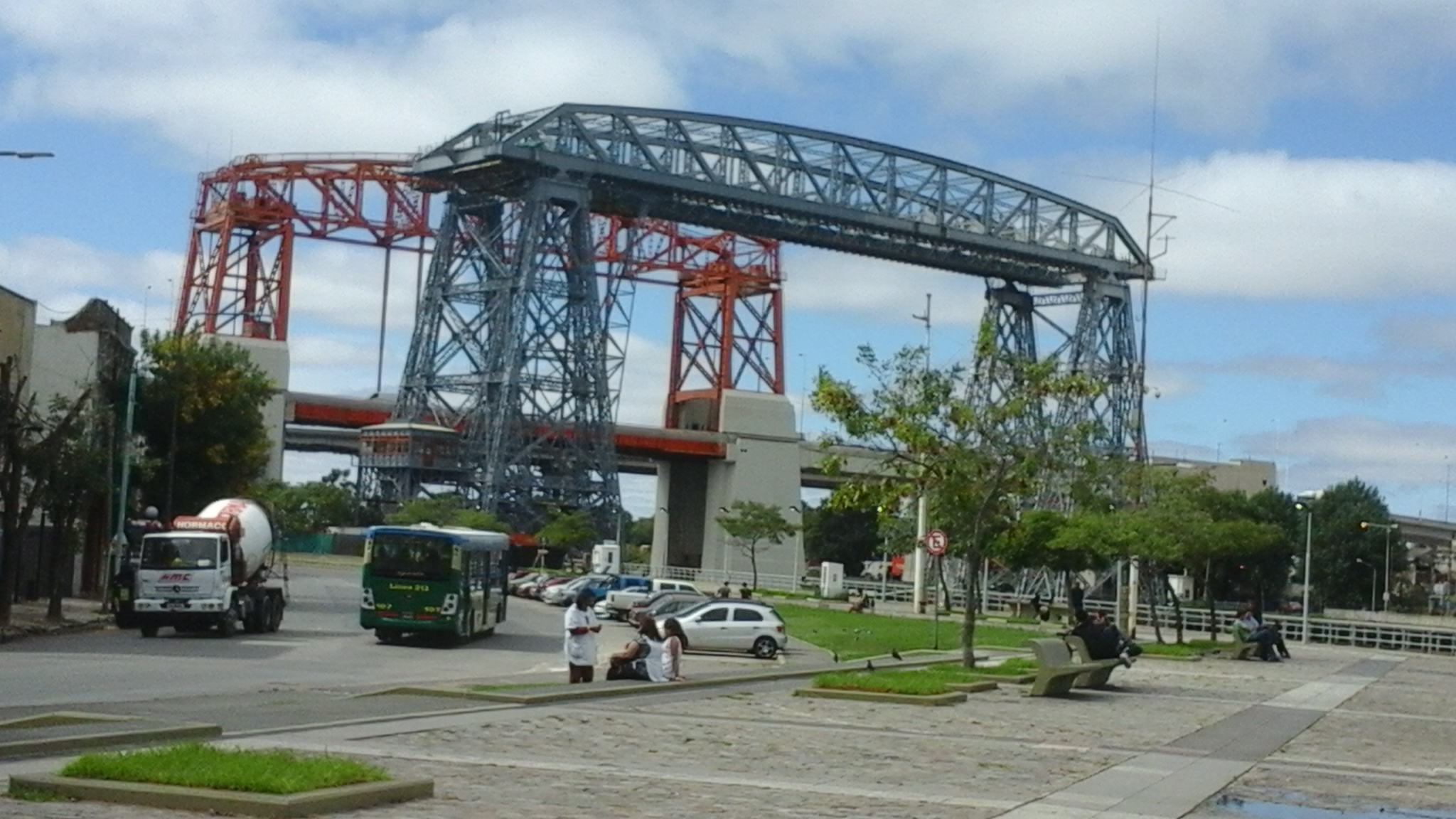
Our third stop was for a coffee and small ham and cheese meurouzo (a small sweet croissant) to help us continue our walk to the Riachuelo River. From there we got a good look at both the old and new Puente Transborado bridges and the famous stadium of the Boca Juniors soccer team.
The stadium is old and ugly from the outside, but is still the place to see the most exciting soccer you will ever see and a chance to yell your lungs out whenever Argentina plays their main rivals. In La Boca they take their football very seriously. That’s another claim to their fame.

By this time we had come to the caminito  where we were confronted with a carnival like atmosphere of brightly coloured houses with lifelike charactures hanging from the balconies, a cobblestone street filled with vendors’ stalls, tables and chairs spilling from the restaurants blaring loud tango music and some demonstrations on how to tango, as well as every other gimmick available to get the tourists to empty their pocket books. Despite all this, I felt no pressure to buy as we walked along taking in some of the tango and shooting lots of pictures.
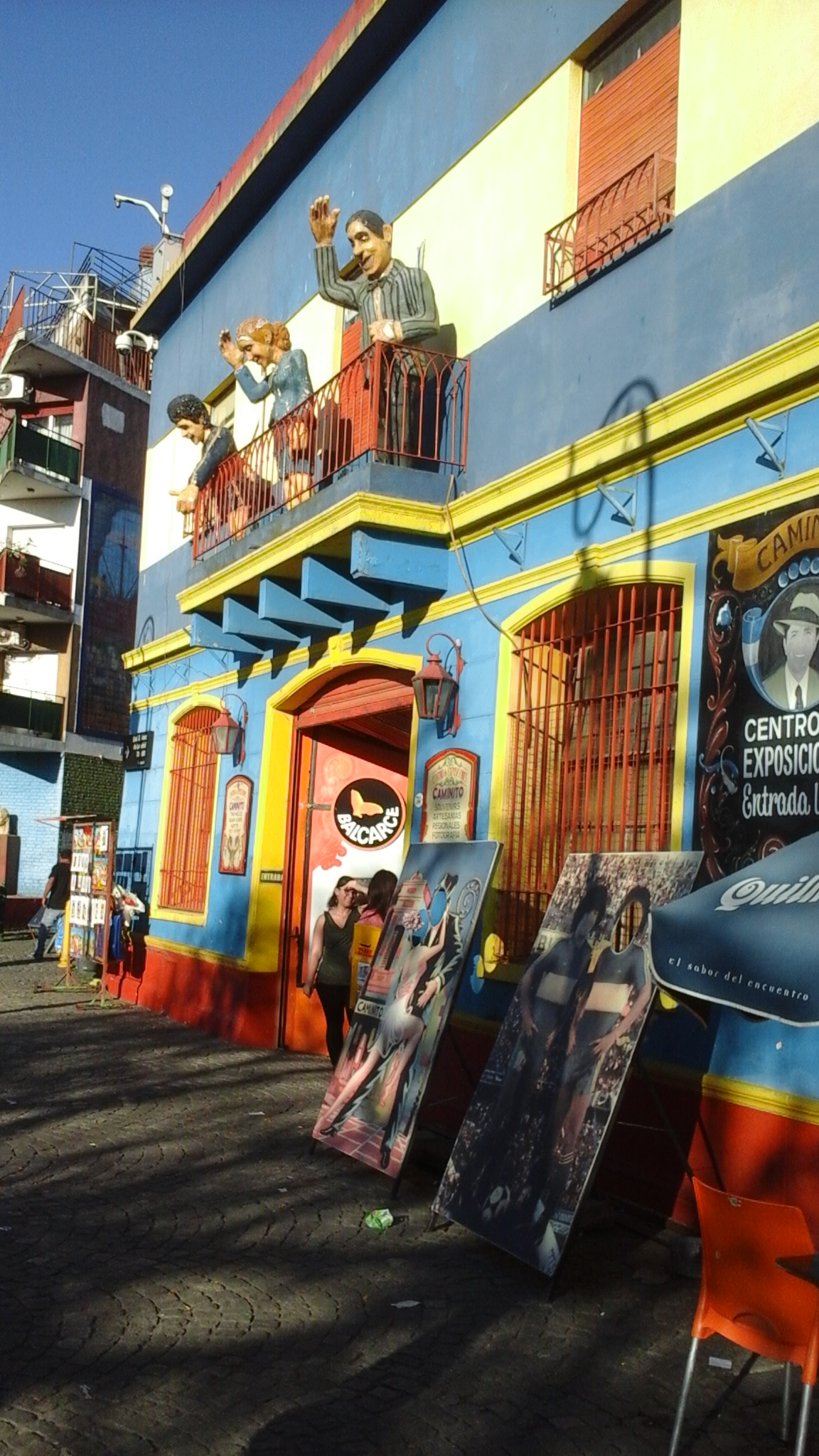
Soccer is everywhere on the El Caminito.

Evidence of the Boca soccer team is everywhere.

Spying a little alley way of shops with interesting merchandise, I pulled Hubby in. We landed in a tiny shop selling handcrafted jewellery and other unique accessories managed by a lovely lady, Annabella, who actually became our friend for the day. That is one of the curious traits of many of the Argentinians we have met: they love to talk and get quite personal about their lives if they speak English as she did. We learned so much from her including a great place to have a late lunch.
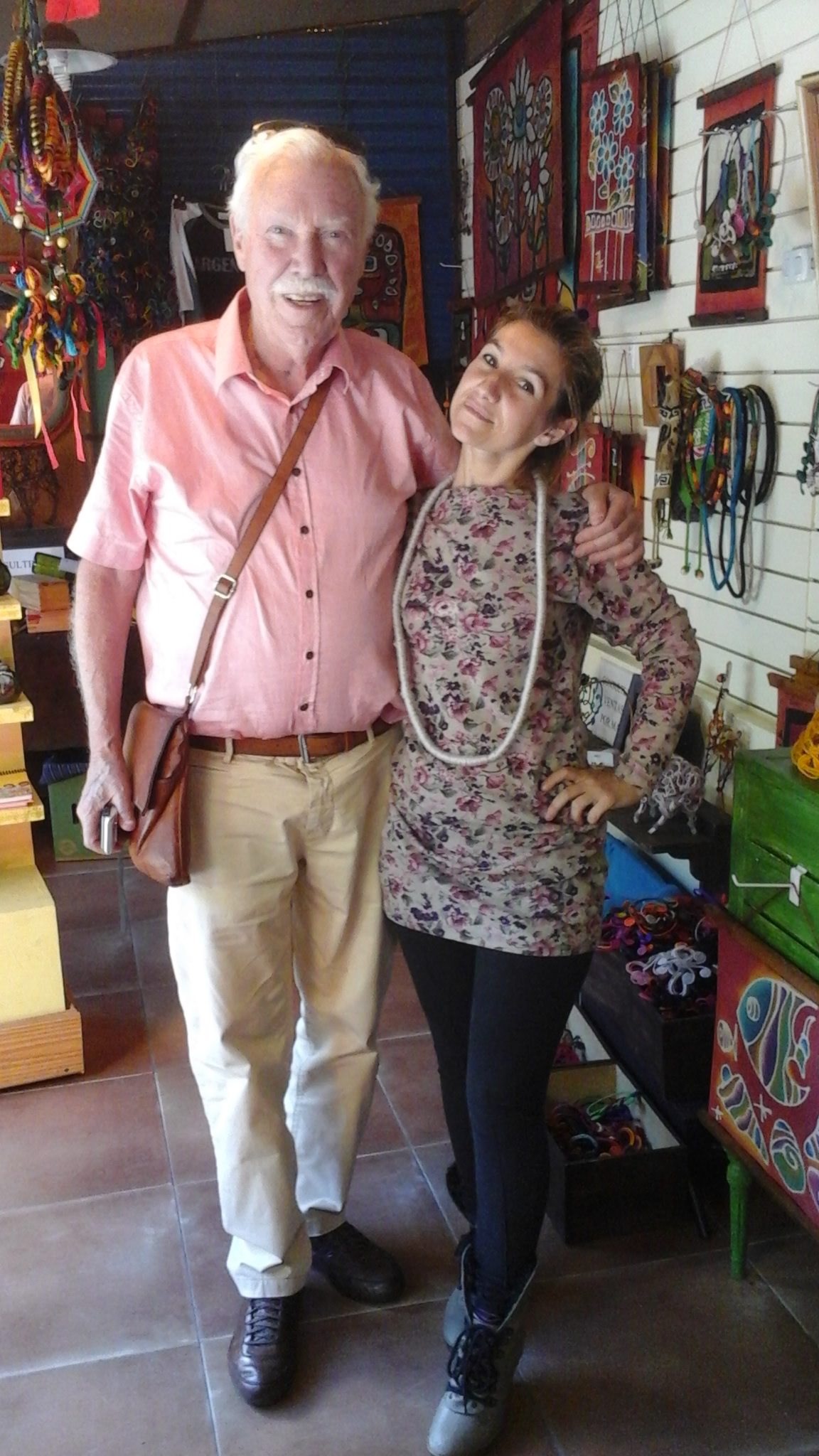
Graham and Annabilia

Graham and Annabella

She did not recommend any of the restaurants that we saw on the caminito but another one around the corner near the old railway track called El Gran Paraiso. We would never have found it on our own, but thanks to Annabella we ended up having one of the best meals we’ve had the whole time we have been in Argentina. This restaurant is located in one of the oldest buildings in La Boca. A huge, rather ugly grille at the doorway doesn’t make for an inviting entrance. However, look past this and you will see tables with colourful umbrellas set in a beautiful garden with large shade trees surrounded by the colourful walls of the buildings. It wasn’t only the setting that made this place special, but also the food and the service. The prices were reasonable, too, which was another surprise since we have found them to be horrendously high in most places putting a damper on us ever eating out. In fact, hadn’t we been told that we would find everything overpriced in La Boca?

2016-04-07 15.08.03

2016-04-07 15.07.34

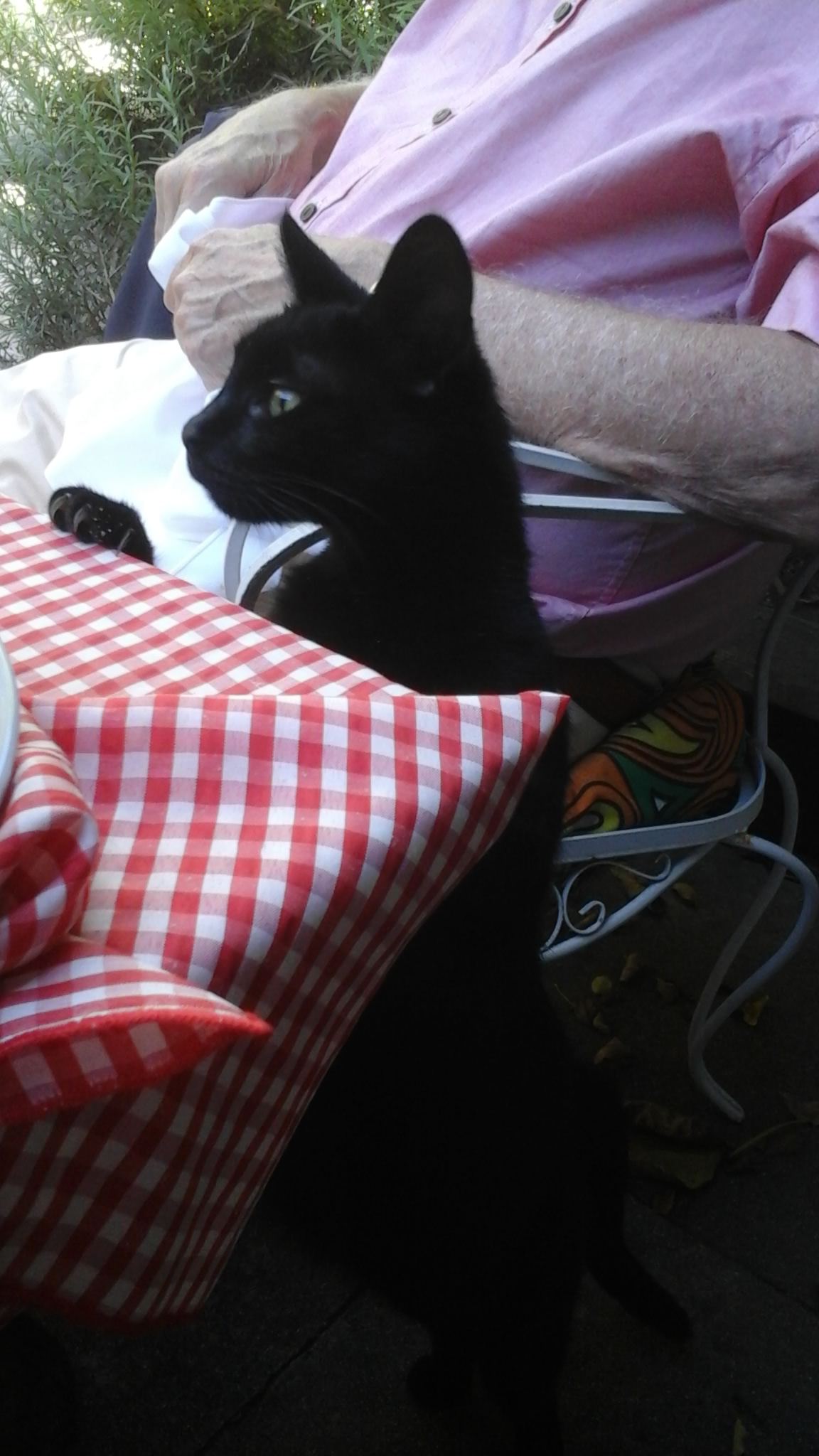
An unexpected guest joins us for lunch.
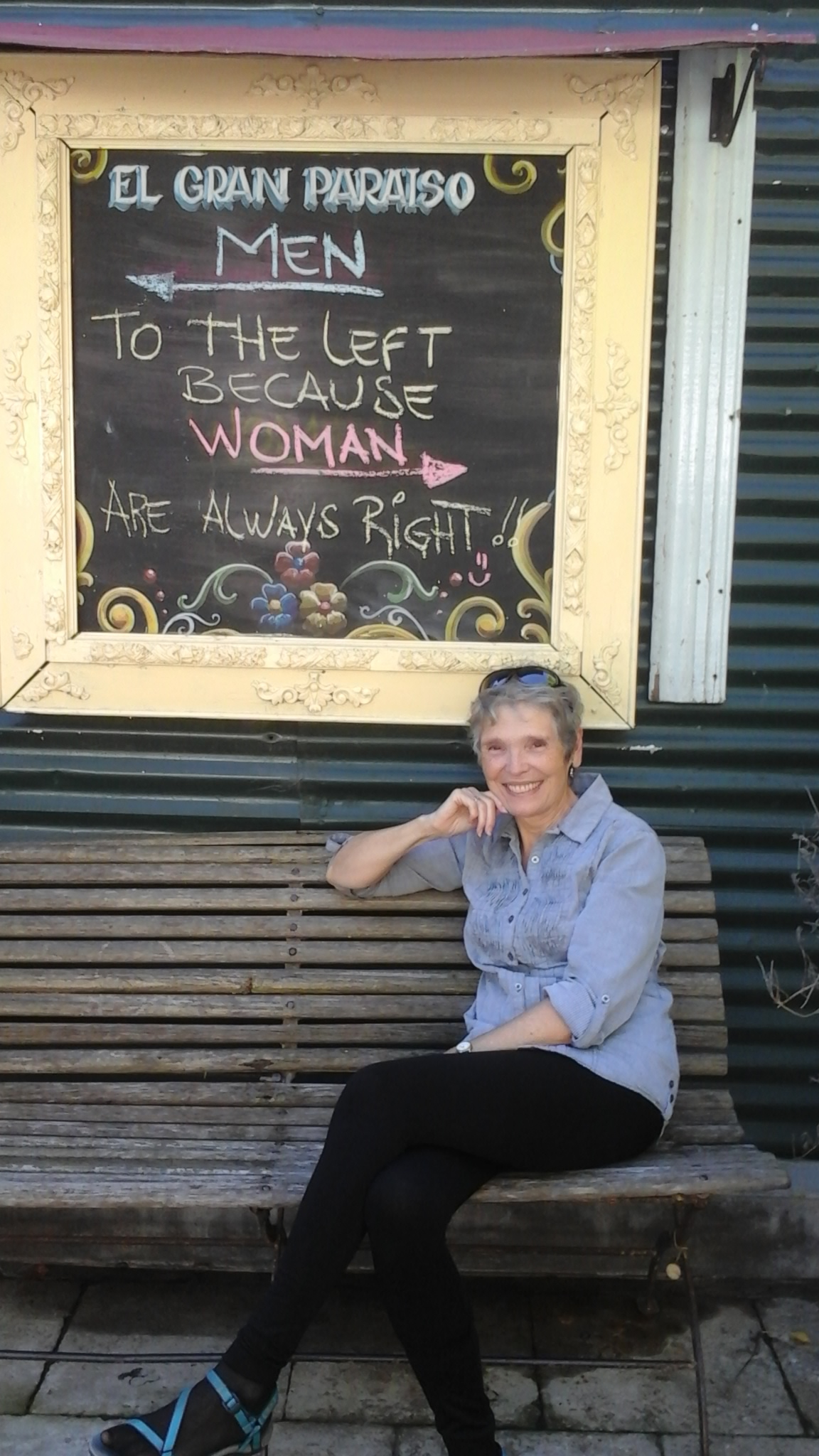
An unexpected guest joins us for lunch.

I love this!

I love this!

We lingered much longer than we had anticipated over lunch. It was now 4 o’clock and in a few hours it would be dark. With the warnings of being there after dark ringing in our ears, we decided we better wend our way back to the port area where we could catch one of the numerous buses going in all directions. The biggest challenge here is making sure you get on the right bus so finding the proper number is important. This you can do by looking at the posts, studying the maps if there are any, or simply asking a fellow passenger as Hubby prefers to do. This seems to work for him so I’ve learned to let him figure it all out. As we were waiting for our bus, we were bombarded with a constant barrage of blue/white and red/green buses all packed with people chanting and waving flags. It didn’t take us long to realize we were witnessing the foreplay which precedes an important game with the Boca Juniors and one of their rivals, in this case a team from Bolivia. Although exciting to see, it was also frustrating because it meant tying up the rest of the traffic and waiting for things to start moving again. This was too much time for my impatient Hubby who decided we should get off our bus and walk to another stop away from this soccer bedlam. After walking for about 20 minutes, I happened to catch a glimpse of a bus similar to the one we had deserted. Realizing it had to be the same one since the driver smiled in recognition, I took the chance of waving it down. Lo and behold he slowed up to let us back on with no additional charge.
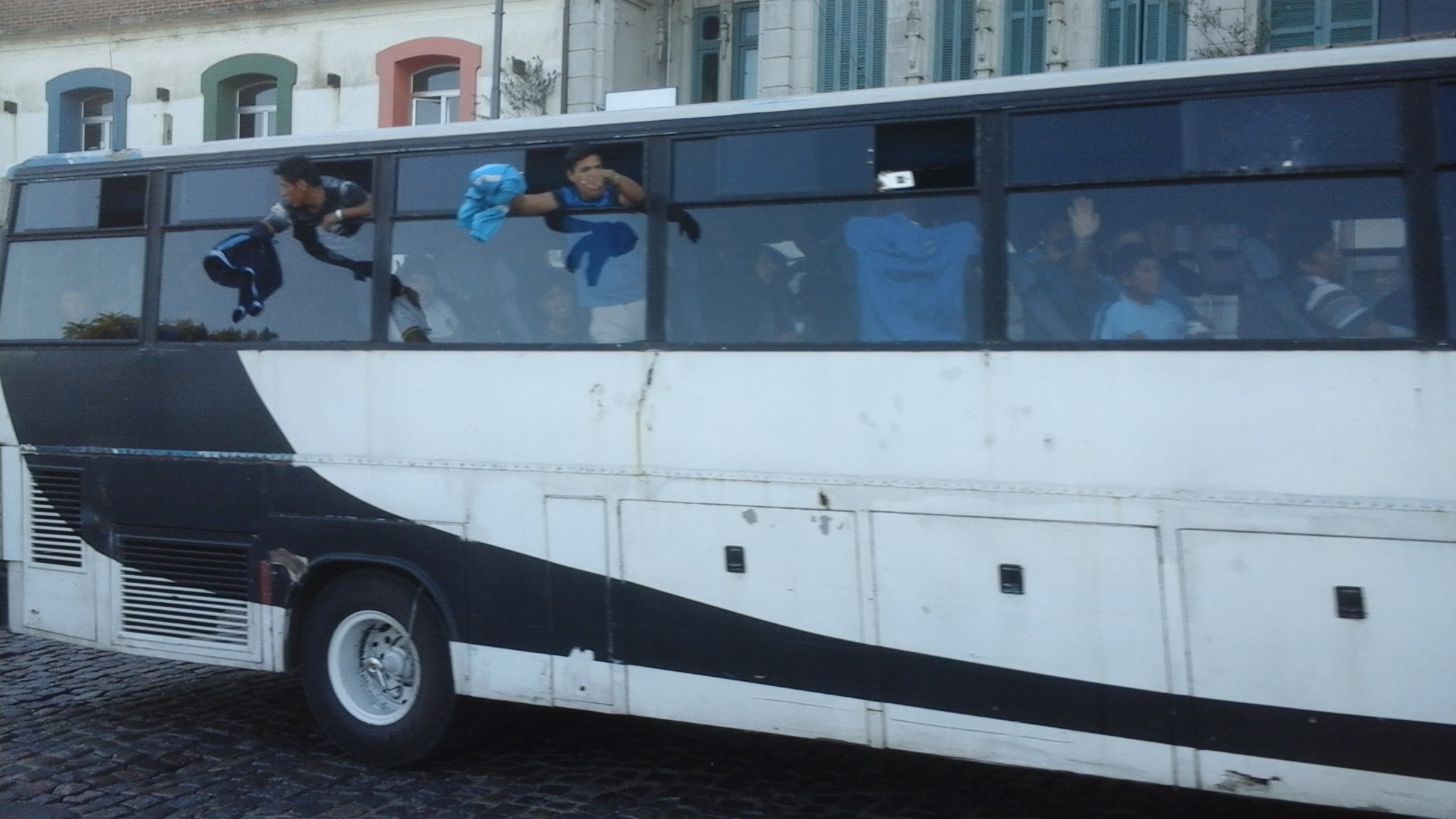
Boca fans.

Boca Juniors fans.

Fans from Bolivia

Fans from Bolivia

The ride back completed what I felt was another day filled with unexpected surprises. Fortunately, they were all good. Ironic that here of all places where we had received so many dire warnings about theft and over pricing we didn’t encounter any of these. We saw and experienced enough to recommend that it’s quite possible to get there on your own, to not spend a ton of money on food and fun, and to simply learn more about what this area is famous for. Amid the gaudy knick knacks and the somewhat seedy areas, the cultural history and sense of neighbourhood is still evident. We never once felt unsafe or pressured by pesky vendors. We did encounter this in Tigre where we least expected because it’s been touted as a very safe place for a family outing. You can read about Tigre in my last post. Instead in La Boca we met some really kind people like Annabelia and the waiter who served us our delicious lunch. I shudder to think that we might have missed this had we listened to all the nay sayers.
Our Trip to Tigre – Facing the Unexpected

Ever since I have been in South America, I have been wrestling with how to deal with unexpected surprises. It seems like the last three months have been full of them most resulting from communication break down and in our case not being able to speak Spanish. A good example of this happened just this past week when Hubby and I visited Tigre, a suburb of Buenos Aires or BA as the ex-pats call it.

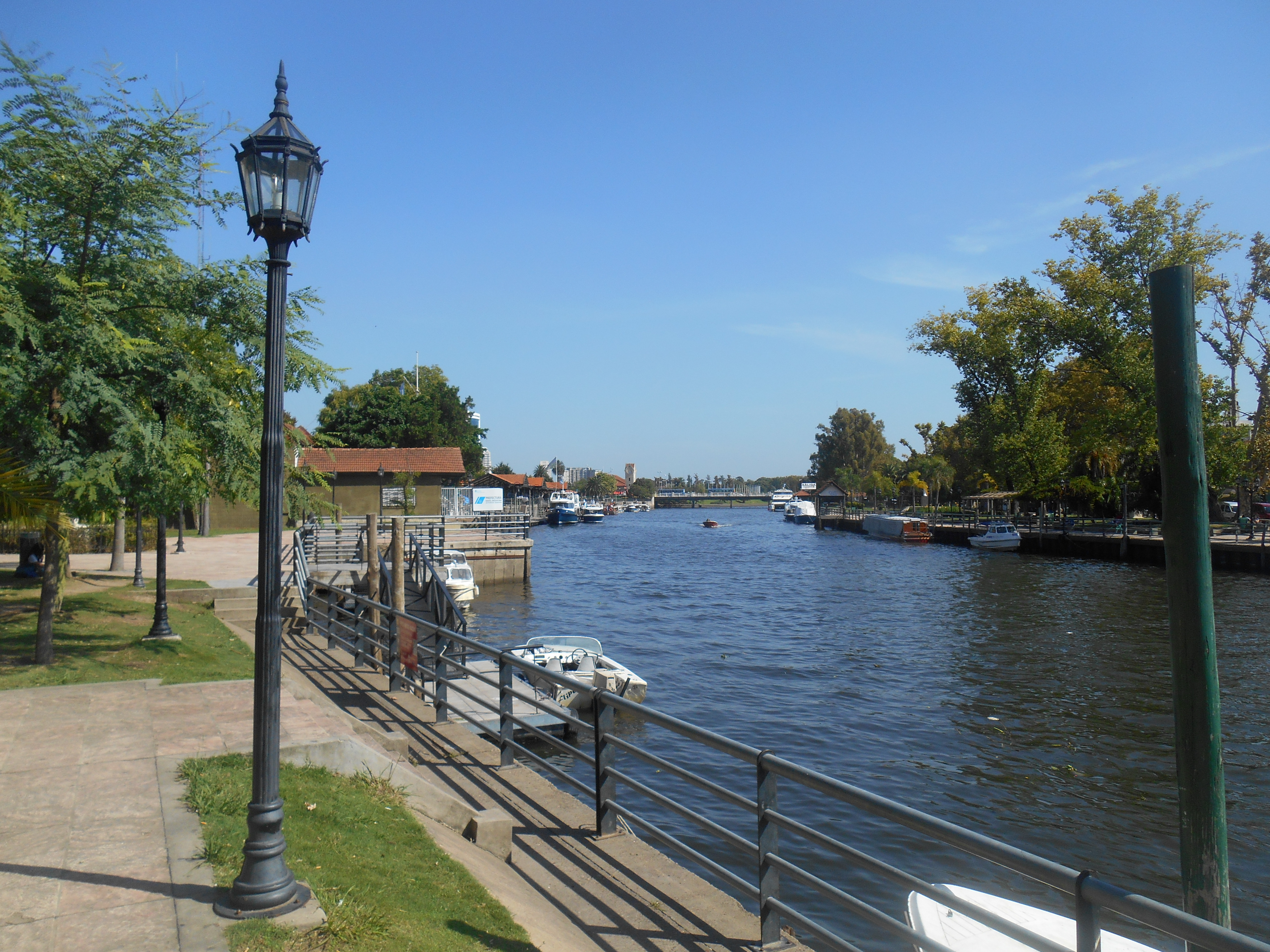
Tigre is a suburb to the north of Buenos Aires on the Rio de la Plata and is a great place to visit if you are looking for an escape from the daily hubbub and noise of the city. The best way to reach it is to take a leisurely, hour-long train ride on the Le Mitre line from the Retiro train station in the city centre.

The Rio de la Plata - Tigre

The Rio de la Plata – Tigre

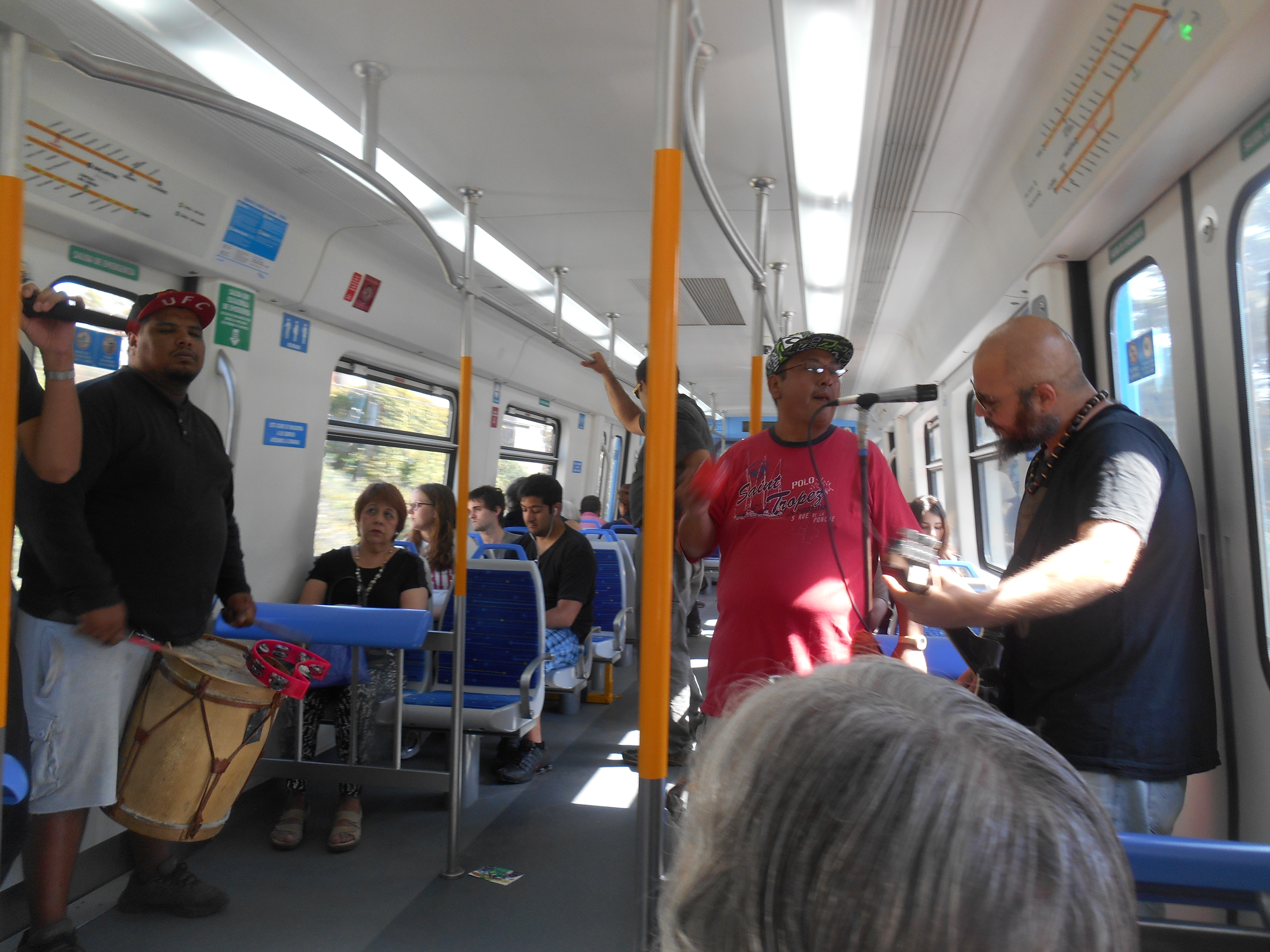
It was a perfect autumn day, not too hot with clear skies and lots of sun. The ride didn’t provide much in the way of scenery except to reveal how those in this part of the BA suburbs live. The homes are more stately, high rises are fewer, and occasional glimpses of the Rio de la Plata were visible in the distance. The huge Rio de la Plata is the river or gulf (it is called both) which forms a boundary between Uruguay and Argentina and runs into the Atlantic. However, our journey was in no way boring since we did get serenaded by a quartet of singers who managed to grab our attention with traditional Spanish songs along with some modern-day rap.

On the train to Tigre

On the train to Tigre

As we have found since we have been in BA, it’s common to be entertained by all kinds of talent on the trains and subways and to even do some shopping. At certain times of the day, when not too crowded, vendors selling everything from soup to nuts ply the cars and make surprisingly good sales. For the passengers it’s a convenient way to shop and pick up any little item they may need. The nice thing about this marketing scheme is that the vendors don’t pressure the passengers to buy. They run up and down the aisles chanting their spiels or even leaving a sample with each person which they will return to in a few minutes. You simply pass it back if you don’t want it or quickly hand over the money. It’s done effortlessly and with no hassle.

Upon arriving in Tigre exactly one hour later, we quickly headed in the general direction of the Fruit Market and the area where the weekend market is held. Unfortunately, in the middle of the week there are only a handful of shops and restaurants open so the place was quite deserted. However, there are always some who stay open for those of us who venture out to avoid the weekend crowds. We quickly sought out a little restaurant right on the river which had empanadas (the South American version of our sandwich which is a meat, chicken, or vegetable filling wrapped in a kind of dough like pastry) which I had decided I wanted for my lunch.

2016-01-16 13.19.36

What a treat to eat our lunch near the water in the autumn sunlight. Yes, it’s autumn here in this part of the world and probably one of the best times to be here since the days are cooling down to a comfortable 25 degrees. They are also getting shorter which seems odd to us since we are thinking spring and feel they should be getting longer. Oh well, the reversal of the seasons is just another little adjustment we have to deal with here in BA.

After our leisurely, but unfortunately not too tasty lunch, we started out on an exploration of the stores that were open. On the way to the river front, we had spied an interesting looking panderia (bakery) with a huge array of Argentinian baked goodies so decided we would pick up a few items for next morning’s breakfast. Hubby saw they were advertising mate, an Argentine caffeine drink which they claim is better than green tea. Since President Obama had sampled the tea when he was visiting here last week, Hubby was curious as to what we had been missing  so put in an order to the young chap behind the counter.

He brought the tea in a special clay pot with a metal straw attached to the side, a large electric kettle, and a full bag of tea. I thought this was rather strange but didn’t say anything since there have been many things about Argentina customs we have found a bit strange, such as maps that appear to be upside down, too much salt in just about all the restaurant food, and far too many dogs.

We both agreed that the mate was too bitter for our tastes even though it’s supposed to have many health properties and that would be the last time we ever ordered it. After drinking as much as we could so as not to offend our waiter, we asked for our bill. When he presented it to us, we nearly fell off our chairs. The grand total was 150 pesos which in Canadian dollars was $13.50! There had to be a mistake! We had heard about how popular the drink was and its wondrous health benefits but at this cost? Was it this magical? Perhaps if he threw in the whole bag along with the pot then this would justify the price. And if all the health benefits were true, then maybe we were getting our money’s worth? There was room here for some negotiation, or so I thought. Maybe he could lower his price to something more reasonable? The problem was how to communicate this to him when he said, “No Ingles” and we said, “No hablas Espanol”. He bombarded us by speaking rapidly in Spanish which he knew we didn’t understand pretending that he had no idea what we were talking about. Obviously we were at a stalemate. Should we give him something for his service and if so how much, or should we just walk away? Yes, this thought had actually occurred to us. However, being nice Canadians we couldn’t do this so very reluctantly gave in to his demand and paid the bill.

We sat for a while at our side-walk table still in a state of shock. This incident had left a bad taste in our mouths. I could see that Hubby’s shock was rapidly turning into a fury at his conclusion that he had been taken. Meanwhile, I tried to drink some more mate to not only get our money’s worth but to try to get the effect of some of those health benefits. I was right, however, as Hubby went into action by first yelling at our culprit or hapless waiter (at this point I wasn’t sure what he was) and then enlisting the help of anyone near by. The first person he  nabbed was an older woman who smiled and greeted us in French as she walked by our table. He related what had happened and asked her whether this was a fair price. She seemed  aghast at what we had paid and intimated that it really shouldn’t have cost anything as it was more a service to visitors to acquaint them to the wonderful benefits of mate tea. Another young man appeared who spoke fairly good English who said the same thing, but it was obvious that neither of them wanted to get involved in this dispute as they gradually faded into the background. Not inclined to give up easily when it comes to money, Hubby again enlisted a group of about five more people who approached the scene.

One of the group, a woman who spoke very good English and immediately understood what had happened to this couple of unsuspecting tourists, undertook the task of making Hubby’s wishes be known that all he wanted was half his money back or he would get the police involved. Oh dear, at this point I really began to wonder how this would unfold. Would this final ultimatum work? Against the wishes of her friends and possibly family, as we didn’t have a clue who these people were, she barged into the bakery to confront our culprit. Within seconds she came back not with half the money but all of it, handed it to Hubby, and told us to leave quickly. Surprised by this sudden turn of events, we thanked her profusely to which she immediately grabbed us both with a strong embrace planting many kisses on our cheeks before her friends grabbed her to lead her away.

We were left shaking our heads in disbelief at what had just happened. We really didn’t know what to make of it all other than to surmise that the young scoundrel had tried to make a few extra bucks off some naive tourists who spoke no Spanish. On the other hand, we realized once again that as a tourist you always have to be vigilant in a country with a different culture. Argentina and Canada share many similarities in lifestyle and culture making it very comfortable so it’s easy to become complacent. Everyone we have met has bent over backwards to help us with directions, to translate to others when we are having difficulties, and to warn us about watching our personal belongings when in public places. On this particular day we simply weren’t prepared for this unexpected incident. There is also no doubt in my mind that if we had the language skills our outcome would have been less stressful.

This was not the cup our waiter served our mate in. This is a souvenir one I bought at the market.

Our mate was not in this cup.  I bought this as a souvenir and it’s made of metal.

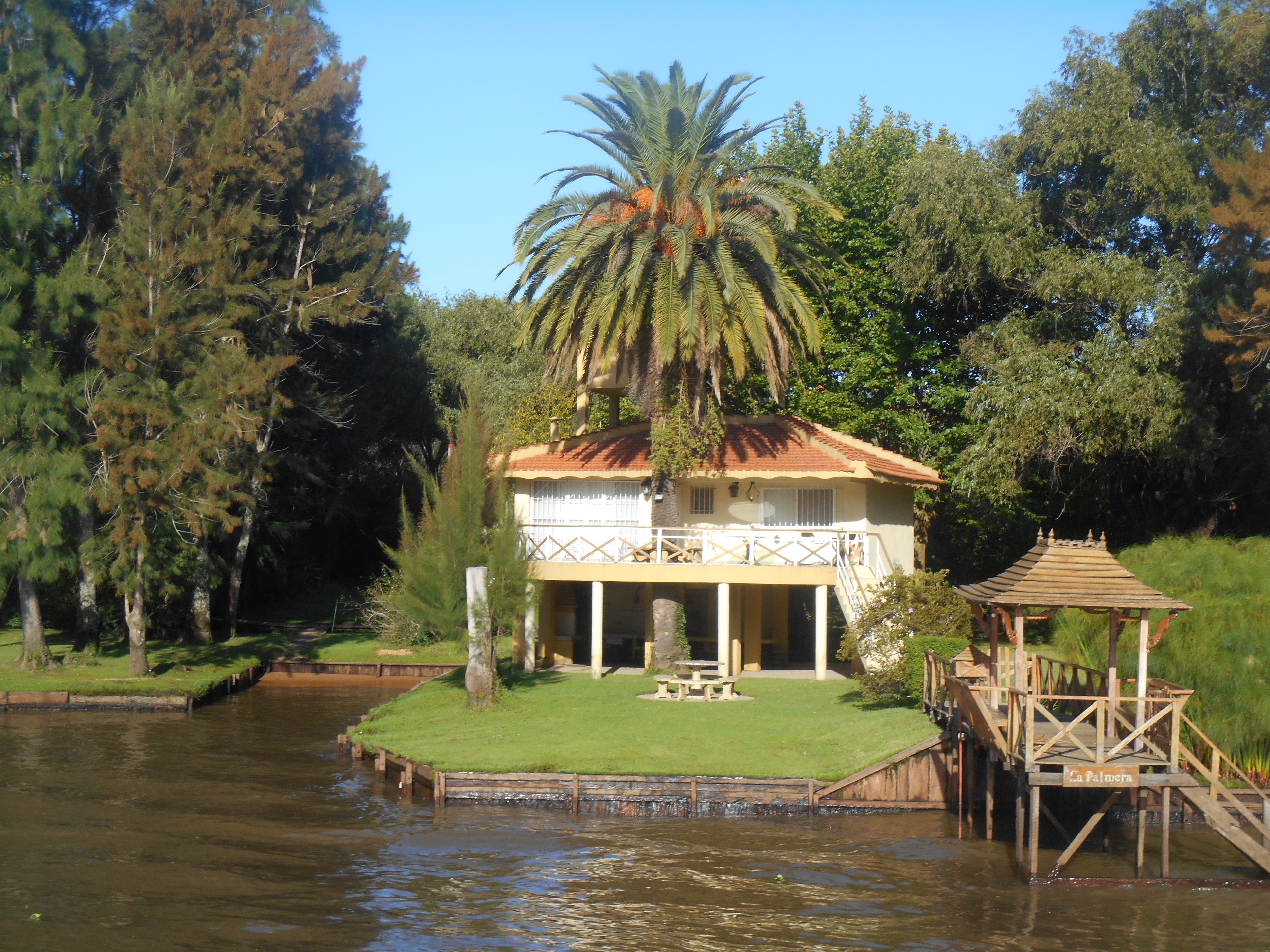
Thankfully the remainder of our day passed with no further surprises. To complete it before heading back to the city, we decided to take a relaxing boat trip up the Rio to see ‘some nature’ – the sales pitch used by the boat operators. A huge catamaran took us past the beautiful estates of the wealthy who have sought out Tigre as their place of escape from the big city. An extra bonus for us was to meet two delightful sisters from England whom we instantly connected with because we all were dying to have a good conversation in English. This is one of the most rewarding aspects of travel in a foreign country. Perhaps more so when we are beginning to feel the first pangs of travel fatigue and miss having our own language all around us.

A home along the river as seen from our catamarand.

A home along the river as seen from our catamarand.

Me with English sisters - Naomi on the left and Natasha in the middle.

Me with English sisters – Naomi on the left and Natasha in the middle.

So again, as has happened so many times on this South American trip, challenges have arisen quickly and unexpectedly only to be followed by something positive and uplifting. This is the thing about travel. You never know what to expect. All we can say is that it certainly isn’t boring – not for a minute!

Mendoza – Touring the Wineries and the Andes

You can’t spend five weeks in Argentina and not visit the famous region of Mendoza where malbec wines reign supreme. But wait a minute there is more to Mendoza than wine. Did you know that the Andes mountains with their snow-capped peaks are not far from the wineries and can be easily accessed in a day?

After three months of travelling on our own, Hubby to his favourite haunt in Florence and me to Ecuador, we have finally met up in Buenos Aires which will complete our winter escape for this year. I am returning for the second time, having landed here in January, to this bustling, cosmopolitan city and am glad to report it has cooled down a bit as their fall season approaches. One of the first things on Hubby’s bucket list was to pay a visit to Mendoza while we were in Buenos Aires so with that in mind I had booked us into the Mallorca Hotel for four nights some time ago.

2016-03-19 14.15.17

After a long, but fairly comfortable overnight bus ride from Buenos Aires to the city of Mendoza which is approximately 1050 kms. to the west towards the Andes mountains, we decided to take it slow and simply try to orient ourselves to the city proper which has a population of about 115,000. Compare that to about 3 million in BA and you have a good reason why some visitors get caught in the ‘trap’ as Lonely Planet likes to call it. Visitors often come to Mendoza for a few days to sample the wine and end up staying for weeks at a time. With over 400 wineries or bodegas as they are called in Argentina at your disposal, a wine lover could spend a year here just going for wine tastings. One of the first things our wonderful host, Mariano, at Mallorca did was to present us with the various options of what tours we could take with their price ranges making it really helpful to narrow down our choices at a reasonable price to suit our budget. We felt absolutely no pressure from him so we immediately signed up for a half-day wine tour on the Saturday and a whole day tour of the Andes on the Sunday.

It was no surprise to me that Hubby wanted to put some wine tasting at the top of his list of ‘to dos’ which I had no trouble with since I do like wine. However, the problem is that it doesn’t like me a whole lot and will often make me feel very tired. But, hey, you don’t go to a place like Mendoza and not drink wine! How can you when Mendoza can easily boast of being one of the world’s largest wine regions, as well as producing more maldec than any other country. Actually the grape that produces this rich, burgundy red wine was first successful in France but was soon taken over by Argentina because the dry but cool climate of Mendoza is ideally suited to it.

2016-03-19 15.55.02

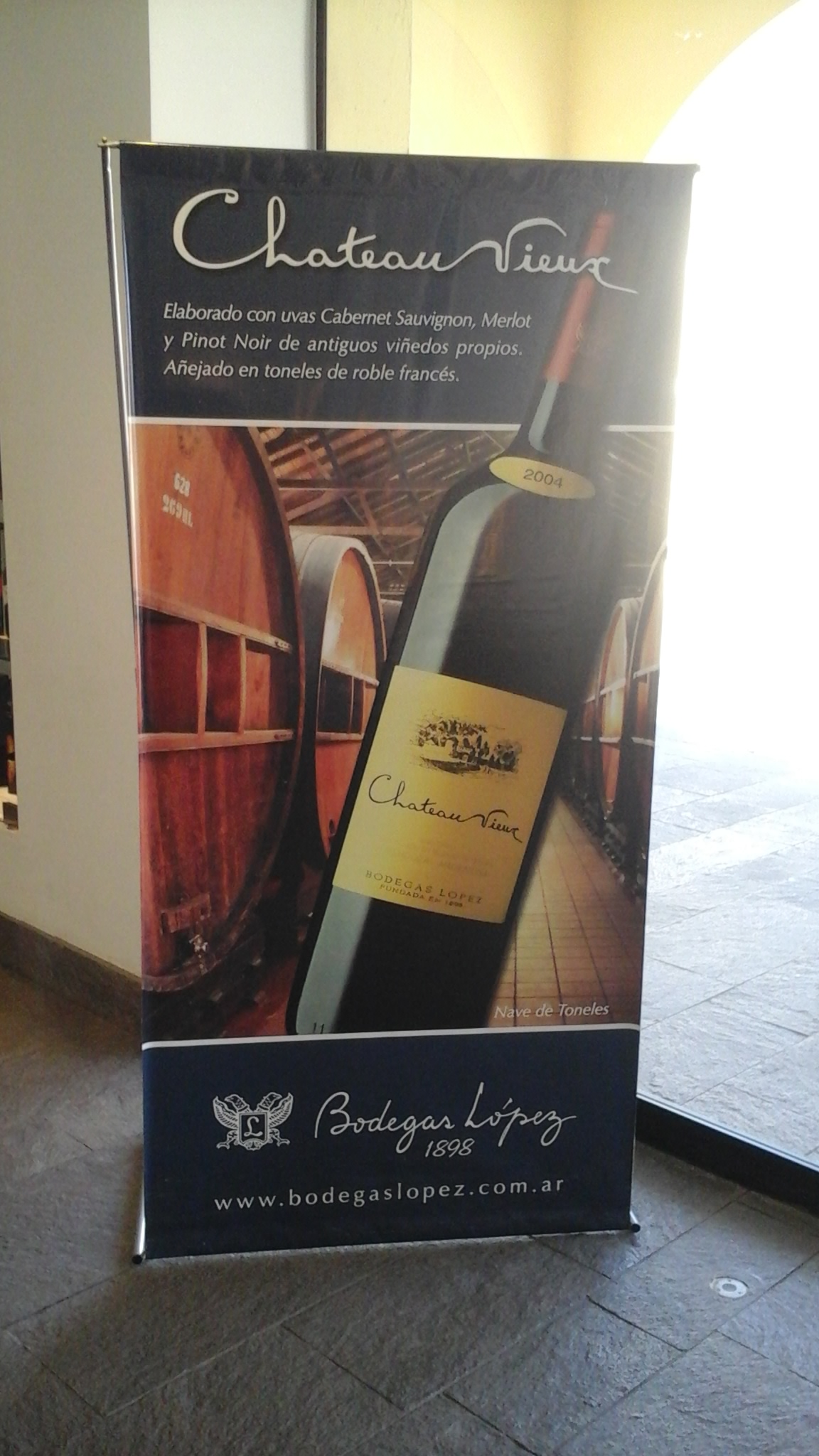
By the end of our stay, we had visited four bodegas and one olive oil plant. By far, we found the best bodega just a hop, skip and a jump from the centre of the city. It was Bodega Lopaz which we reached by taking a newly resurrected train to the city’s outskirts. Here we were treated not only to generous and free tastings, but also wines which we thought were far superior to any others we had tasted. On top of this, their prices were definitely lower than any of their competitors, and the staff went out of their way to be helpful in making our selection of wines to buy and packing them up for us.

2016-03-21 16.31.03

2016-03-19 15.51.46

2016-03-21 16.43.48

I also thoroughly enjoyed our visit to the Pasrai olive oil plant probably because I needed some good food to absorb all the wine I had tasted on our tour. Our guide led us through the olive oil making process and then offered plates of bread with various spreads and oils to wet our palates. Putting in a great sales pitch for a line of body lotions made with their olive oil, our guide convinced me that I definitely needed this natural product for my poor body which has taken such a beating with my travelling lifestyle. Hubby opted for a large bottle of olive oil which he swears he will finish before we leave. He’s going to be doing much of the cooking and probably will succeed as he loves to douse everything he cooks with the stuff.

2016-03-19 17.18.35

With more than enough wine tastings under our belts, I was glad when our tour to the Andes finally arrived. This was one tour that didn’t disappoint and was definitely worth the money. However, it did present us with some unexpected surprises.

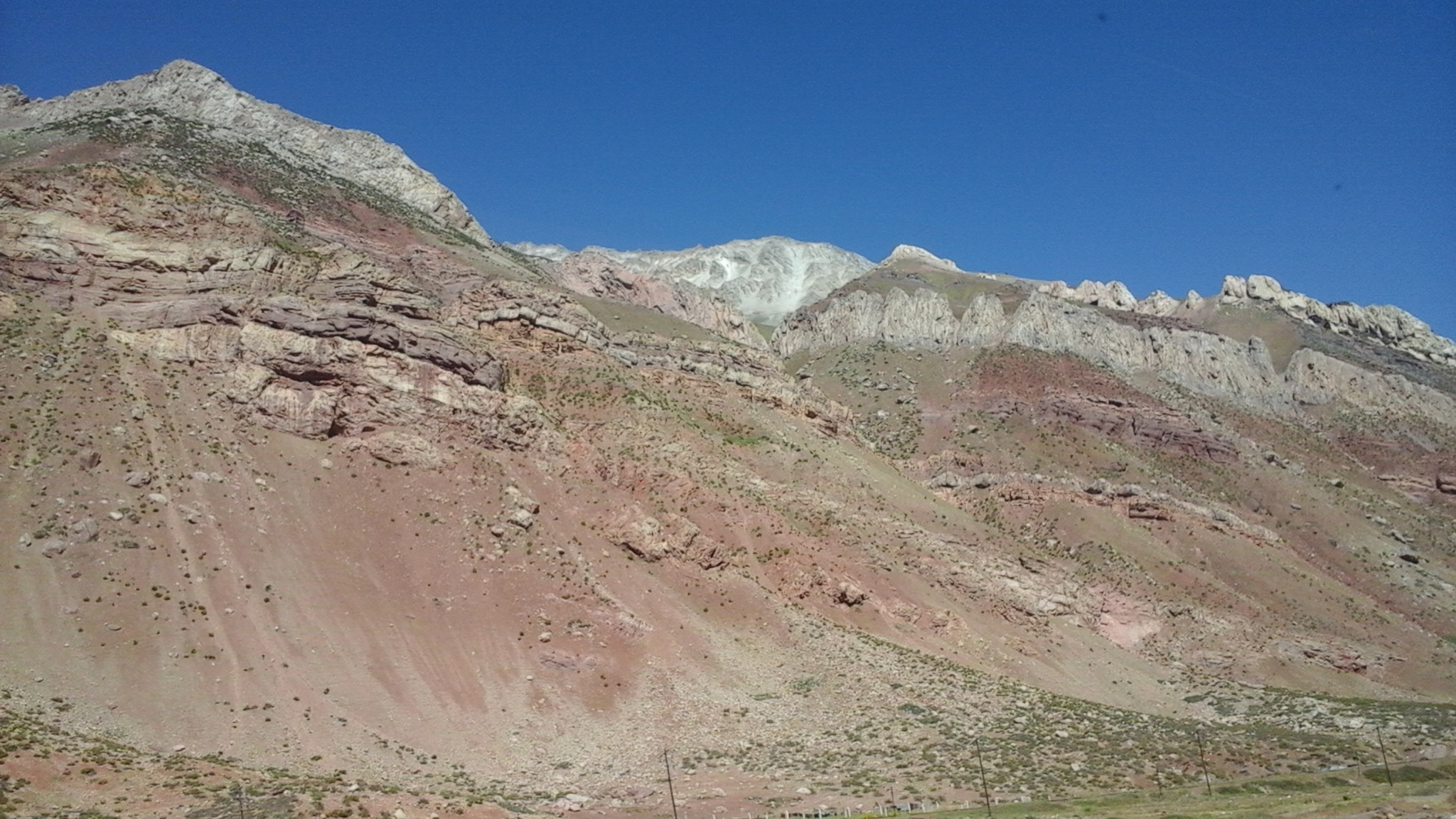
The Andes are the largest continental mountain range in the world. Like all mountain ranges they are teeming with minerals and ores which we know was the lure for the Spaniards and Portuguese who discovered this in the 1500 and 1600’s. Our guide pointed out to us that the different hues of colour that we could see represented some of the minerals in this central part of the Andes: the green denoted bronze, the yellow was sulphur, and the orange was copper. Add to this the snow-capped peaks appearing every so often, we had lots to keep our attention until we made our first stop at a tranquille lake. It was still quite early in the day (about 9:30) so the effect of the rising sun made for a rather dramatic effect.2016-03-20 12.22.41 (1)

2016-03-20 08.51.38

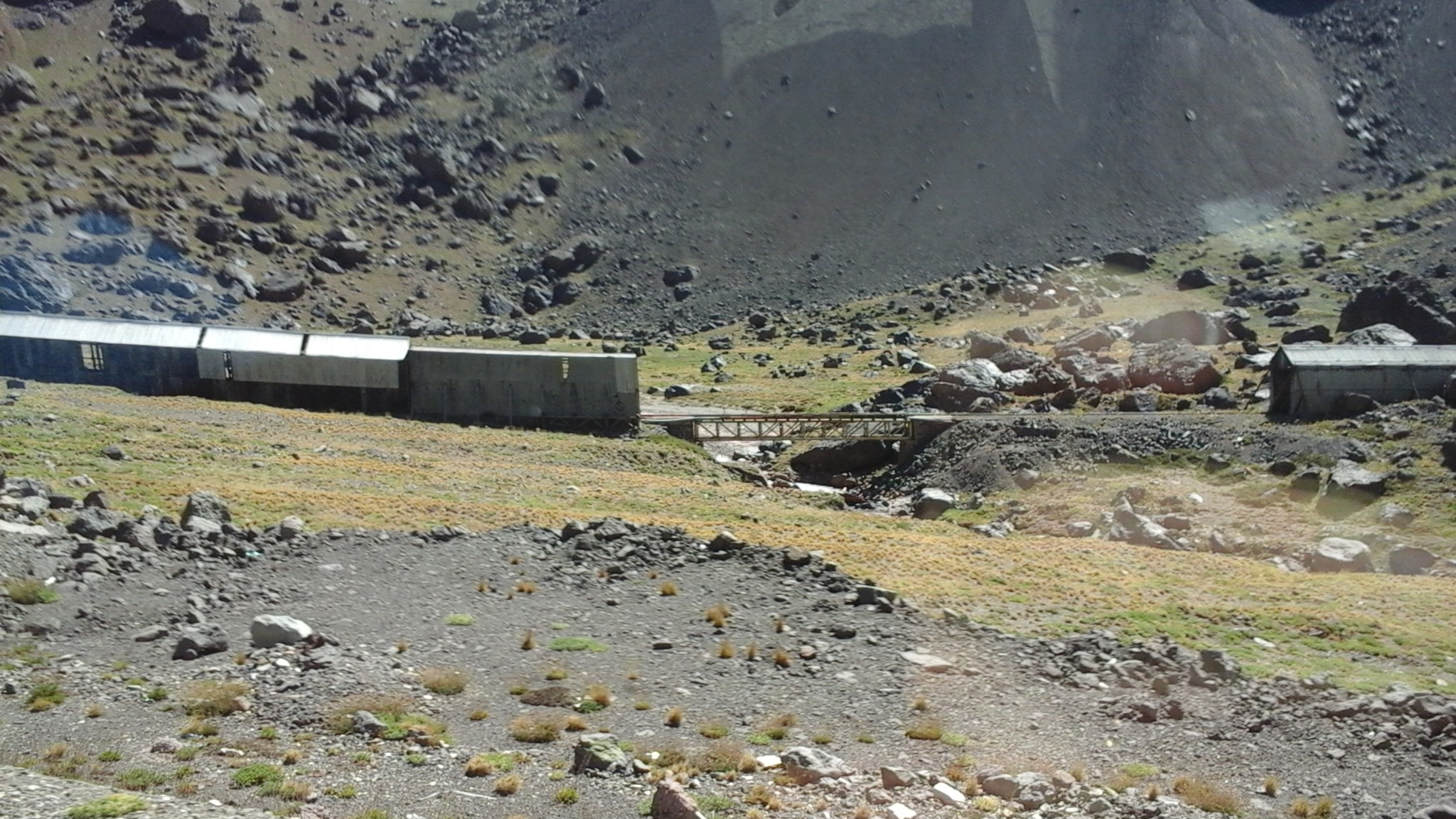
Old rail road connecting Argentina to Chile built by the British. No longer in use.

Old rail road connecting Argentina to Chile built by the British. No longer in use.

Thankfully, our next stop was for coffee and some food which was so welcome since we didn’t have time to have anything before our 7:30 departure other than some bananas.

As I have mentioned before in my posts on Ecuador, to not speak Spanish is a real liability in any South American country. This problem has certainly been the cause of many of my challenges which I thought might improve with Hubby by my side, but unfortunately not so. As it turns out his Italian isn’t of much help except for basic words which are similar to the Spanish, and in many cases just confuses any Argentinian who has no English.

The first surprise on this tour happened when our bus came to pick us up at our hotel and our guide asked us if English was our only language. He was as surprised as us when we told him that, yes, we were English and did not speak Spanish. He quickly caught himself and graciously promised that with his limited English he would do his best to give us some information. My heart sank at this disappointing turn of events. However, like so many other episodes on this trip, just when you think the world is collapsing all around you, something or someone appears to save the day. This happened to us as soon as we found our seats at the back of the bus. No sooner were we seated when the pretty young girl in front of us turned around to say that she spoke good English and would translate for us. We could have hugged her! Her name was Michaela so from that moment on she and her boyfriend, Ivan, who didn’t speak English but had a good understanding of it became our bosom buddies. They did an excellent job and were delightful to talk to. We probably learned more from them than we ever could have from our guide. I just hope we were as helpful to them. We certainly shared much with them even addressing the possibility that they might like to move to a country like Canada. Ivan was all for it, but Michaela confessed she was a city girl and wasn’t keen on the cold.

Michaela and Ivan our interpreters.

Michaela and Ivan our interpreters.

I digress so let’s get back to our trip to the Andes because as I was to discover our surprises did not end here. We knew that the objective of this tour was to see the Andes and its highest peak which is Aconcagua, as well as to go to the border where Argentina meets Chile so we could visit the shrine of Jesus the Redemptor. What we did not know was just how high up this shrine was and what the road would be like. During our travels in Morocco last year when we had to cross the Atlas mountains by bus, I swore I would never want to do anything quite like this again where the bus is climbing up and up ever so much further with nary a guard rail in sight. Unfortunately, I have not learned to master the technique of controlling my thoughts of the bus not making one of those sharp curves and literally falling over the edge. Try as I might by looking up, not down, or imagining I’m having fun on a roller coaster (something else I never have liked), I am still petrified.

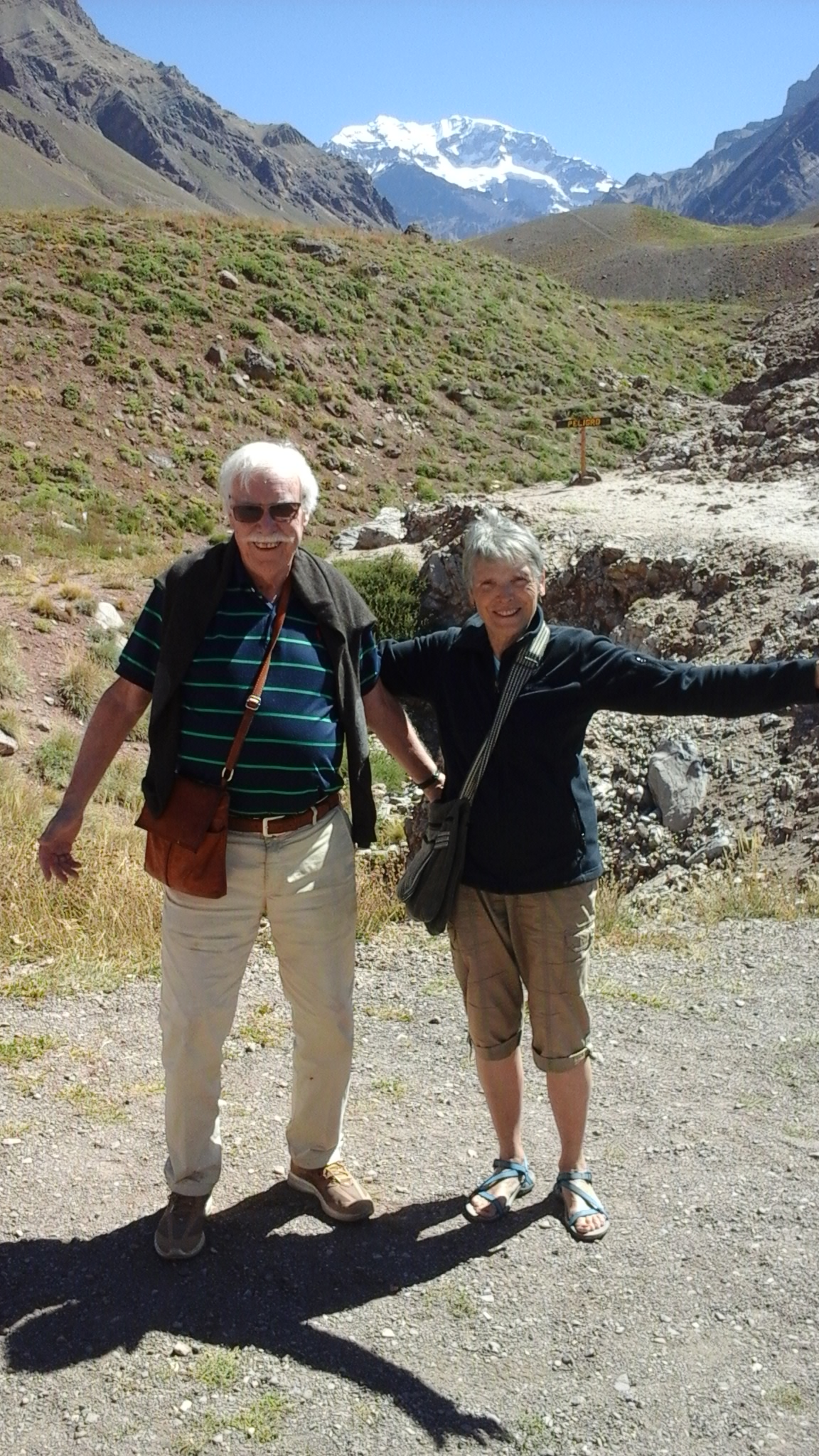
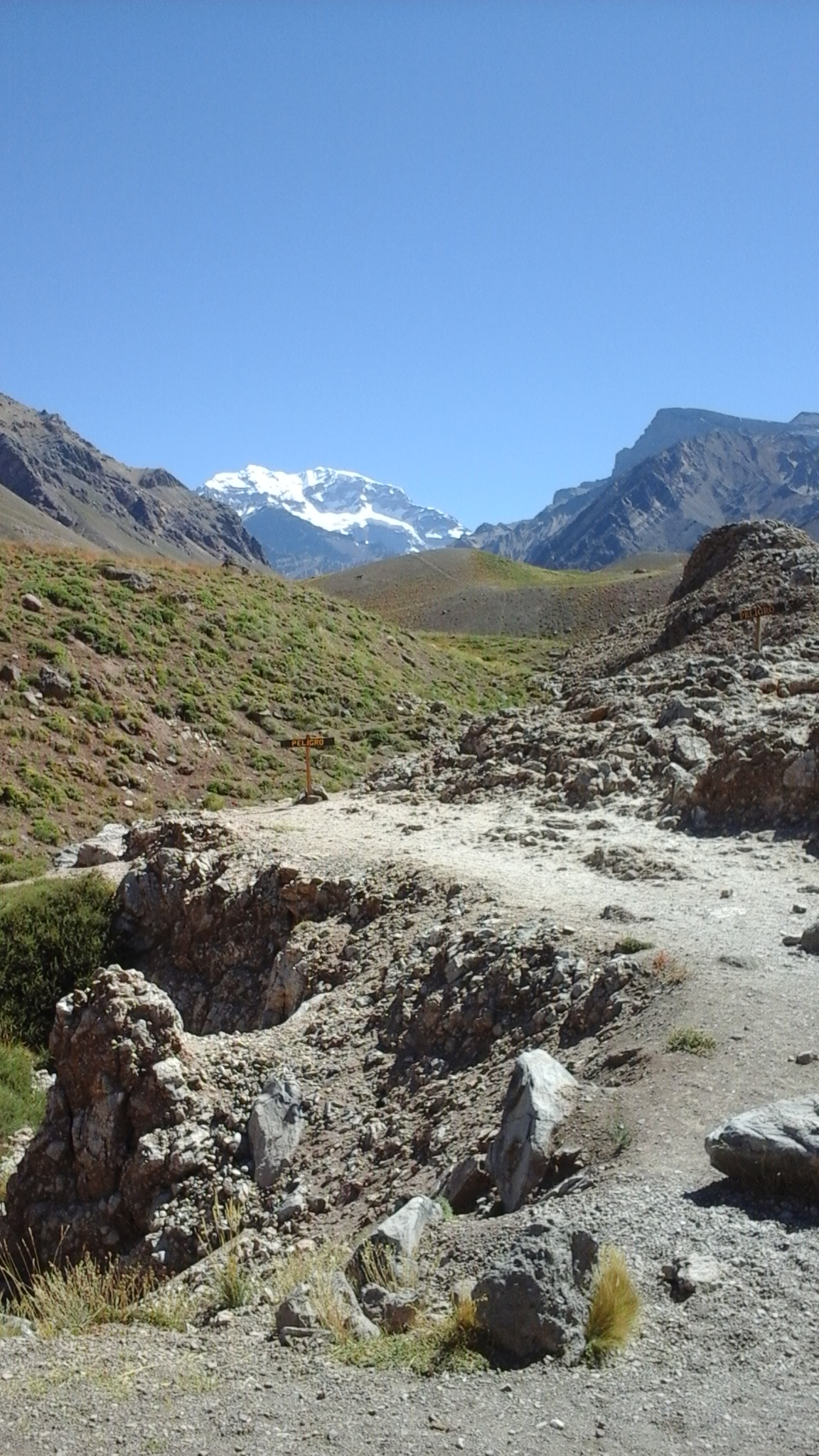
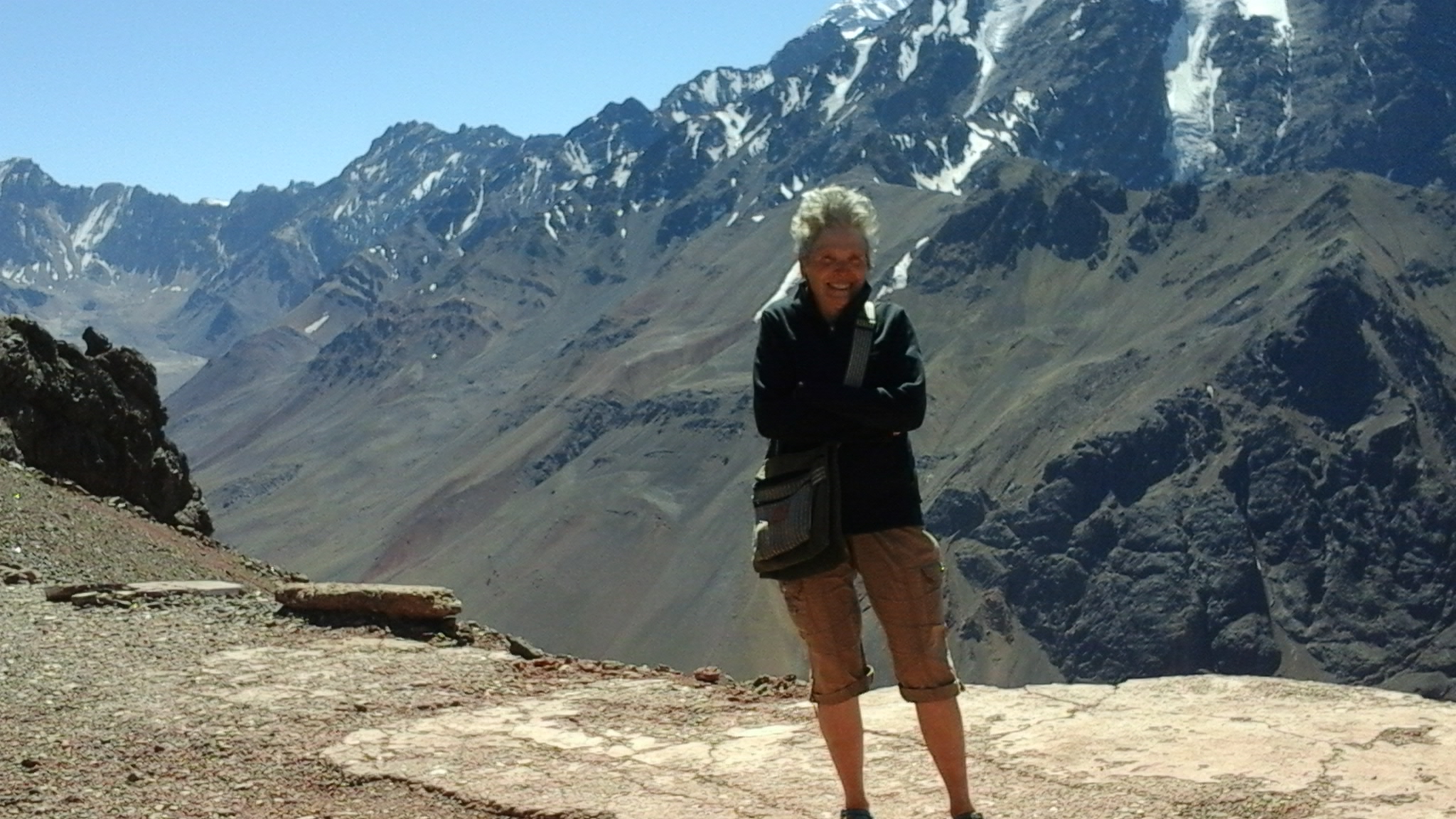
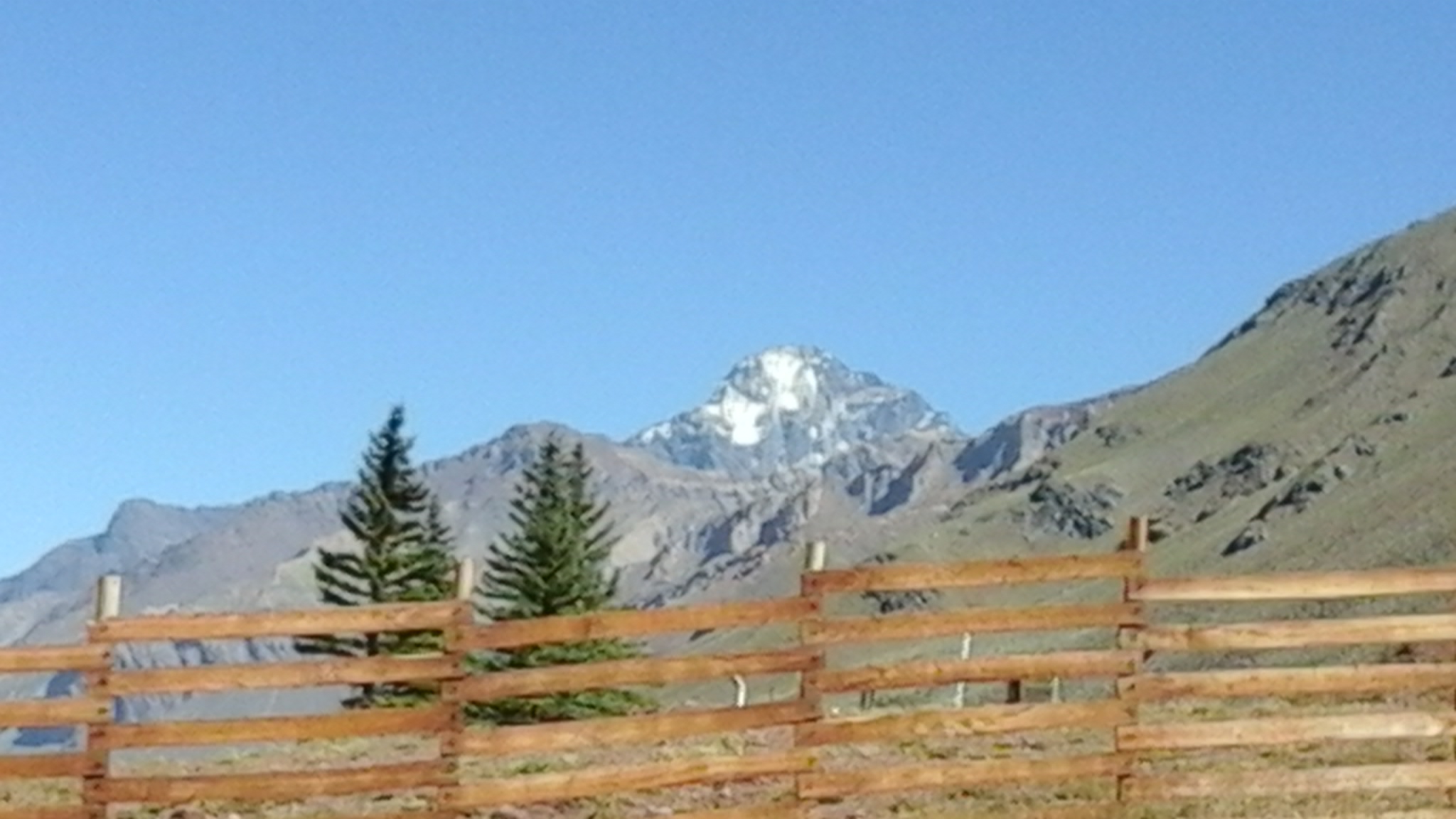
After a brief stop to have a look at Aconcagua, or the ‘roof of America’, and also the highest mountain in the world excluding the Himalayas in all its snow-capped glory, we began our ascent up to the shrine.2016-03-20 12.28.22

Aconagua -"the roof of the world". Over 7,000 m. high.

Aconagua -“the roof of the world”. Over 7,000 m. high.

I tried to get some information from Michaela on just how far up it was, but she couldn’t remember. She was so excited about the prospect of the forthcoming climb as everyone else seemed to be so I settled back believing that nothing could be as bad as what I had experienced last year and that perhaps I had conquered my fear. However, this positive thought didn’t take long to turn to the negative when I realized that quite possibly this time could be even worse. The road wasn’t paved and there was just enough room for one vehicle all the way up. There was no sign of a guard rail anywhere. Whenever our large mini-van made a particularly hair-raising turn or had to move over for another on-coming bus, everyone raised their hands and voices in applause while I in the meantime was trying to find some place where I could place my eyes so I couldn’t see what was ahead or below. Burying my head in Hubby’s shoulder helped. Unfortunately, I seemed to be the only one not enjoying this torture. Again Hubby came to my rescue by pulling out a prayer card for Saint Brother Andre. I did something I never believed I would do and that was to chant the prayer on the card over and over. All I can say is that dear old Brother Andre must have been listening because we reached the top without toppling over, and I found that coming down was much easier than going up. In fact, I was so composed that I even managed to get some good pictures of our descent.2016-03-20 13.18.51

2016-03-20 13.31.27

2016-03-20 13.21.04

The road up to the top.

The road up to the top.

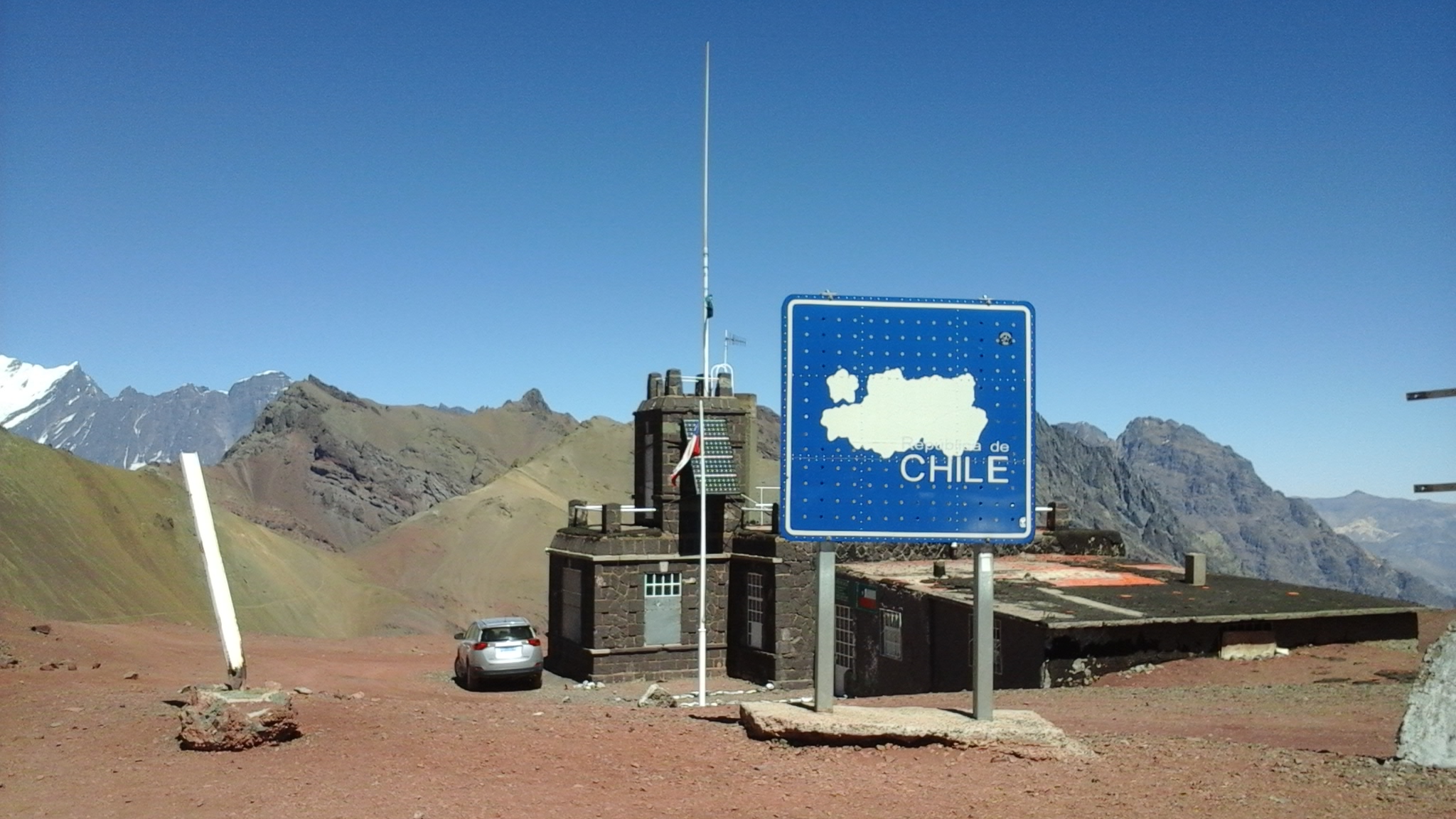
In spite of the horrendous journey up, I realized that it was worth it for the incredible scenery, the story of why the shrine was there in the first place, and the hot chocolate that awaited us. The shrine was erected to celebrate the peace treaty that took place in 1984 between Chile and Argentina. Even though they both fought together with San Martin and others to gain their independence from Spain in the 1800’s, they were never able to agree on their borders and territory so numerous war – like scuffles occurred right up until they signed their treaty and the shrine was built. Since then relations between them have improved to the point that Chile has become one of Argentina’s main trading partners. In fact, Argentina came to Chile’s rescue in a big way after their devastating earthquake in 2010.

Our final stop of the day was at the site of the Puente del Inca or Inca Bridge which is one of Argentina’s natural wonders. The combination of ice from the mountains and the thermal waters from the hot springs has produced this unusual formation which acted as a bridge for many years. It was so unusual that it attracted not only his attention but an actual visit from Charles Darwin in 1835. The Incan people used this bridge centuries ago and in the early 1900’s the British erected a spa to utilize the healing properties of the hot springs until 1965 when it was hit with an earthquake. Today its only purpose is to provide some photo ops for tourists. The bridge has been deemed as unsafe.

Puenta del Inca

Puenta del Inca with remains of the spa.

I wrote at the beginning of this post that many people who visit Mendozo often allow themselves to be ‘trapped’ there. The numerous wineries alone could be one reason especially for all the wine lovers who seek the thrill of indulging their pleasure in the tastings and the ambience offered by the bodegas. However, as I discovered the awe inspiring and, yes, often fearful Andes are definitely another draw for those who seek to know their place in nature. These mountains not only do that but also provide for us a source of adventure for those who want to take the risk. How fortunate that the city is situated right at the base of these awesome mountains in a desert like valley that produces such delicious wine. This is certainly enough for anyone to justify staying there just a bit longer. What more could it possibly offer? I found that it offers much more which I will write about in my next post.

2016-03-20 11.50.50


The Cloud Forest in the Rainy Season

A few days ago I woke up to pouring rain and no electricity. So why should this be such a disaster, you may ask? Well, what if I told you that when I went to bed at 9 o’clock the night before it was raining and there was no power. The first thought I had as I awoke that morning was, “Do I have to face another day of this and can I?” I began to plot my escape.

Continue reading

Why Ecuador?

With the abysmal performance of our Canadian dollar, you have to wonder why I am literally running into Canadians every other day while I have been travelling around Ecuador. A few weeks ago on my first visit to Cuenca all the guests, except for one young female from England, were from Canada. We had a solo woman traveller from Alberta, a couple from Saskatchewan, another couple from Manitoba, a couple from Ontario, and Cathy and me from Nova Scotia. Previous to our arrival, our hostess announced that she had just had a couple from Montreal stay with her. Bonding very quickly over the horrible weather the folks back home were experiencing, it became an old home week for us all. It’s probably a good thing there was no one from the US as I’m sure they would have felt outnumbered.

I’m not exactly sure for the reasons for this influx of Canadians this year, but I can guess at some of them because they’re probably similar to my reasons for being here.

For years I’ve been hearing how inexpensive it is to live here or to visit for that matter. That still seems to be true, although it’s not surprising that costs are creeping up here as they seem to be world-wide. Even though our dollar is not performing very well right now, Ecuador is still affordable. As a result, Canadians are trading in Florida and Arizona for their winter escapes and looking at Ecuador as their next possibility.

For ex-pats or would be ex-pats it’s the perfect place to come to. The present government, under Rafael Correa, has done much to make it easy for people from all over North America and some from Europe to make this their home. They are finding that their retirement fund goes a lot further here. In fact, many of them can honestly tell you they are living in the lap of luxury compared to how they would be living back home. Depending on where they choose to live and how, a couple can live quite comfortably on $1200 or more a month.

I must point out that not all ex-pats are retirees. There are many young people, some with children, opting to make Ecuador their home. The younger ex-pats want a simpler life and definitely don’t want to take part in the ‘rat race’. The want a cleaner and safer environment so have chosen to buy land here and try their hand at farming. I saw that in Vilcabamba and Cotaccachi, both small towns where things grow like crazy all year round. Some retirees have set up their own businesses such as restaurants, food companies or whatever their interest happens to be. There are many opportunities here for anything in the exporting field since the country is rich in resources.

The present government has encouraged ex-pats to come here by making it easy for them to buy property, set up a business, get access to good but inexpensive health care, and by providing seniors’ discounts on transportation, museums, and concerts, some of which are free.

It’s not surprising that the weather plays a big part in why people are choosing to live here. Wouldn’t you be lured by what can almost be described as living year round with ‘eternal spring’!The whole country has the equator running through it so was aptly named from the Spanish word meaning equator. You might think that this would mean the country would be terribly hot but not so. It can be very humid down on the Pacific coast at sea level, but the rest of the country can legitimately claim to have an ideal climate where it’s not too hot or too cold. Temperatures can vary somewhat with it being a bit cooler in the north and warmer in the south, but always a moderate climate is enjoyed if you live in the middle which is higher up in the Andes. In fact, if you climb up to the top of any of the numerous volcanoes here, you will need to dress very warmly as temperatures can go down to the single digits. From January to May is the rainy season which isn’t always the best time to visit if you are a sun-seeker. The weather can be extremely changeable with sun, cloud, and some rain all in one day. Let’s just say I would hate to be a weather forecaster in this country! In spite of this weather uncertainty, there is always the consolation that there is never any snow to shovel.

There is nothing boring about this country. For beautiful scenery, it is fantastic. It has mountains and volcanoes galore, lush green valleys, tropical forests, cloud forests, numerous rivers with grandiose falls, and gorgeous beaches. It’s an adventurer’s paradise. It’s biodiversity is apparent with more than 25,000 plant species and 1,600 types of birds, more than any other country in the Western hemisphere. The numerous tribes of indigenous people along with the Spanish and mestizos provide a colourful and vibrant culture. For visitors and ex-pats alike, there is much to see and do for such a small country.

I might add that the country is still relatively healthy environmentally although signs of pollution from the poorly maintained buses isn’t helping the atmosphere especially in the cities. I am sure there are other atrocities going on as we might suspect in the Amazon region with the discovery of oil there in the 1960’s, and the government’s seemingly lack of will to stem the exploration despite the protests from the indigenous tribes who live there. There is a movement afoot which is gaining momentum to allow them to limit the rampant growth so they can live sustainably. Sounds to me like Ecuador is facing the same problem here as we do in Canada with our Tar Sands. The money reaped by their oil discovery has just been too lucrative for the country’s coffers to seriously do anything about it.

Generally speaking Ecuadorians are friendly people who are genuine in their response to all the new comers arriving in their county. This does, of course, make it much easier for ex-pats to set up a new life here. The welcome mat is obviously out for them. Some are more successful than others at integrating into the local culture. The one place which has a large number of gringos (the polite word used by the Ecuadorians to describe anyone, not just Americans, who move here) in proportion to the population which is about 4,000 is the town of Cotaccachi not far from Otavalo. The day Cathy and I decided to visit, I was amazed at how the ex-pats or gringos seemed to not only take over the market but were also forming groups in many of the restaurants. It appeared obvious that they had unwittingly taken over certain restaurants, thus, claiming their turf. We felt entirely ignored so I can imagine any local would feel the same way. My sensation of this was later backed up by Miryam, my hostess for the AirBnB where I have been staying. She claims there is a tension between the locals and the ex-pats. It’s unfortunate this has happened in  Cotaccachi as I personally think that Ecuadorians are extremely friendly and helpful and in most cases go out of their way to make any visitor to their country feel welcome. Of course, there are bound to be those who want to take advantage of us with their petty thievery, but this isn’t surprising since there are many who are still poor and lacking in education. Nevertheless, this country has come a long way in improving its social services since Correa has been in power but still has some distance to go in narrowing the existing disparity between the rich and poor.

Probably the most important question to be answered for me or anyone who thinks that Ecuador might be a good place to live is to talk to the ex-pats and get their responses. I found that the ones who were most positive were those living in Cuenca and Vilcabamba. The most exuberant person was a lady I met at the Central Plaza in Cuenca who moved there from Ottawa four months ago with her husband. Here was a couple in their early 50’s who sold their home and most of their possessions to live in Cuenca. They were not looking back and loving their new life for all the reasons I have suggested. Their one big challenge was to learn the Spanish language.This I have to agree has been a real hindrance for me in getting to know the people and the country better. The Americans are further ahead of us in this as most of them have had experience at speaking Spanish in their own country. Then there was the couple from Toronto in their 80’s. I met them while having lunch one day in a fancy restaurant offering a terrific luncheon special. They were visiting Cuenca to check it out places to rent. Once they found a place, they were going to make the big move. The wife was regaining her youth again so much so that she was actually taking up sky diving and loving it. She also added that her husband had lost 20 pounds in the two months they had been there from all the walking they had been doing. Amazing! I hope I can be like them in my 80’s!

There is much more I could write about this country. I hope that my impressions of why Ecuador is gaining a good reputation as a place to move or retire to if you are looking for a lifestyle that will be easier and more affordable are sufficient to whet your appetite just a wee bit. Or better still, why not consider it as a country just to visit? There really is much more here than the Galapagos!