Battambang – the ”Heart and Soul” of Cambodia

Battambang, Cambodia’s second largest city, is a relative newcomer to the tourist scene in Cambodia primarily due to the Phare Ponleu Selpak’s Circus School. I first heard of Battambang and the sensational productions of this group from my journalist friend in Phnom Penh who reports on Cambodia’s fledgling but flourishing arts and culture scene for the Cambodian Daily newspaper.

Before the Khymer Rouge wrecked its havoc on this beautiful country and its people, Battambang was not only considered Cambodia’s ‘rice bowl’ but also the ‘heart and soul’ of its culture. I decided that this year I had to go up to the northwestern part of the country to check it out for myself.

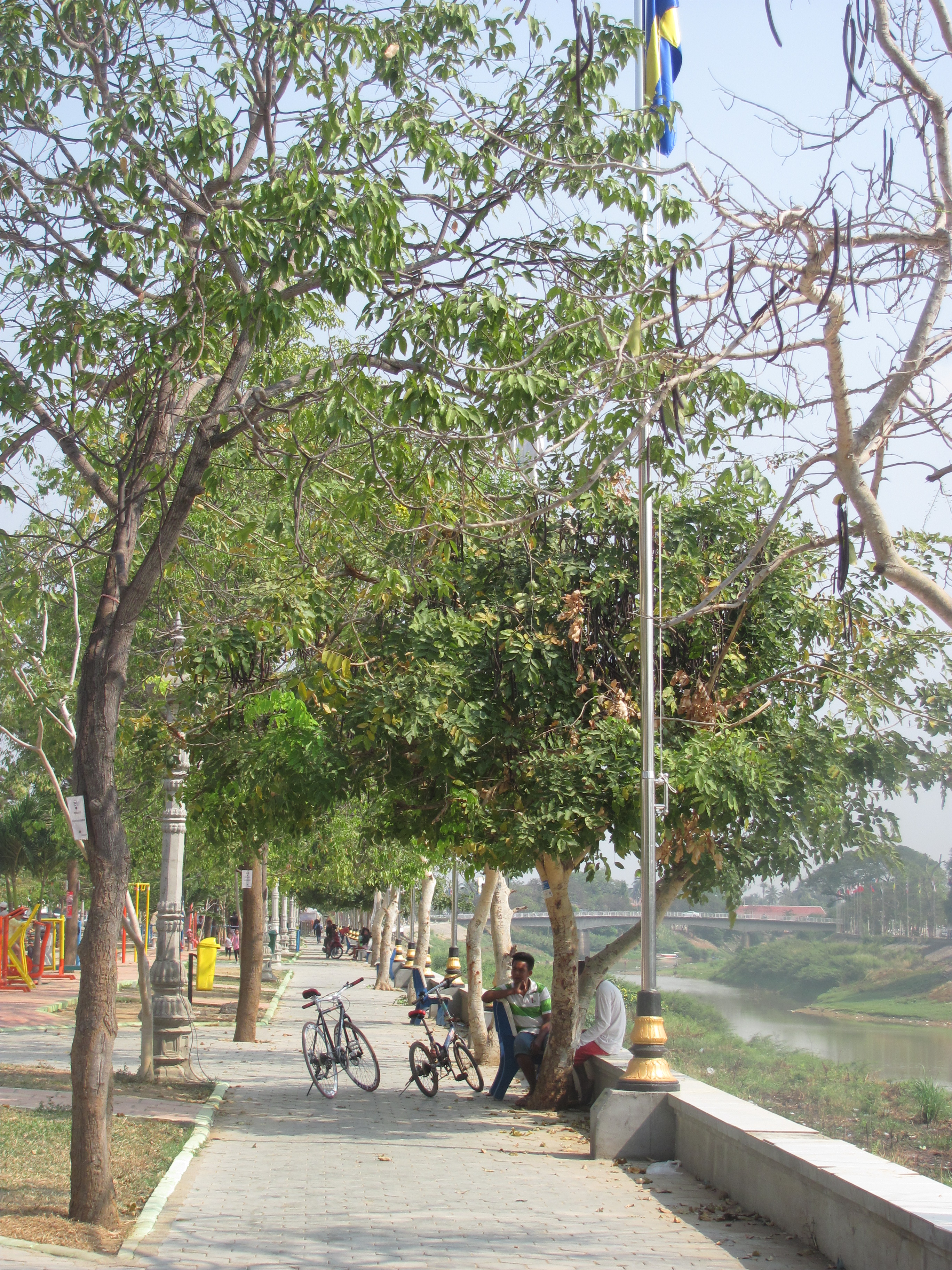
What struck me was the friendly spirit of the people and the peace that prevailed over this city of 240,000 inhabitants. Moreover, it was easy to navigate. The Sangkae River runs through the town splitting it into two parts resulting in numerous bridges, and streets laid out in a grid system, thanks again to the legacy of the French. I was able to walk everywhere and never get lost. The tuk-tuk drivers weren’t too happy about this but they never gave up on me and always accepted my rejection of their offers with good grace and humour.

Peaceful river scene.

Peaceful river scene.

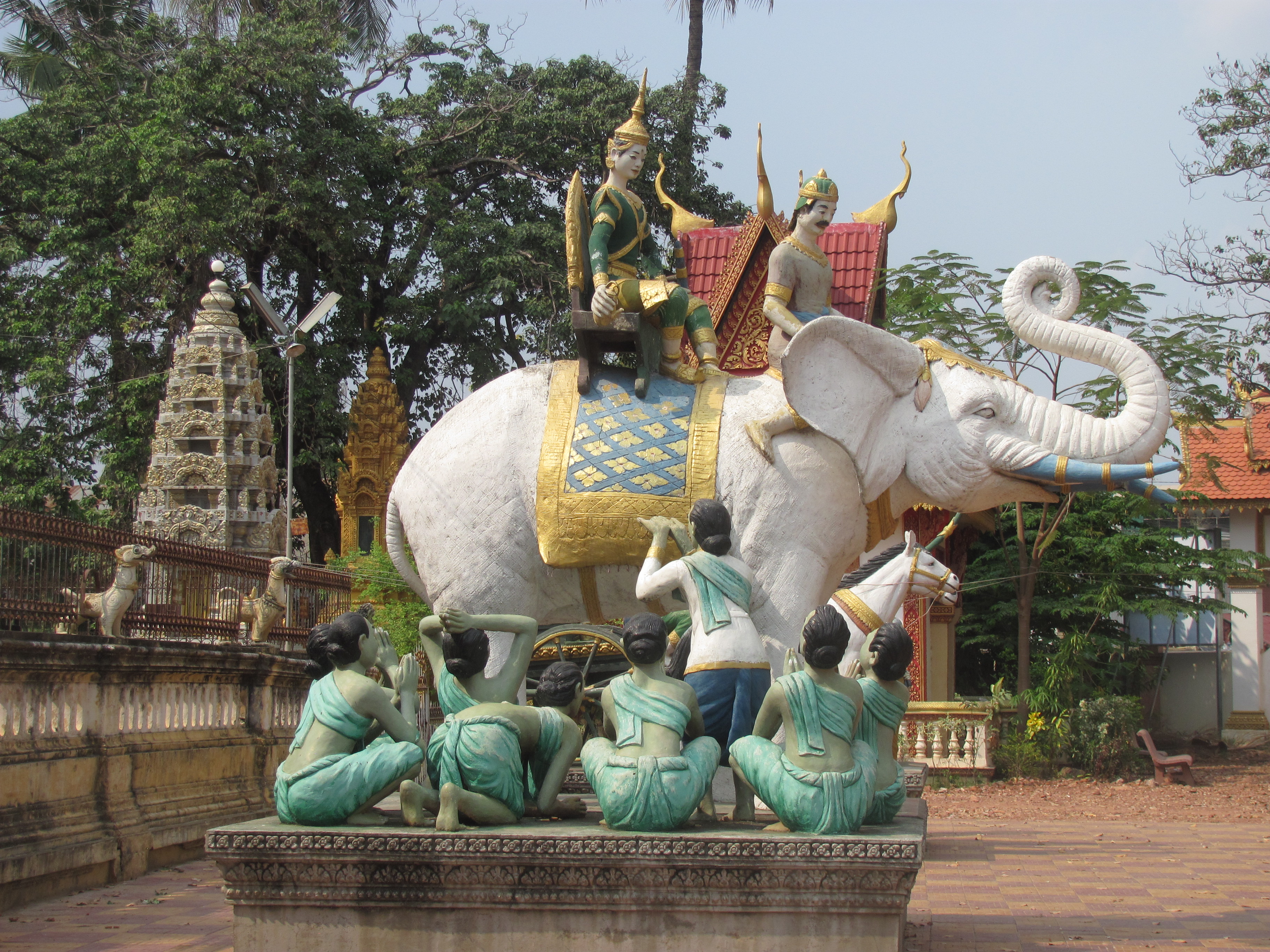
Battambang or “bong” witch is the way it’s pronounced but not spelled, like all Cambodian cities, has its fair share of temples and ancient ruins from its Khymer past. Most of them are in the outlying area and easily accessible by tuk-tuk or moto-bike. Not excited about combing temples and ruins in the heat and having had enough exposure to the Cambodian past which can be so gruesome, I opted to stay within the city limits and get a feel for the place by walking and meeting the people. I stayed for four days and would have visited at least one if not two of the more famous sites such as, Ek Phnom an ancient temple that pre-dates Angkor Wat, or Wat Samrong Knong and the “Well of Shadows” which is the oldest pagoda in the area and was a prison during Pol Pot’s terror. However, I was distracted by  my computer and G-mail which decided to test my patience and mental stability by presenting me with one problem after another. I quickly realized how dependent I’ve become on my technical gadgetry so had no other choice than to seek help and not worry about seeing or doing all those touristy things I could have done.

Inside the grounds of one of Battambang's temples.

Inside the grounds of one of Battambang’s temples.

After spending countless hours of what I can only describe as a feeling of floundering around in the darkness of cyber space, I eventually found  and bravely sought help from eager to please Cambodians who all seemed to have a different solution to my problems. Unfortunately, their language skills didn’t come near their eagerness to help which was a major drawback to a technical illiterate like me. Eventually after I thought some of my problems had been solved, I managed to attend a performance put on by the students of the now famous Phare Selpak’s Circus School.

The Phare school is a huge success story for this area and was the beginning of Battambang’s quest to regain its past glory of being the spiritual, intellectual, and cultural centre of Cambodia. It all started after the fall of the Khymer Rouge in the late ’70’s in the midst of the largest refugee camp of displaced Cambodians located on the Thai-Cambodian border. Nine of Veronica Decrops’ students, who were children at the time she was providing drawing workshops for them, went on to become the founders of Phare which means “the brightness of the arts”. Decrops understood the need for these disadvantaged children to overcome their horrors of the war by developing their artistic talents and instilled in them the belief that the arts are a powerful tool for human development and social change. To this day, this remains the focus of the organization supporting the school where up to 1400 students are presently enrolled. All come from disadvantaged families where through a co-operative effort by teachers, parents, and the students the environment is not only creative but nurturing and supportive.

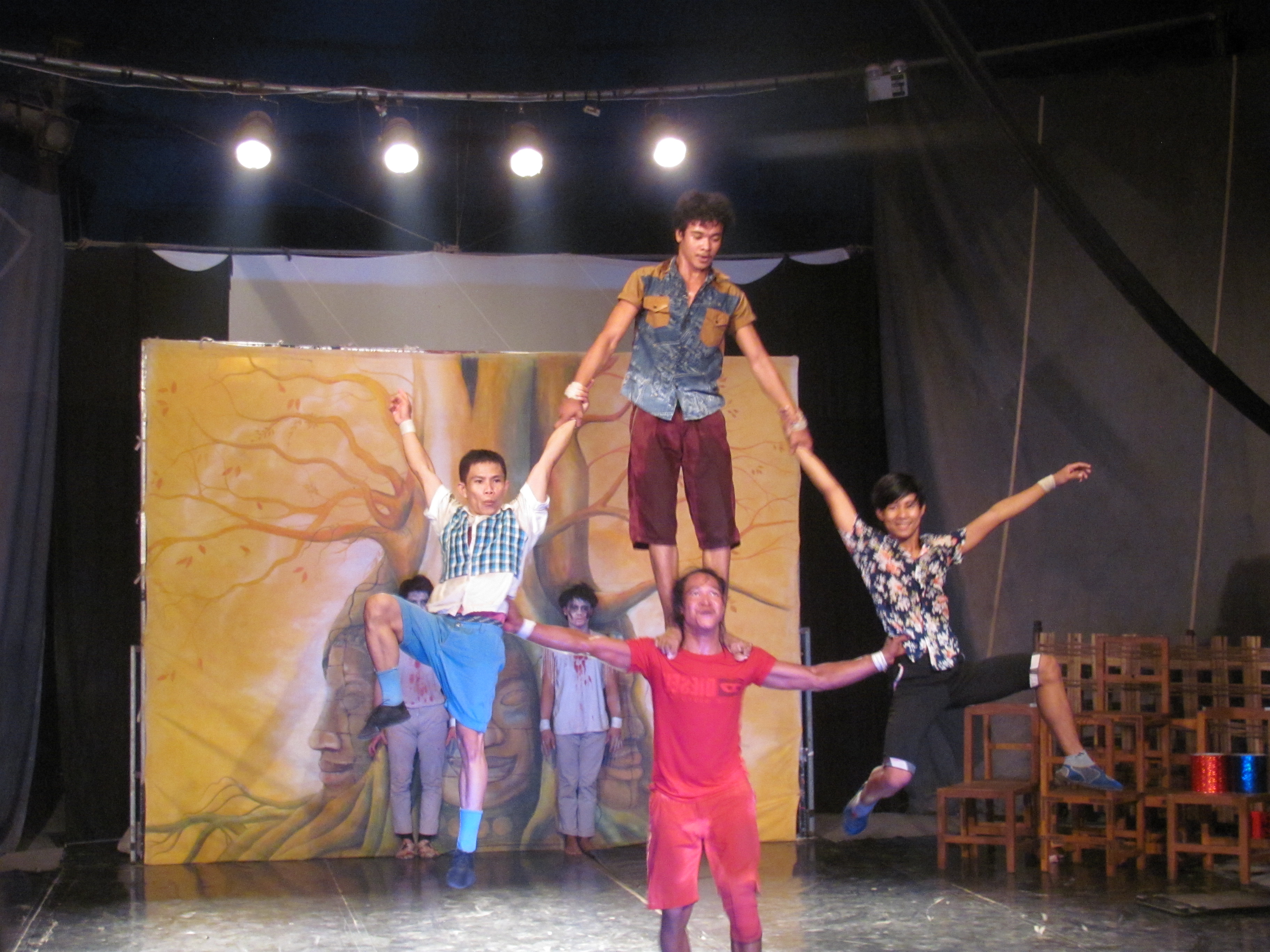
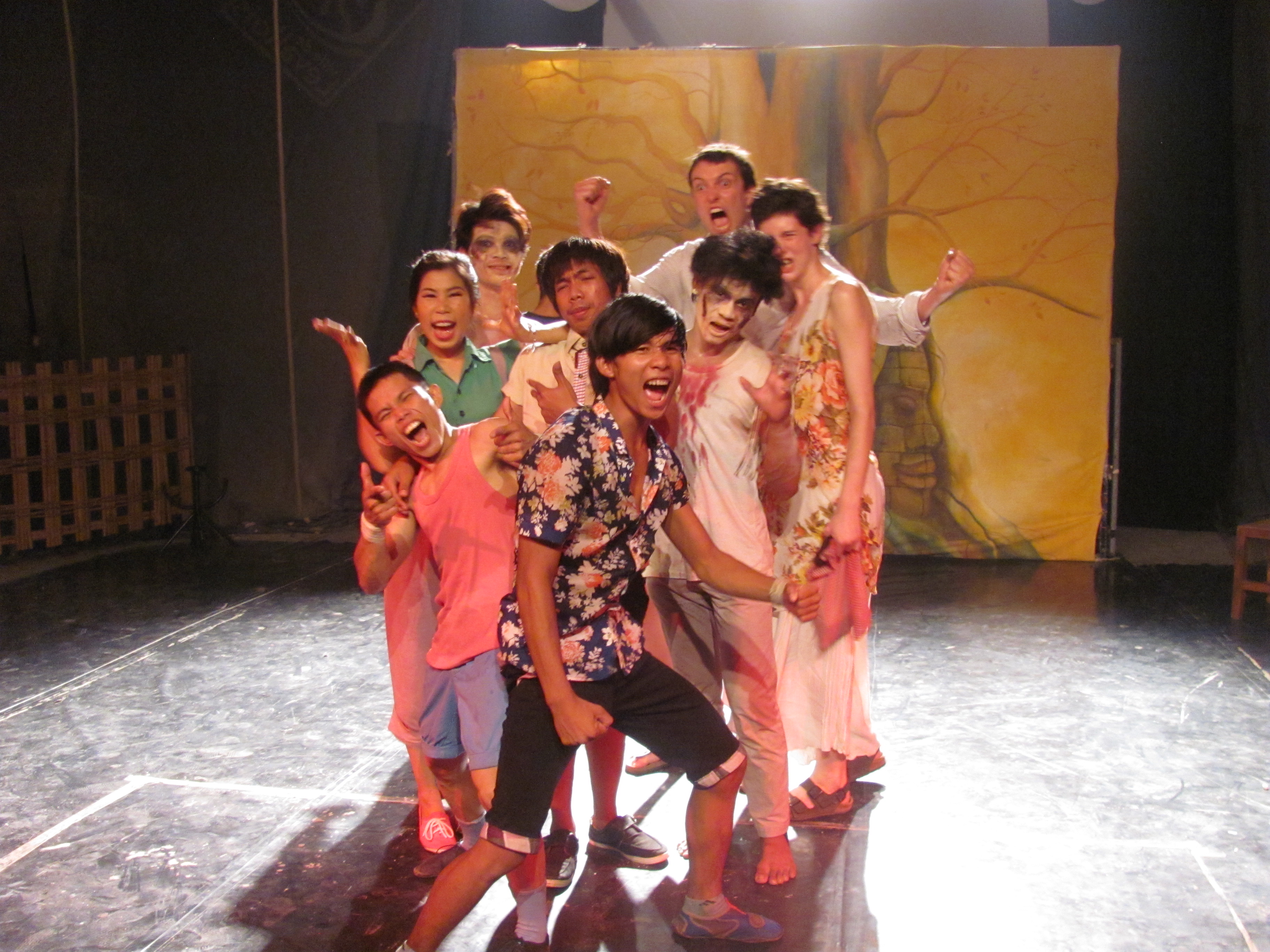
The ongoing work of Decrops’ vision was very evident in the premier of Chills the performance I attended. The young performers connected instantly with the audience so much that there were times I was sitting on the edge of my seat as yet another more daring twist, flip or balancing act was executed on the small stage in front of us.  These guys and gals were true performers – professional all the way, yet engaging and sincere in spite of the heat which made their bodies so wet that I was certain one of them would slip and have a serious fall. At the end of their performance, they were all there to let us come up on the stage to congratulate them or take a picture. In the spring, they will travel to France and from there take their show on the road to other parts of Europe. Graduates of this school have now set up a professional group in Siem Reap with nightly performances and when not high season there, they tour the world making a name for themselves as the Phare Circus. Circle de Soliel had better keep an eye on this group!  You can find out more about the school and the group at http://www.pharecambodiancircus.org.


A hard act to follow.

A hard act to follow.

The troupe after their very energetic performance.

The troupe after their very energetic performance.

To escape from my hotel room and my computer problems, I crossed the river to stroll around the down town of Battambang. On my walks I met some incredibly interesting people. One of the first places I walked into was Bric-a Brac where almost immediately I was greeted by one of the most energetic and engaging Cambodian girls I have yet to meet on my travels here. Lisa was her name and because her English was very good, we were able to talk about many things especially the changing role for women. She left her rural family home to come to Battambang on her own to learn English and to attend university to study International Law. When not studying she is working at Bric-a-Brac making crafts and serving customers. By nature Cambodian girls and women are shy and quiet, but they are gradually becoming empowered. Many have worked with volunteers at various NGO’s to learn confidence building skills and are now practicing them as she is doing.

Then I met Kimleang at Green Lotus Tours and Coconut Jewellery who was also busy making attractive bracelets out of recycled bottle tabs and rubber. She is another enterprising young woman who has left her family home to pursue her own dreams. She has started a small school in a nearby village and struggles to keep it going by crafting and selling her jewellery for the enterprising young Cambodian fellow whom she works for.

Kimleung showing one of her finished products.

Kimleang showing one of her finished products.

Typical Cambodian friendliness.

Typical Cambodian friendliness.

The next day as I was walking along a side street lined with various art galleries, a man on a motor bike stopped me to ask in perfect English what the difference was between “shall”and “will”. I was nonplussed! Reaching back into my memories of learning and teaching English grammar, I was able to come up with a fairly accurate definition for both. He quickly hopped off his bike, took off his helmet, and suggested we sit at a nearby bench so he could talk some more. He got right to his point which was to tell me a bit about his past during the Khymer regime and what he was now doing to help rebuild his country. I was impressed but couldn’t help but be somewhat skeptical since there are always the scammers who want your money for a good story. However, this fellow even had brochures about his school, and was going so far as to carry a huge book with names of all the donors who had given something or volunteered at the school. Now I was doubly impressed! You guessed it: I became another of his donors. If you want to read more about his school go to : www.slarkramenglishschool.com.

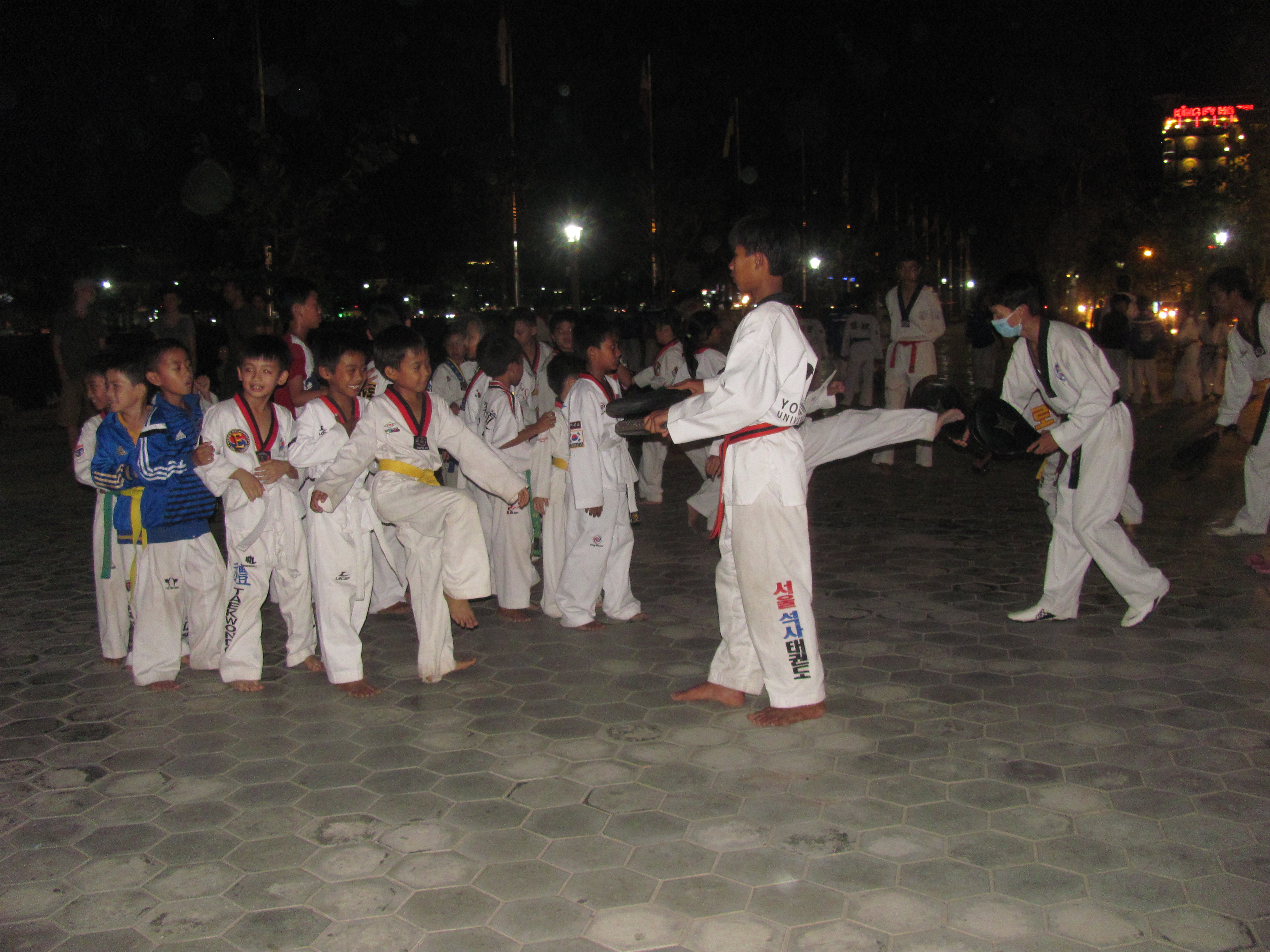
The children in Cambodian are so visible which is to be expected in a country where old folk are a rarity. We need to remember that many of them never survived the Khymer Rouge regime when over one fifth of the population was killed. In the cities at least, it appears that the main focus of the parents is get their children educated as best they can. In the evenings you could see groups of kids being coached in what looked like judo or tai kwan do. At all hours of the night parents were playing with their children in the parks along the river. Physical activity seemed to be high on their list of nightly activities. I didn’t see many kids playing with their I phones, and I certainly did not see one obese kid!

Kids keeping active with judo.

Kids keeping active with judo.

Many of the schools in Cambodia were set up and are run by NGO’s which are considered to be far superior to the government schools which are underfunded and totally corrupt. There was an  NGO school located next door to my hotel and every morning at precisely 7 a.m. I was awakened by the children as they sang their national anthem before heading inside for their classes. I learned from a very interesting American teacher that this school like many of the NGO schools is failing to provide the kind of education needed by the Cambodian students which helped me understand why I had met two Cambodians this year and one last year at the Meas Family Homestay who were setting up their own.  His job now was to visit all the schools in the area to determine if the level of English instruction was meeting expectations and in the best interests of the children. Time and time again I heard from the Cambodians that the only way for them to move forward and to get their country back on its feet was to learn proper English.

Students heading to class at the NGO school next to my hotel.

Students heading to class at the NGO school next to my hotel.

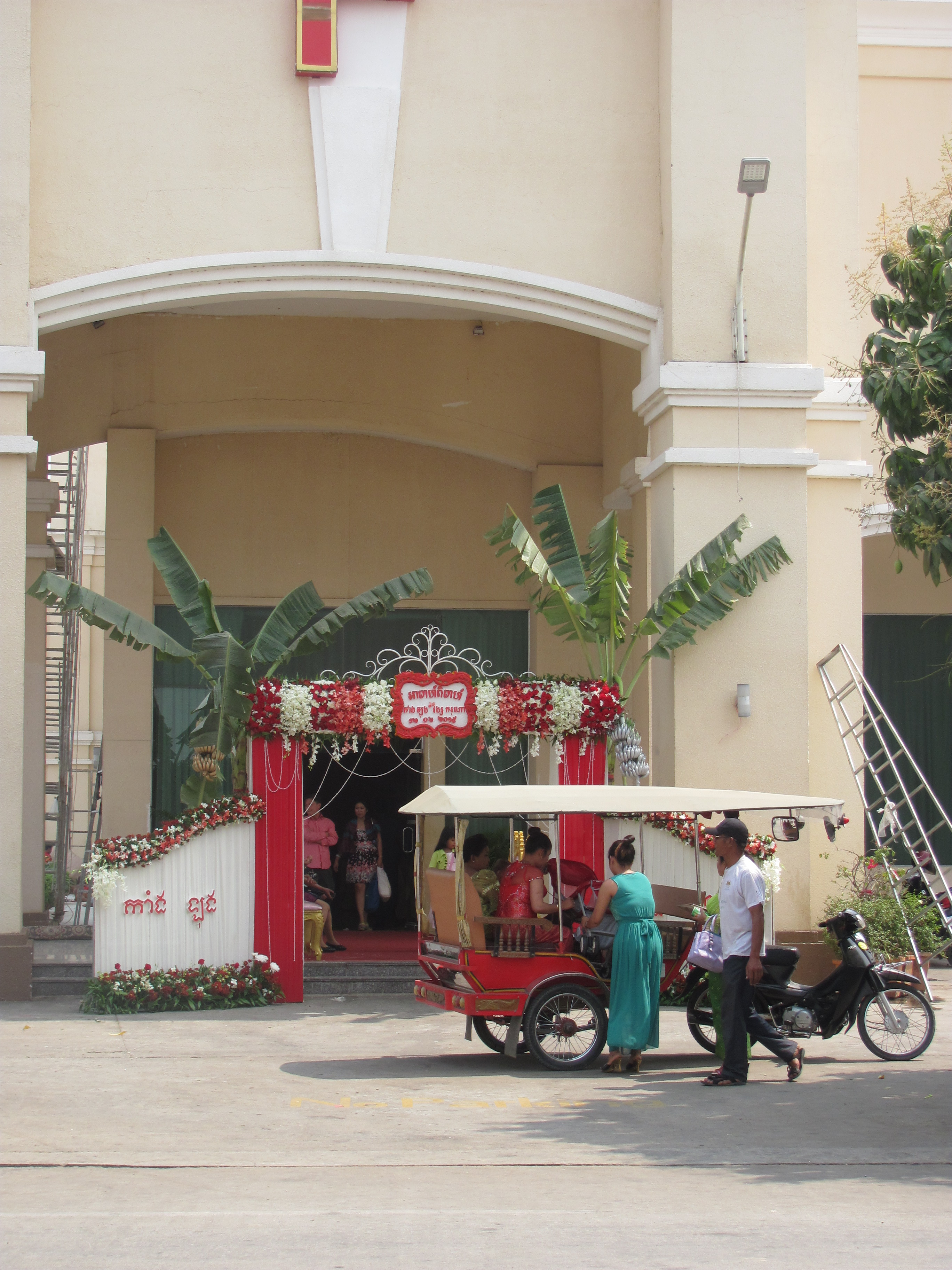
On my walkabouts I also witnessed several locations where colourful tents had been erected for wedding ceremonies. It seems that Cambodian weddings can take place over several days so tents are put up with beautifully decorated tables and chairs for friends and neighbours to come and give their blessings to the bride and groom and their families. The same is done for funerals with the only distinction being that everything is laid out in white. Such ceremonies are not carried out by monks in the temples; however, the monk does come to the families with their prayers and blessings.

Preparing the tent for a Cambodian wedding.

Preparing the tent for a Cambodian wedding.

Maybe I didn’t get to see many of the sites that Battambang had to offer and perhaps too much of my visit was taken up with trying to get my computer problems ironed out, but the one thing I do know is that I will not forget all the beautiful Cambodians and a few barangs (Cambodian name for foreigners) that I met while I was there. I felt a tremendous feeling of renewal among those I talked to, and my sense is this can be traced back to the creation of the Phare visionaries and the good works that this organization is still carrying on today.

Escape to Kampot

For those readers who read the post I published yesterday, I want to offer my sincere apologies, but also thank those who had something kind to say about a job only half way completed. I did what every writer must have nightmares about: I mistakenly hit the publish button before my post was finished or edited. This is the finished rendition complete with a picture gallery, I hope.

After more than two months in the busy cities of Chiang Mai and Phnom Penh, I was ready to escape to the sleepy, laid back town of Kampot in southern Cambodia. I fell in love with this charming, French colonial town last year so was compelled to come back again. I stayed in the perfect place for me: a guesthouse called Mea Culpa about a ten minute walk from the centre of the town in a quiet garden setting. You can take a closer look by following this link: meaculpakampott.com.

Most of my week was spent working on my latest post “Phnom Penh Revisited”, reading, and sampling good food and coffee at some of Kampot’s excellent restaurants and cafes. I really think I could spend a month trying out all the eating places in this little town. Here are the ones I tried and can recommend:

  • Om House for a tasty fish amok, one of Cambodia’s signature dishes. Everything is prepared using fresh, organic ingredients.
  • the Espresso Cafe for the most delicious coffee roasted on the premises and the banana pancakes with a caramel and sea salt syrup to die for.
  • the Kampot Pie and Ice Cream Palace for a breakfast of Mary’s Bird Nest (egg embedded in a large piece of toast and topped with cheese) accompanied by an excellent cup of coffee.
  • the Kampot Kooker and the Honeymoon Creperie both located on what is commonly known as “Eat Street” and both good for tasty and inexpensive dinners.
  • the Greenhouse about five kilometers up the Kampot River in a beautiful setting with the restaurant and patio looking right over the river. I had their French breakfast of juice, coffee, and croissants which was delicious. It was well worth the long bike ride up there! If you wish to read more about this little haven and how it originated then go to greenhousekampot.com.
  • and finally, I ate at Mea Culpa which has its own restaurant serving food all day if you haven’t got the energy to walk to town. They are famous for their wood-fired pizzas which I do recommend and their appetizers which are almost big enough for a meal.

By mid-week I was ready to explore some of the outlying areas of the town so signed up for tour of the countryside which took me to visit the salt flats where salt is harvested from the sea, a local pepper plantation where the famous Kampot pepper is grown, a Muslim fishing village, a temple cave, the Secret Lake which isn’t so secret where no one seems to know how it got its name, a trip to the nearby town of Kep for lunch at the Crab Market, and finally, a visit to the beach. We were a group of four and none of us was prepared for the crowd we met at the beach. Since it was the Chinese New Year, families from as far away as Phnom Penh had come for a swim and to picnic.   Towards the end of my stay, I decided to pamper myself with a massage at the Banteay Srey Woman’s Spa. This spa was started by a Canadian woman from British Columbia as a project to give poor Cambodian girls the training necessary to get them off the streets of Phnom Penh into an honorable profession where they can now proudly display their skill at administering healing massages and cleanses and surprisingly creative henna body art. I had one of the best massages ever, consisting of a total body scrub with milk and turmeric followed by a steam bath of fragrant herbs. When finished my skin was a soft as a baby’s and I felt wonderful – at least 20 years younger!

Although some travellers might find Kampot just a little too laid back, the majority of Cambodians as well as the French colonials who helped build it used it as a place to chill out and to escape the heat and chaos of the city. Those who come here to visit or stay prove this is still true today. For instance, many of the restaurants, resorts and guesthouses are owned and run by ex-pats from Europe, Canada, and the US. They all love the lifestyle and are working hard to maintain it. There are still some of the old French buildings needing repair but many have been restored to their original glory. Not only the architecture but also the scenic riverside boulevard which is unmistakingly French is helping to preserve the charm this town has always been noted for. It is still a great place to escape to and I feel hopeful it will remain so.

Phnom Penh Re-visited

After a hair-raising but eye opening ride from the Phnom Penh airport to my hotel, I have since been questioning just how this city, the capital and pulse of Cambodia, ever earned the reputation for being SE Asia’s “Pearl of the East”. This was my second visit having been here last year with my husband. Admittedly, I experienced some culture shock on my first day last year which I wrote about in a previous post entitled “Soaking up Phnom Penh”. However, I quickly banished any reservations I had about the disparity between the rich and poor, the heaps of garbage piled on every street corner, and the chaotic traffic when I fell under the spell of the smiling and very hospitable people. Was this year any easier? Surprisingly it was not since the three offenses that assaulted my senses last year had an even greater impact on them this year.

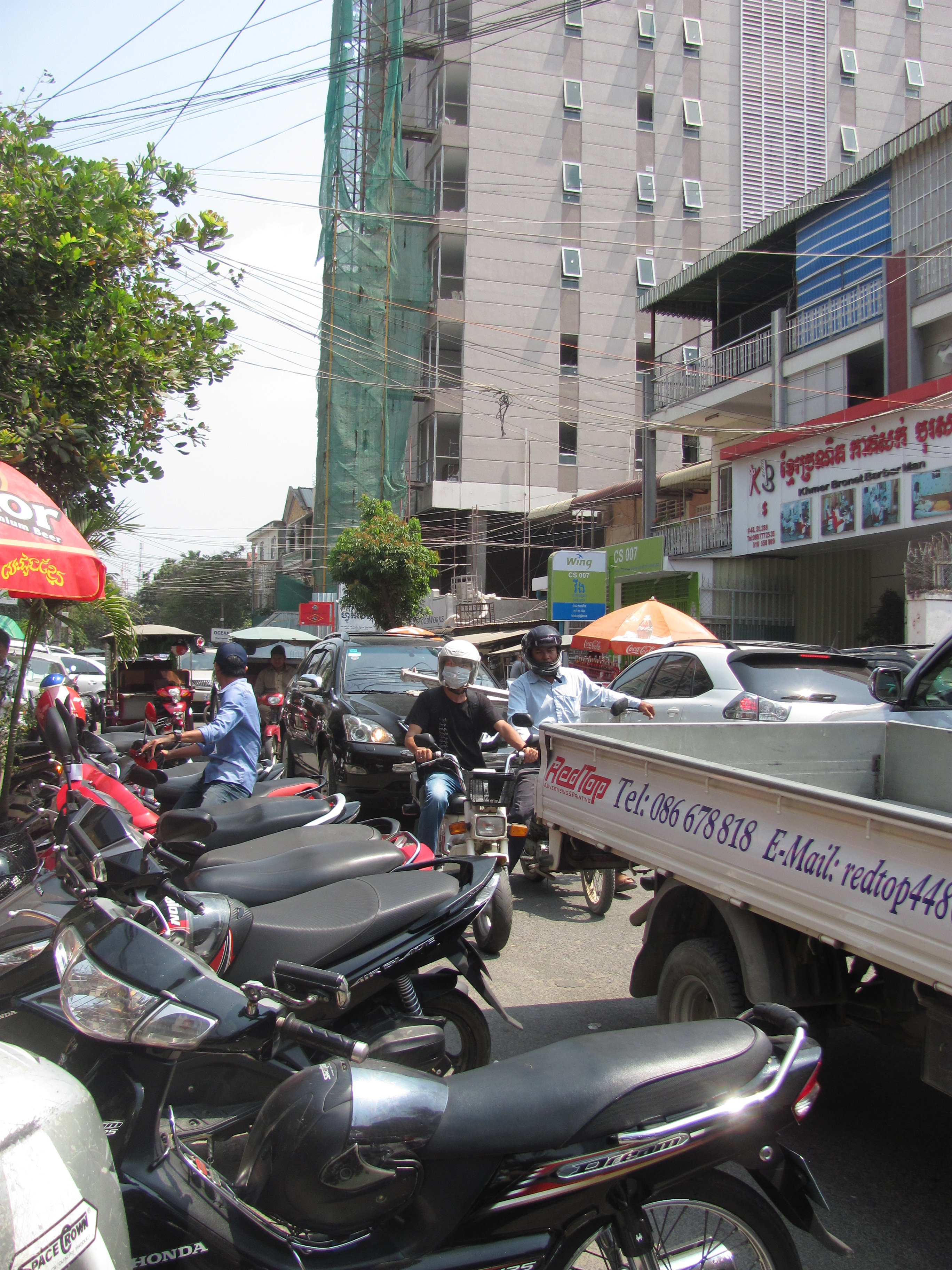
The traffic is always the first thing that has to be dealt with if you arrive by plane at the airport as I did. You have the choice of using a taxi or a moto-car or tuk tuk as it’s commonly called. Since I try to travel on a budget, I again chose to hire a tuk tuk driver. Last year I was awed by the dexterity of my driver who managed to weave in and out of the chaotic traffic with such ease. This year was somehow different. Many of the moto- car and motor bike drivers were not so serene and were showing some obvious signs of distress. They were all taking risks that literally took my breath away and caused my driver to actually swear. My mind flashed back to the New Delhi drivers who had to fight for every inch of space to keep moving forward. Now I realized this was happening in Phnom Penh. When I looked around me, I was dismayed to see that we were surrounded by monstrous vehicles taking up so much space that they were literally forcing all the other vehicles up onto the sidewalks. To make matters worse some were coming at us going in the wrong direction. I must have witnessed at least a hundred near misses on that ride to my hotel. After a few more days of walking the streets, I realized just how these vehicles were making the pedestrians’ lives miserable by taking up their sidewalk space as their parking lot. There was hardly a small car to be seen anywhere! A journalist friend explained why there are now so many. Apparently every year government workers are rewarded with big bonuses and the huge monster vehicle has become the unanimous choice for everyone. Naturally, they bring them to the centre of the city for business and pleasure to show off and gloat in the fact they never have to walk anywhere.

Monster vehicle parking lot.

Monster vehicle parking lot.

Traffic jam.

Traffic jam.

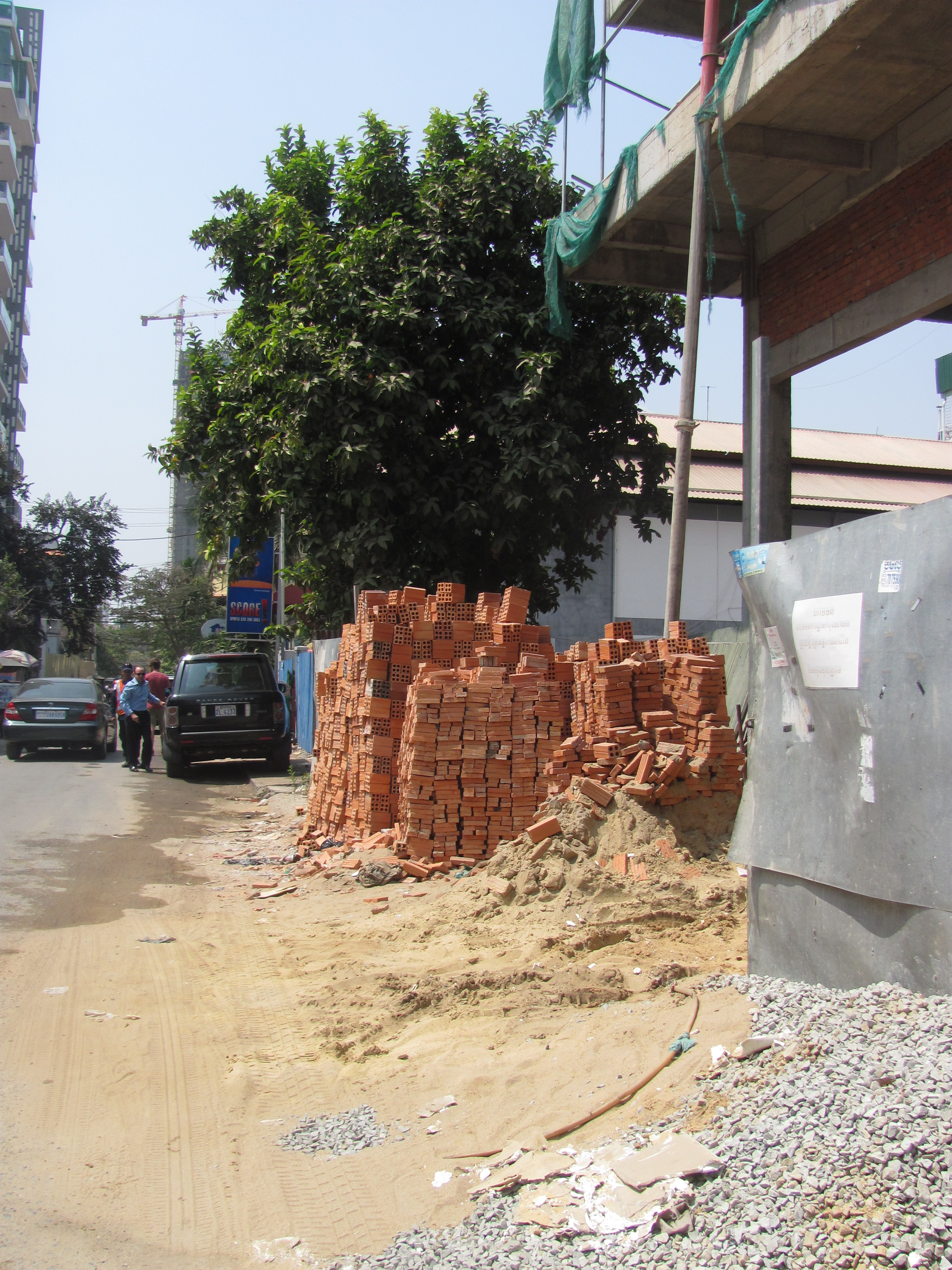
I had to laugh after reading a brochure published by the city’s tourism department claiming that it was a wonderful city for ‘leisurely strolls’! Like many tourists I love to walk around a city to get a proper feel for it and to take photos which are often the impetus for my blog posts. I would guess that it is now one of SE Asia’s worst cities for walking. Not only are pedestrians having to contend with the traffic, but also the seemingly endless construction, destruction, and reconstruction projects going on at this time. The sidewalks are littered with piles of earth, bricks, building materials, and whatever else it takes to build yet another huge hotel, luxury condo, or office tower adding another challenge to any kind of safe walking. The People’s Party of Cambodia is committed to reviving this city’s former status as the “Pearl of the East” at any cost by allowing such extreme over development.

One of many sidewalk hazards.

One of many sidewalk hazards.

Another luxury condo under construction.

Another luxury condo under construction.

The Nago casino under construction.

The Naga Casino under construction with moto-bikes (tuk tuks) in foreground.

The third problem facing visitors and residents, is the proliferation of garbage. Last year the problem was blamed on the garbage collectors strike, but this year it’s even worse and there is no strike. I read in the Phnom Penh Post that the company the government has contracted to do the job isn’t fulfilling their end of the deal so they will be looking into it. They are concerned that it will offend the tourists but no mention of how the residents are being affected! I’ll have to come back again next year to see if they have carried out their promise. Unless by some miracle the ‘powers that be’ wake up to the corruption that has taken over this country the garbage heaps will still be there

A typical garbage-ridden street.

A typical garbage-ridden street.

Along the Tonle Sap River.

Along the Tonle Sap River.

I remember last year on my first day here, I was appalled by the stark difference between the rich and the poor. There was little evidence of any kind of middle class. The divide is still very much in evidence. The rich, who are mostly Cambodians who work for the government and some of the NGO’s who work here, are driving all those big cars, living in the opulent mansions, and eating in the upscale restaurants. The poor are having to live on the streets or in inadequate buildings where their rents are increased every time they get a meager increase in wages. They are by no means doing any better and from what I have seen or heard are doing worse. Land in the city which has now become valuable real estate is being bought up at ridiculously low prices by the developers. This results in a huge problem for those former land owners as they cannot afford anything in the city so hence could easily end up on the streets. As I walked along the riverfront boulevard or Sisowath Quay, one of the main tourist attractions lined with chic shops, restaurants and bars, I noticed more obviously poor families trying to eke out a living by selling drinks or flowers with what looked like their few family possessions and children surrounding them. One doesn’t have to look far to see such extreme poverty in Phnom Penh and to have it so close to this touted tourist area and not far from another huge project being build on Diamond Island for those with the money is upsetting to witness.

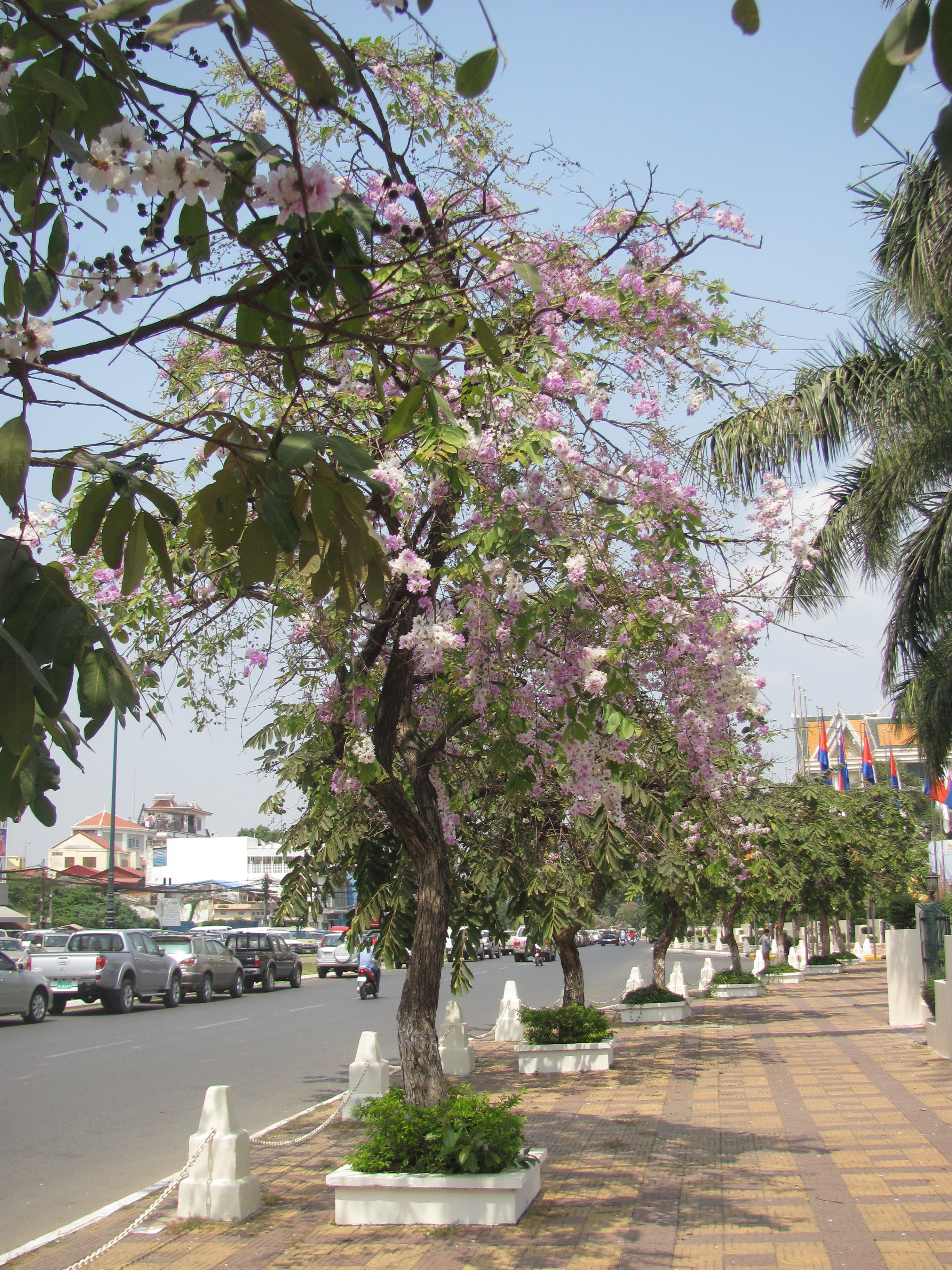
Sisowath Quay along the riverside.

Sisowath Quay along the riverside.

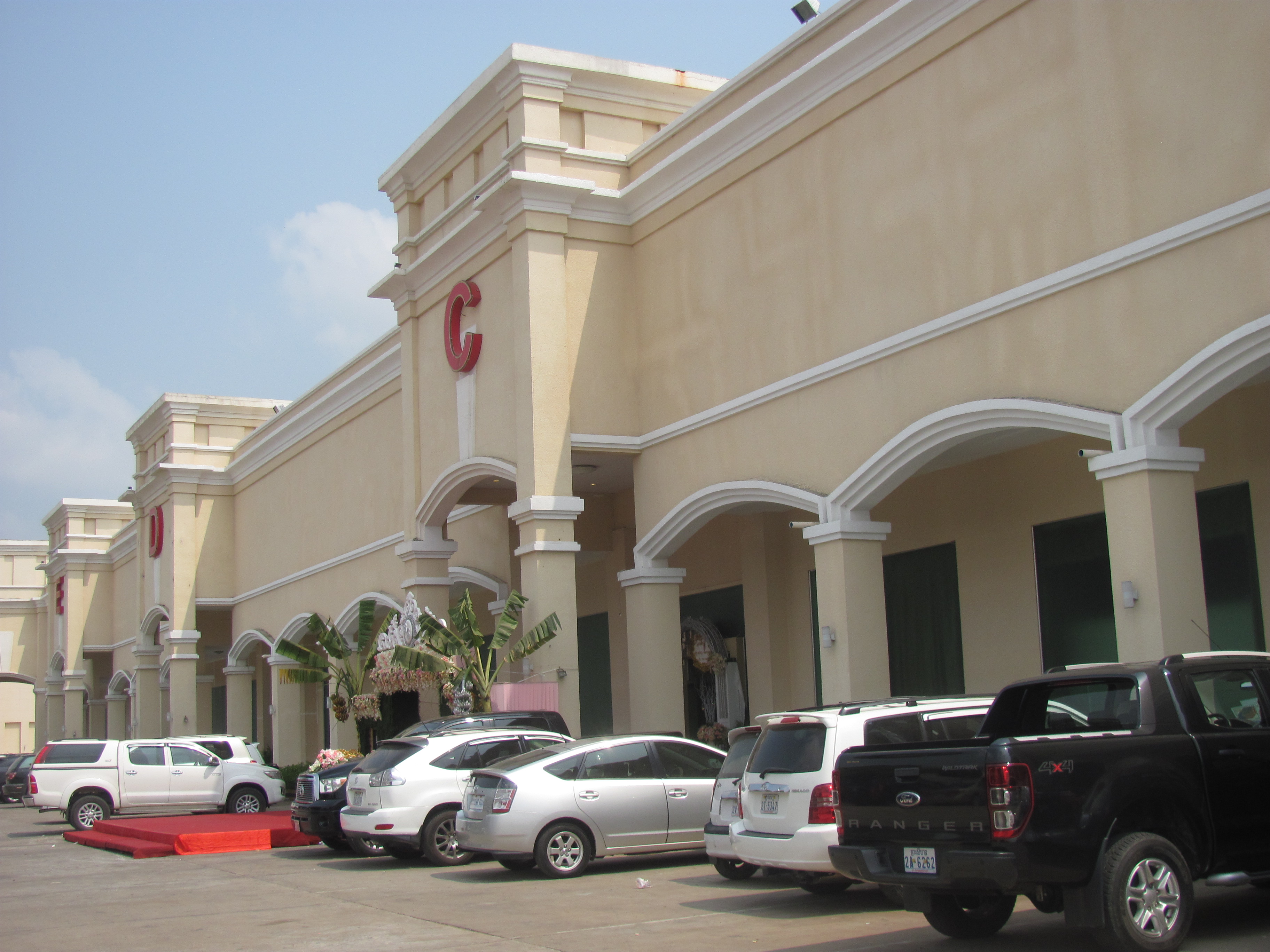
Huge hall where lavish weddings are held.

Huge hall where lavish weddings are held on Diamond Island.

Wedding party after the ceremony.

Wedding party after the ceremony.

Once you adjust to the social conditions of a good portion of the over 2,000,000 people who live in Phnom Penh, you begin to appreciate what the city has to offer. Since I am one of those who thoroughly enjoys their excellent coffee and food, not to mention all the places I have stayed in which are just as good if not better value as in Thailand or elsewhere in this part of the world, I need to give some credit to those countries i.e. Japan, Thailand, Viet Nam, China and some European countries, who have played a significant part in bringing Phnom Penh into a destination to be seriously considered by a growing number of tourists. For a long time the tourists who ventured to Cambodia came to see Angkor Wat in the north and then headed south for Sihanoukville to cool off after clamouring over the ruins of Angkor. Very few would stop for any length of time in Phnom Penh. It’s truly surprising when you take the time to remember that the city’s infrastructure still lay in ruins and life here was pretty rough as late as the 1990’s after the Viet Nam war and the rise of the Khmer Rouge. For three years at the height of the Rouge tyranny, it lay practically deserted after most of the residents were led astray and herded out of their homes en mass with nothing save the clothes on their backs. Most of them were executed never to return. A memorial to this horrific event has been erected in the Killing Fields where the bodies were buried. This site, as well as a former school which became infamous as the Toul Sleng Genocide Museum where people were held until executed, have become popular tourist sites for visitors who want to learn more about the madness that overran this country in the ’60’s and ’70’s.

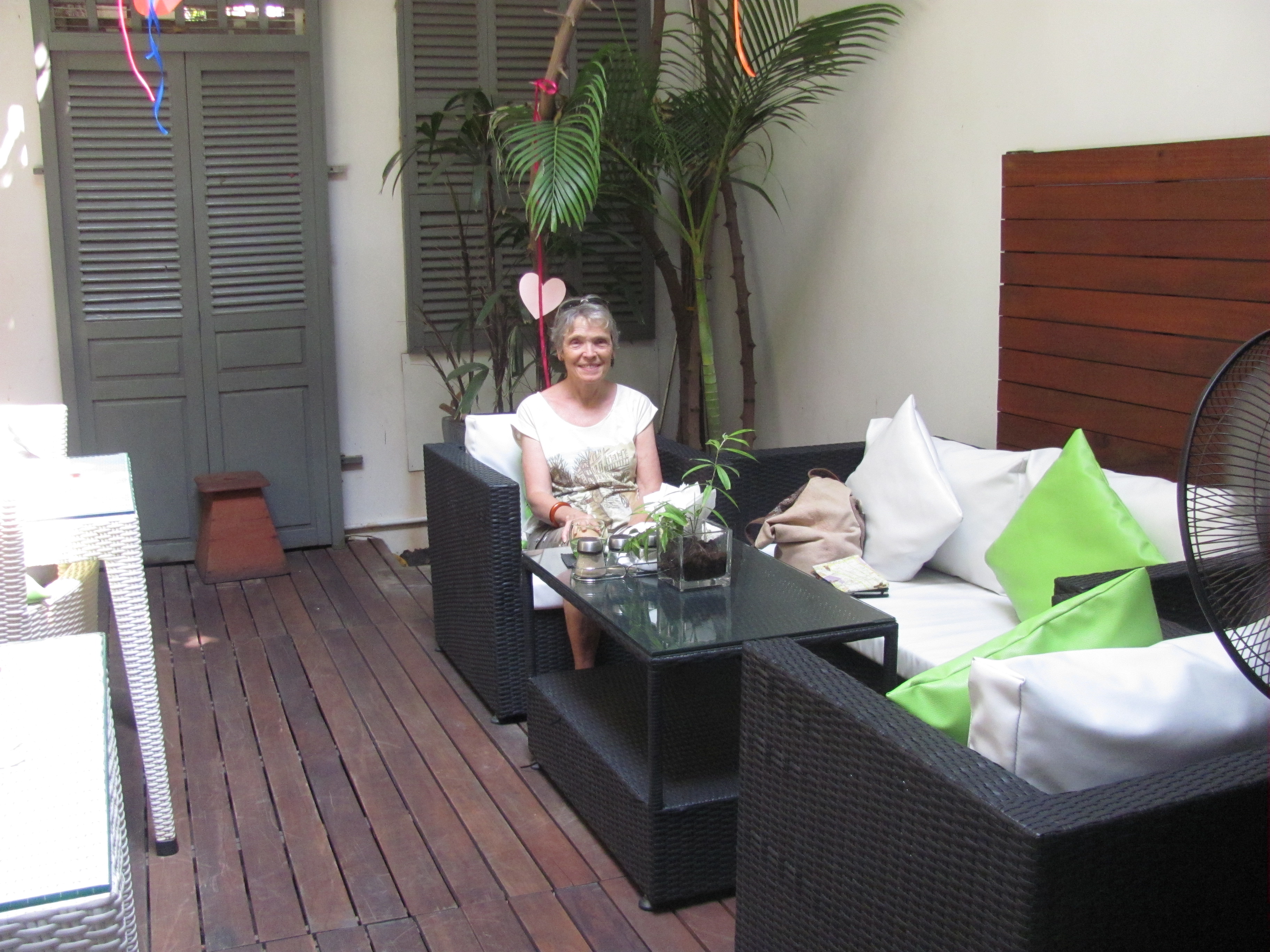
My favourite drink from a popular cafe near my hotel- the Golden Gate.

My favourite drink from a popular cafe near my hotel.

Lunch at the Tea Garden - a little hidden gem on tiny congested street.

Lunch at the Tea Garden – a little hidden gem on a tiny congested street.

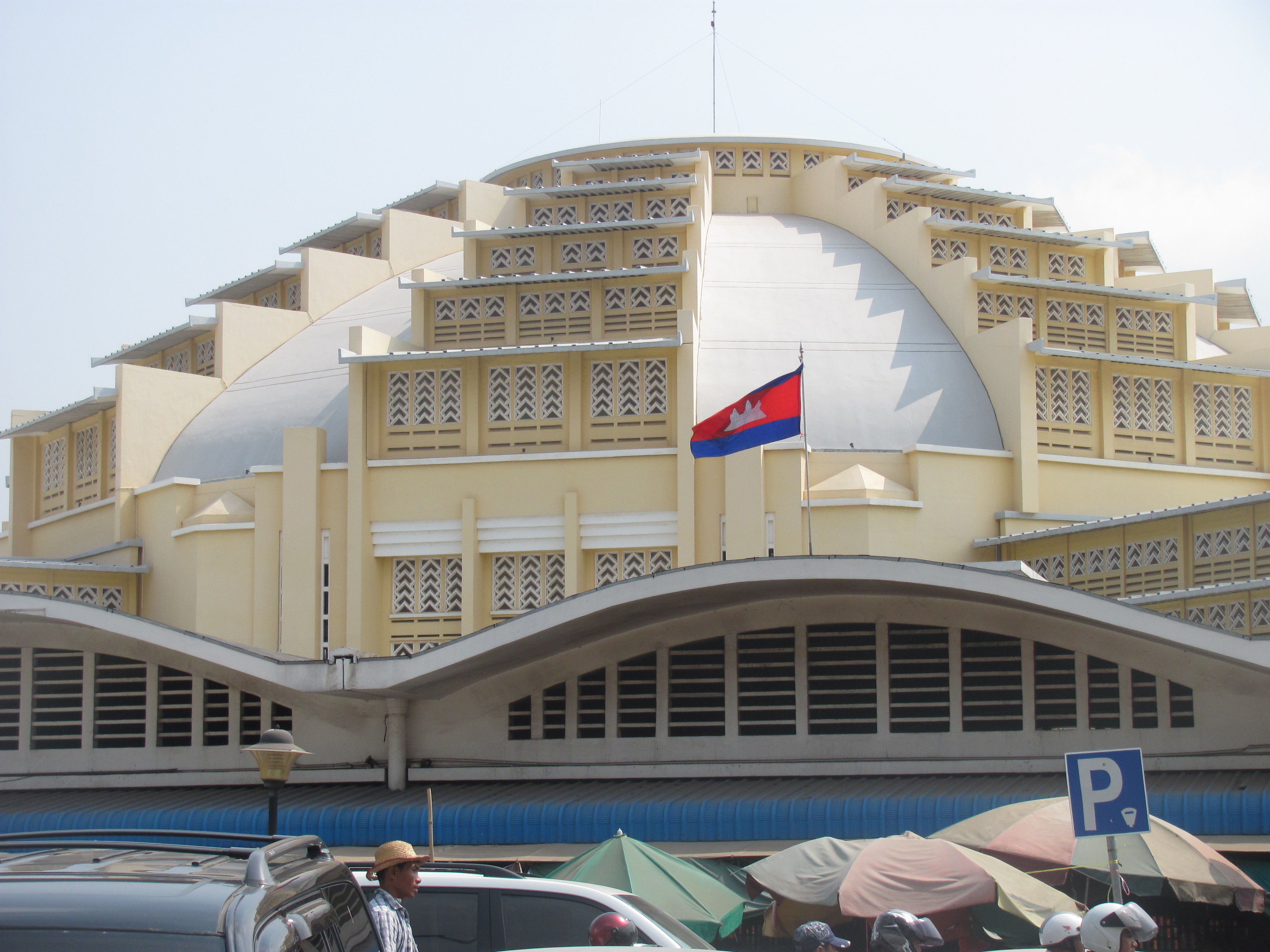
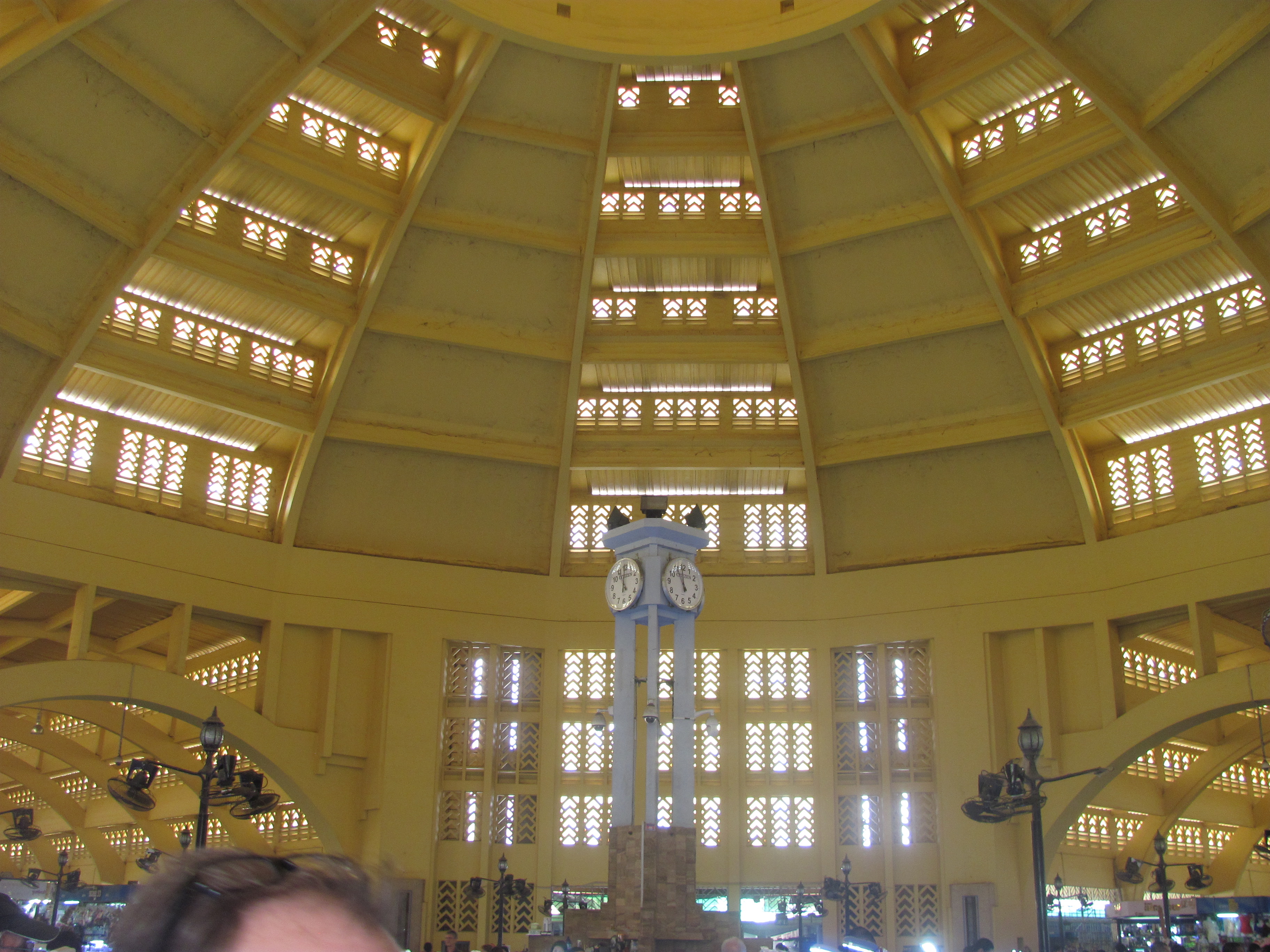
If visitors to Phnom Penh find the remembrance of the havoc brought by Pol Pot and the Khymer Rouge to this city as a bit too heavy to take in, there are other sites of more uplifting historical periods to see. Even though this city is fairly young dating back to 1858 when it was declared the capitol of Cambodia, and thanks to their then King, Norodom, it quite quickly grew from village status to that of a glamorous city influenced by the King’s passion for anything French. The city saw a building boom of structures heavily influenced by French architecture mixed with some Khmer. It was during his reign that the Royal Palace with its Silver Pagoda and the National Museum were built. My husband and I visited both of these attractions last year and learned much about the greatness of the Khmer civilization and the more prosperous times in the past. This year it was time to visit another talked about building with unique features dating back to the the king who succeeded Norodom – King Sihanouk- who unlike his father had a passion for all things Art Deco. As a result, Phonm Penh has probably the most interesting building in Asia devoted to a huge market housing thousands of vendors. Goods from gold jewellery, gems of all kinds, beautiful fabrics, souvenirs, flowers and hardware can be found here. The Central Market as its commonly called or Phsar Themi in Cambodian was built 1935 in the shape of a dome with four wings jutting out from each side. Its gold painted dome is visible from all parts of the city as it sits right in the middle. Although getting there was not easy (I actually broke down and took a tuk tuk) once inside I found one of the cleanest and most well-organized markets I have ever seen. I can say this because not once did I get lost. I also did not find the vendors to be too ‘pushy’ and the prices to be fairly reasonable. I had no intention of buying anything until I ran across some very lovely silk scarves which I simply couldn’t resist. Cambodia is known for its quality silk and these certainly are good examples of that claim.

Entrance to the National Museum.

Entrance to the National Museum.

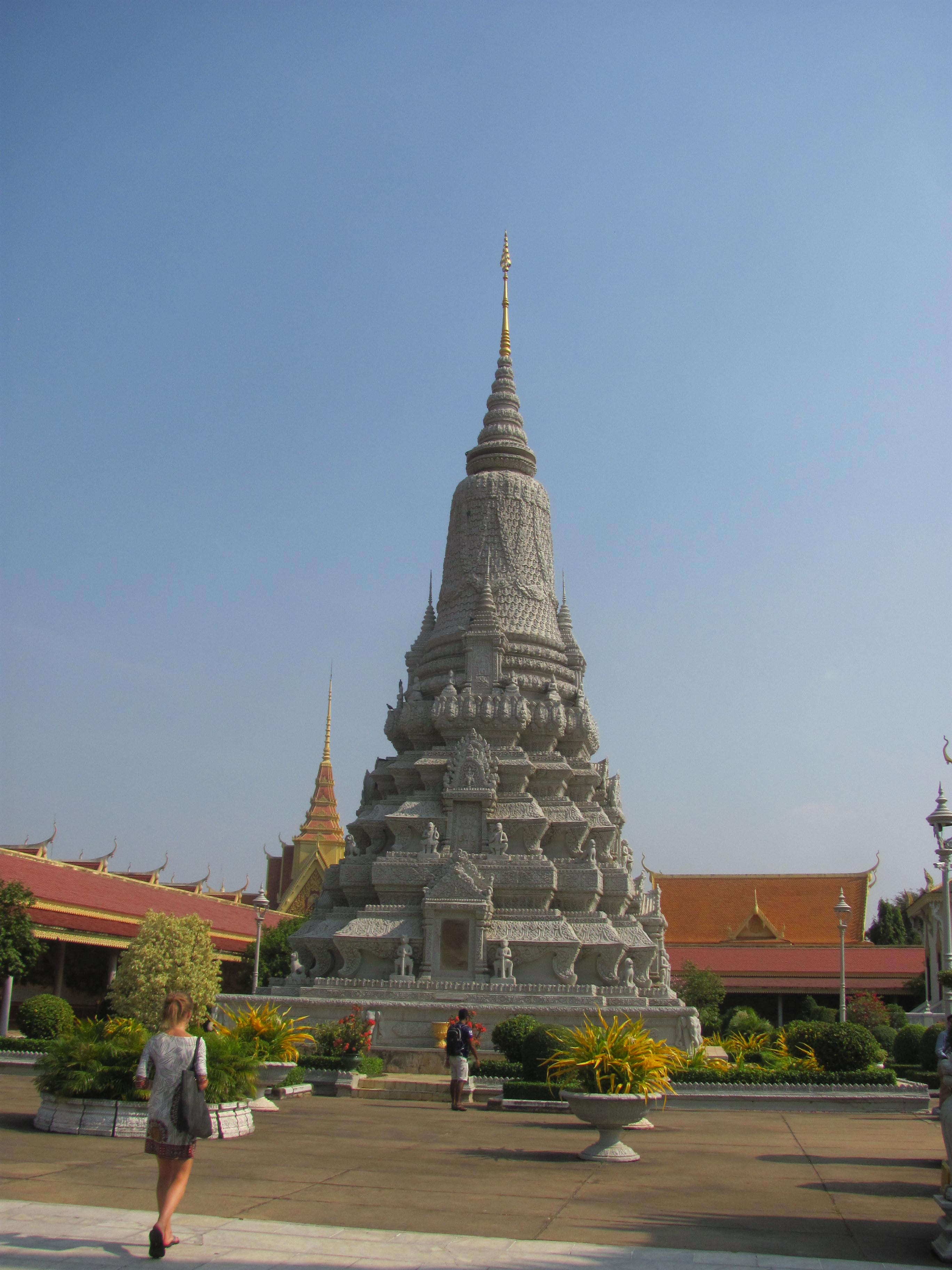
The Silver Pagoda on the grounds of the Royal Palace.

The Silver Pagoda on the grounds of the Royal Palace.

Approaching the Central Market.

Approaching the Central Market (Phsar Themi).

One of the four entrances.

One of the four entrances.

Inside the dome.

Inside the dome.

Doing a brisk business for Valentine's Day.

Doing a brisk business for Valentine’s Day.

As I reflect upon my four days in Phnom Penh, I realize that it’s not an easy city to visit if you are on your own and on a budget. It does take some adjusting due to its problematic social concerns as a result of its power-hungry political leaders and just a few too many non-government agencies who do good things but take away the responsibility of the government to do more. Aside from poorly executed social services and politics, which have caused many of the present day problems facing this city, the pulse of the city which draws people like me back are the people. In spite of their past and their present, the majority of them that I have met are still smiling and they are still honest. I do not get the impression that they are out to service the influx of us tourists simply for the money. They are genuine and want to help. I hope whatever happens to them in the future doesn’t change them. One thing they have going for them which I think helps to sustain them is that they have had a peaceful country now for over 20 years. After what they went through in the Pol Pot years, it’s easier for me to understand why they can endure so much.

A rare quiet street in the city.

A rare quiet street in the city.

Celebrating Chinese New Year.

Celebrating Chinese New Year.

A Day Trip to Mae Salong

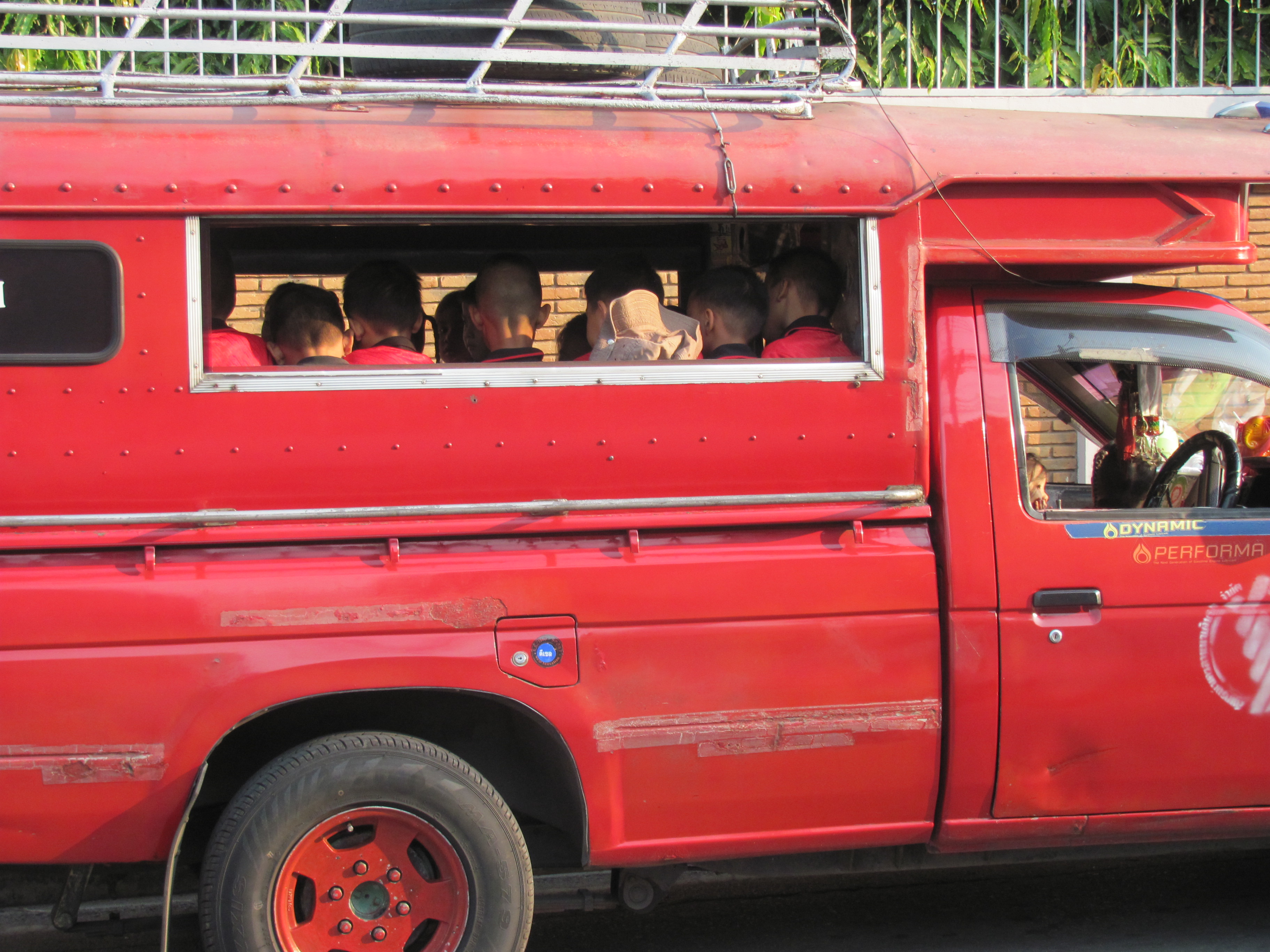
Three days to see and do all the things I wanted to during my recent trip up to Chiang Rai were not nearly enough as I wrote in my previous post. However, I am congratulating myself for taking my last day there to venture outside the city to one of several interesting Hill Tribe villages in the surrounding area. All of these towns/villages would have been more easily accessible if I had a motor bike, but that’s an activity I am not fully qualified for at this time. So instead I chose to get to my destination using the available public transportation which happened to be a local bus and then a songtao. *

Children going to school in a songtao.

Children going to school in a songtao.

Continue reading

What About Chiang Rai?

Chiang Rai or Chiang Mai? Are they two separate cities or do we just confuse the two for the one which we all know and that is Chiang Mai? To set the record straight, they are definitely two separate cities with many differences. I have been coming to Chiang Mai for eight years but only visited Chiang Rai for the first time last week. So many times I have heard the same refrain: “Why do you want to go way up there? There’s not much to see and do. It’s just a miniature of Chiang Mai as it was 20 plus years ago.”

By not heeding this advice, I believe I just made one of the wisest decisions I could have made to start off this year of 2015. I am so glad I went and only have one regret which is, I wish I had planned to stay longer. Contrary to all the naysayers, I found a thriving little city with plenty of things to see and do, so many in fact that if I had stayed for two weeks instead of three days, I would not have accomplished all I wanted to do.

Because of the pouring rain on the day I left, my bus trip up didn’t get off to a great start. Rain in the midst of winter and the dry season is rare in Thailand, but who knows any more what we are going to get when it comes to the weather? Fortunately, I had an umbrella (lent to me by my wonderful dentist the day before when the rain started) to protect me as I stood on the street outside of Pachkit House where I am staying trying to flag down a songtao (the red trucks which ferry us around Chiang Mai).

Chiang Rai is Thailand’s northernmost city about 200 km. north of Chiang Mai. Northern Thailand is more mountainous so we weren’t too far out of Chiang Mai before the fog set in along with the driving rain. With no prospect of seeing any of the beautiful scenery, there was only one of two things to do and that was to attempt talking to my young Thai seatmate, or sleep. I thought I would first try my luck at conversation fully expecting no positive response other than “No speak English” but was totally taken aback when she replied to my question in almost perfect English that she was a university student on her way to Chiang Rai to participate in a volunteer project for Children’s Day, which was coming up the following day. We ended up talking for most of the  three-hour ride on many topics, an opportunity which seldom happens in Thailand because most Thai have a limited English vocabulary or are too reserved to open themselves up to a foreigner as much as she did. Not only was she articulate but very insightful for a person so young so when we parted ways on our arrival, I couldn’t help feeling I was leaving behind a true friend. This was a wonderful start to my visit to Chiang Rai which continued throughout my stay.

To me one of the most important parts of a trip is the accommodations I find. I was fortunate to find Jansupar Court, a family owned guesthouse near the centre of town with a great atmosphere. The family consisting of mother, father, son, daughter-in-law, and a precocious cat were so very welcoming that when I checked out I felt like I was leaving home. Not only was it good value for the money, but it also had a little bistro which not only provided some really good food, but drinks, including wine at 75 baht a glass, and for breakfast homemade bread and real coffee. You can even get a pretty good cappuccino made by Jiab, the son. For information on Jansupar, you can check out places to stay in Chiang Rai on booking.com.

Jiab with precocious cat.

Jiab with precocious cat.

Another priority of mine is the availability of good eating places and Chiang Rai certainly has its share of those. They know what the tourists want so there is no lack of great coffee shops and bakeries plus authentic Northern Thai food. Aside from my meal at Jansupar ( translates to Moon Woman) which served the best cashew chicken I’ve ever had and the food I picked up from the vendors at the markets, I ate lunches at Yod Doi (translates to high mountain) which was all organic and freshly prepared, and a tasty dinner at Destiny Cafe and Restaurant another great find where the emphasis was on healthy and freshly prepared. For more information on this eating place go to www.tripadvisor.ca – Best places to eat in Chiang Rai. Thai food is good but can be very spicy which for me is fine for awhile but every few days I need a break from it to appease my craving for fresh Western.

However, my piece de resistance was recalling a place called “Melt in Your Mouth” recommended to me by my bus seatmate. She was insistent that I go, but just the name of the place was enough to convince me that this was well worth pursuing. All I knew was that it was somewhere near the river. The Thai are not good at giving directions or following maps so what my seatmate had told me was very vague. Thanks to my unrelenting ‘sweet tooth’ and a helpful TAT (Tourist Authority for Thailand) girl I was able to find it and what a find it was! It is a huge restaurant in a beautiful location on the Kok River, a tributary of the Mekong, and the coconut cake and coffee was ‘melt in your mouth’ delicious. I paid 200 baht ($7.50 Cdn.) for this treat which is expensive for Thai food and those of us on a tight budget, but it was worth every penny. To find out more simply go to www.facebook.com/meltinyourmouthghiangmai

Coconut cake & white coffee from "Melt in Your Mouth".

Coconut cake & white coffee from “Melt in Your Mouth”.

Now that my room and meals were taken care of, I began to plot out what I should try to see in what amounted to just three days. My first day resulted in much walking while trying to orient myself to the layout of the town. For a small town it was quite confusing at first because right in the centre is the famous Clock Tower which forms a round about. Everything seems to radiate out from there so you have to know in which direction north, east, south and west lie. However, my first day was cloudy so I couldn’t use the sun as my guide. The little map given to me by Jiab’s mother wasn’t much help either. Not gifted with a great sense of direction, I often made too many unnecessary steps in the wrong direction. I should mention that the Clock Tower is quite a sight and especially at night when at 7, 8, and 9 o’clock a light show can be viewed accompanied with lovely music. The tower is painted in gold making it beautiful in the daylight as well. It was designed by Thailand’s famous visual artist, Chalermchai Kositpipat who also designed the famous White Temple, another noted attraction south of Chiang Rai. The tower is dedicated to the Thai King, Bhumibol Adulyadej.

The Clock Tower at night.

The Clock Tower at night.

Chiang Rai is one of the oldest cities in Thailand so has several significant wats a visitor should check out. My first visit was to Wat Prah That Doi Cham Thong sitting atop a small hill with a gorgeous view of the city and the river. It was well worth the climb up the long serpent lined stairway.

Stairway to the stupa at Wat Prah That Doi Cham Thong.

Stairway to the stupa at Wat Prah That Doi Cham Thong.

Wat Prah Kaew, Chiang Rai’s most significant wat, was my second choice. It was here around 1434 that the famous Emerald Buddha (since discovered to be jade, not emerald) was discovered when a bolt of lightning hit the chedi housing a large clay Buddha. The lightning split it open to reveal the Emerald Buddha which now resides in Wat Phra Kaeo in Bangkok after being moved around the country and even to Laos because it is such a symbol of dominance. The grounds are forested with many trees, a contemporary Lanna style museum, and a chapel which houses the largest and most beautiful Palava style Buddha image in Thailand.

The chedi where the Emerald Buddha was found.

The chedi where the Emerald Buddha was found.

My third wat visit was Wat Prah Sing which used to house a major Buddha image which is now in Chiang Mai in its sister wat of the same name. It has a Lanna style ubosot with exquisite wooden door panels.

The Ubosot at Wat Prah Sing.

The Ubosot at Wat Pra

It was two years ago when I took a day trip from Chiang Mae up to the Golden Triangle which is the pivotal point for three countries: Myanmar, Thailand, and Laos and the undisputed centre for a once thriving opium trade. Nowadays this area is a major tourist attraction due to its exotic history as well as the controversial White Temple situated about 35 km southwest of Chiang Rai. This modern-day travesty or work of art, depending on how you look at it, is a Buddhist temple (Wat Rong Khun) built and designed by that same Thai artist who designed the Clock Tower. It’s an ongoing project with new buildings being added all the time. I have to admit the the tiny glass mirrors embedded in the pure white of the structures is breathtaking. The murals inside the temple are painted in vivid colours depicting scenes from the life of the Buddha and our immortality  with a modern twist showcasing our present day pop culture. You can spot Elvis, Micheal Jackson, and MacDonald’s for example. The theme of the whole complex is about freeing ourselves from rampant consumerism – an appropriate message exemplifying the Buddhist philosophy.

The White Temple

The White Temple

A closer view.

A closer view.

The "Sea of Hands" holding skulls to symbolize our journey from hell to heaven.

The “Sea of Hands” holding skulls to symbolize our journey from hell to heaven.

Like all the cities and towns in Thailand there is always a market or two to take in for the fresh produce, Thai food, crafts, cultural performances, and other sundry items depending upon the kind of market it is. Chiang Rai has its fair share with the most popular being the Saturday Walking Market and lately the Sunday Walking Market which happened to be just down the street from where I was staying. I went to both just to soak up the atmosphere and enjoy the never-ending variety of Northern Thai food. I was in for an additional surprise on Saturday at that market when I ran smack dab into the most beautiful display of flowers in the park which bordered the street where the market vendors were displaying their wares. I wandered through the park at dusk and an hour later when it was then dark. The creativity displayed with the lighting and the flowers was outstanding. I discovered that this Flower Festival is an annual event to celebrate the New Year.

Creativity with flowers.

Creativity with flowers.

Some creative lighting.

Some creative lighting.

At the Sunday Market I got a chuckle from what appeared to me to be the main attraction: stall after stall selling woolly hats of all shapes and sizes. The emphasis was definitely on winter which to the Thai is when the temperature at night might dip down to 10 degrees. Those vendors who were selling any kind of warm clothing were far busier than those selling their Hill Tribe crafts. The food vendors were doing a roaring business especially those selling anything hot and spicy, but the biggest surprise for me was those selling insects. Yes, deep-fried crickets, silk worms, and water bugs were being gobbled up by the Thai. I didn’t see any of the few tourists who were there sample them. I also enjoyed watching the cultural shows of dance and music but mostly the families as they went about their shopping.

Winter hats and summer sandals. Something for everyone.

Winter hats and summer sandals. Something for everyone.

The latest fashion in hats for the babies.

The latest fashion in hats for the babies.

A water beetle snack anyone. Very popular with the Thai.

A water beetle snack anyone? Very popular with the Thai.

Since there are so many smaller villages and towns in the province of Chiang Rai which are fairly easily reached in a day’s trip from the city, I decided that my last day would be devoted to visiting one of them. I chose Mea Salong which I will write about in my next post. However, going there meant I had to forfeit seeing other attractions in Chiang Rai. For example, you can take in the Hilltribe Museum and Cultural Centre, the Chou Fong Tea Plantation, the mineral water bath just outside of the city, a boat trip along the Mae Kok River, or the Luang Mae Fah Cultural Park. These choices will appeal to the older traveller but for those with children you can opt to visit any of these fun places: the Boomerang Adventure Park, the Black House, with its bizarre artifacts, the Singha Park …. built by the beer company…. which offers bike riding, animals and oodles of play space. Then finally, there are numerous long treks to the Hill Tribe villages for an authentic cultural experience. I was told that the golf courses in Chiang Rai are pretty decent, too.

Additional sites to visit are not the only reason Chiang Rai is calling me back. My other considerations are the cooler climate and cleaner air, the manageable size of the city (about 200,000 souls compared to about a million now in Chiang Mai), all the amenities that a tourist or ex-pat would look for, such as good value for accommodations, eating spots, shopping, hospitals, numerous activities, and an active ex-pat association. I should also mention that the ethnic influence of the Chinese who have migrated there from south China and the Hilltribe peoples who live in the area i.e. the Lisu, Aka, Hmong, Yeo, and Karen make for an interesting population and culture. It is what Chiang Mai must have been like before it got over developed and over run with tourists and isn’t that what some of us no matter what our age are still looking for?