A Walk About Cuenca

I love Sundays. There has always been something special about them. In fact, I wrote a post about a year ago titled “ A Precious Gift” about spending a memorable Sunday in Chiang Mai, Thailand. Sundays have no special religious connotation for me but I do find them inspirational. For example, I have noticed it is often on a Sunday that I get inspired to write another blog post.

I woke up today realizing this is my last day in this beautiful city called Cuenca. What was I to do with it after I finished Skyping my daughter and my travelling friend, Cathy? Some of the guests here where I’m staying were taking an excursion out to visit some nearby villages for their Sunday markets, but that didn’t hold much appeal for me. There were other things I could have made an effort to see, such as the El Cajos National Park but that didn’t ring my chimes either. What I opted for was to set out to explore all my favourite places right here within walking distance from my hostel.

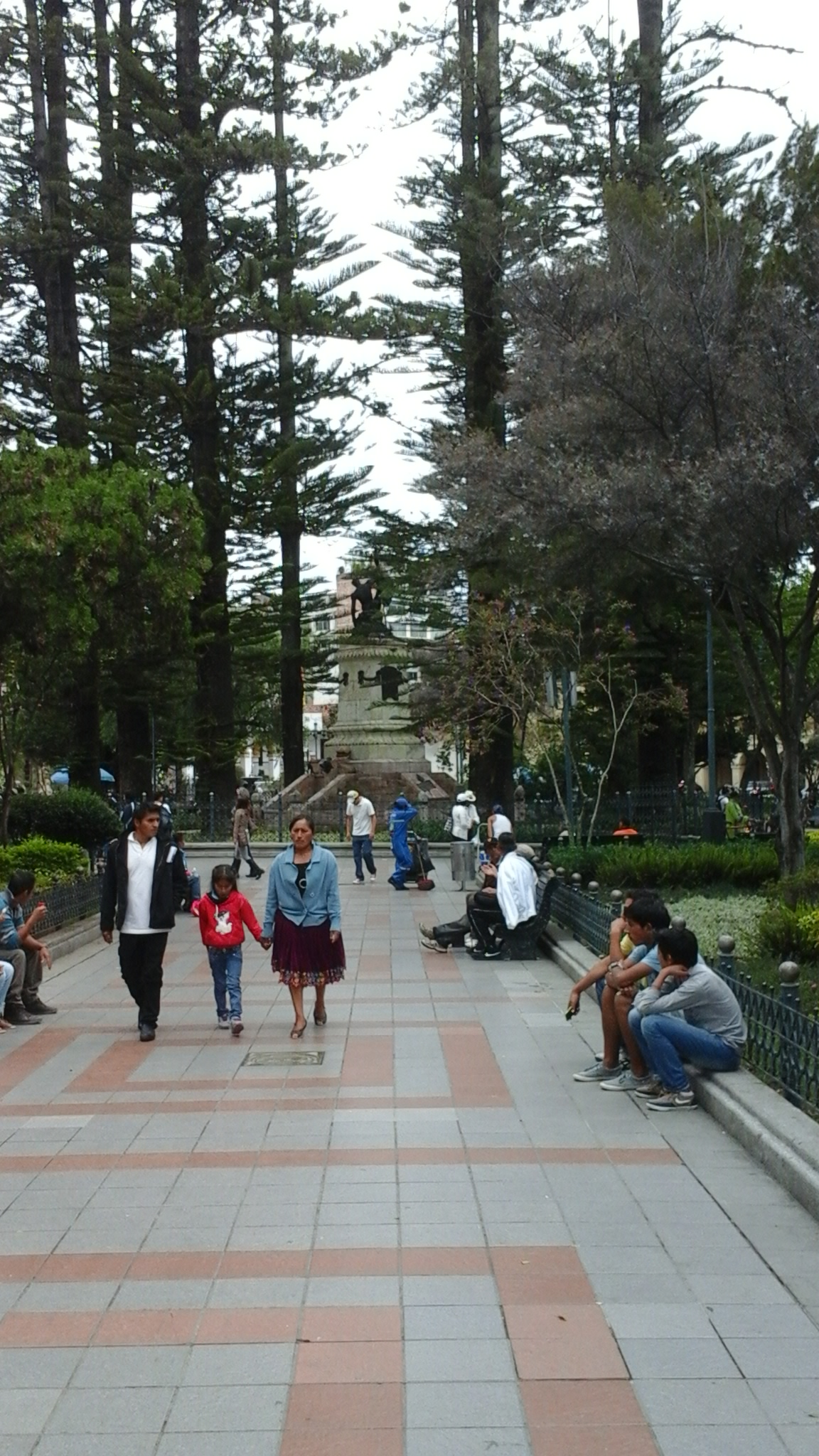
Tourists and locals who want to explore or who simply want to stroll will invariably head for the pulse of this city: the Plaza del Calderon.2016-02-21 13.50.11

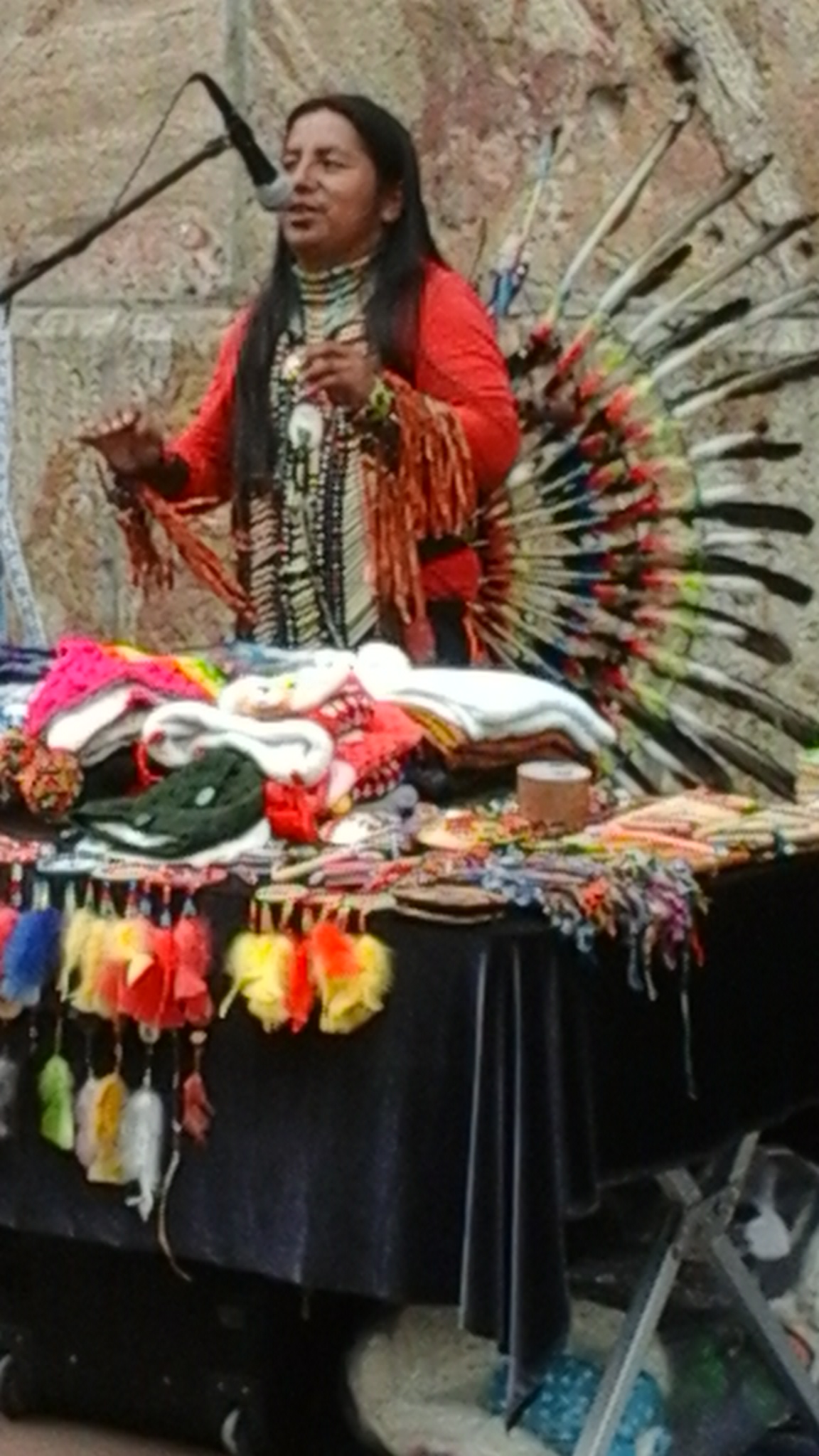
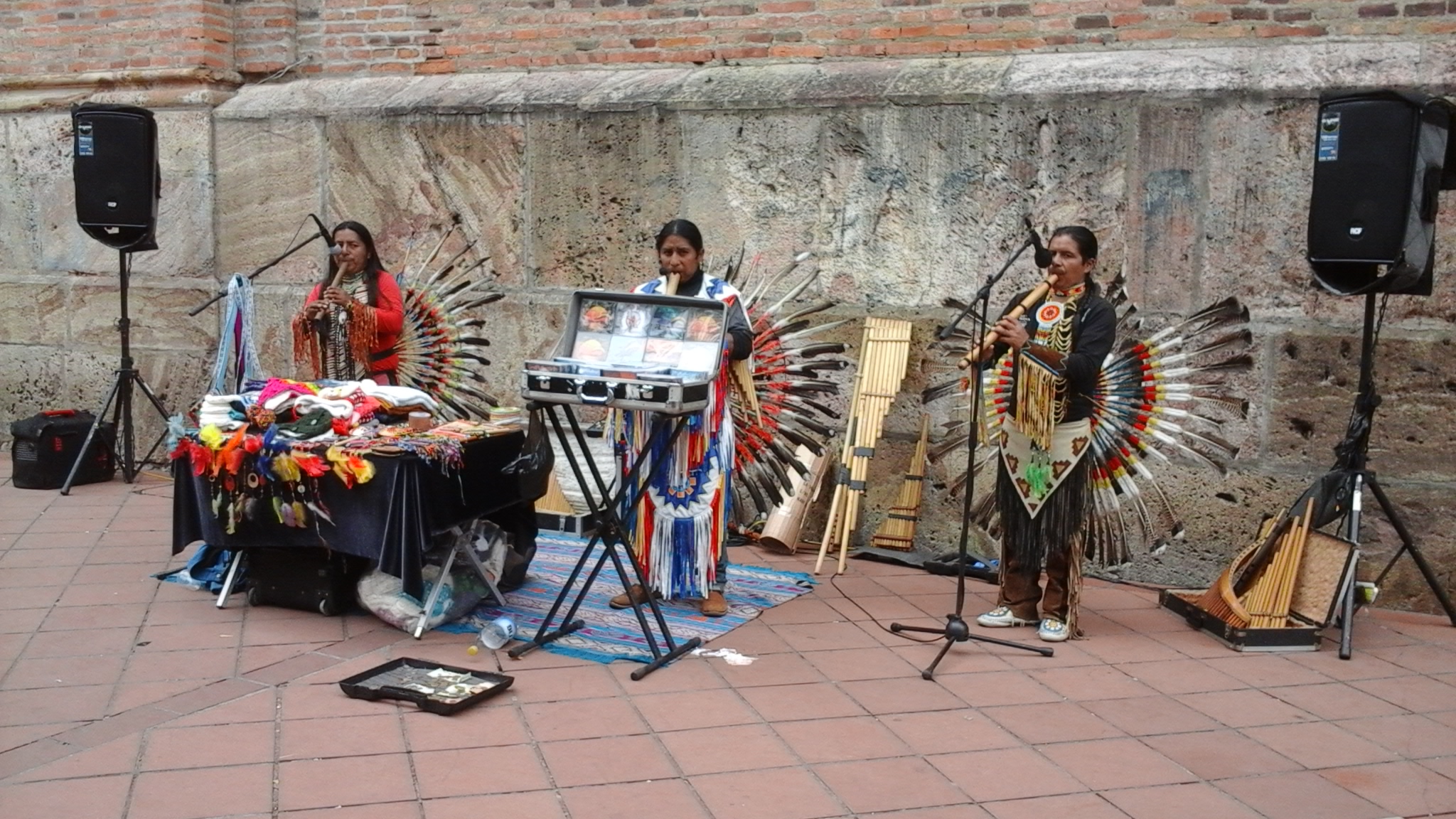
As I approached it, I could hear authentic Andean music or folklorical as I’ve seen it referred to. This was exciting because I have been wanting to hear more of this music but somehow the opportunity had just not presented itself. There it was, finally, at the Nuevo Catedral! Three men dressed in native costume were making music that literally sent chills through me. 2016-02-21 13.40.59

2016-02-21 13.41.46

At last I had found what I was looking for and to sweeten the pot even more they were selling CD’s. Without hesitating I bought one on the spot for only $5.00!

Feeling quite elated, I decided to head down to Calle Larga the street following the Tomebamba River one of four rivers snaking through Cuenca. The streets here are laid out in a kind of grid pattern in spite of the rivers, mainly because the heart of the city is nestled between the Andes that run parallel on either side of it. The Tomebamba River, which is the nearest to the centre, flows from west to east so all the north south streets lead to it.

2016-02-20 15.44.42

I find myself on a street I have not walked on before. At first it appears to be rather nondescript with houses, shops, and a few eating places on either side. Suddenly a shop with colourful textiles and a few people milling around catch my eye so I  decide to check it out. I find the kind of llama sweater I bought for myself a few weeks ago which I mentioned in my latest post. If I can get several of those at my price of $10 I decide I will buy them. I am in a shopping mood after buying that CD. He starts at $28 and finally comes down to $15 but I can’t accept that even though they are thicker and of a slightly better quality. I know I am fighting a loosing battle. Not wanting to leave empty-handed, I spy some bags which might sell if again I get the right price. Starting at $15 he eventually lowers to $8 so I buy two of the three he has in stock. Buying in Ecuador takes much effort so I’ve had to walk away from many of the things I see and like because of our crummy Canadian dollar!

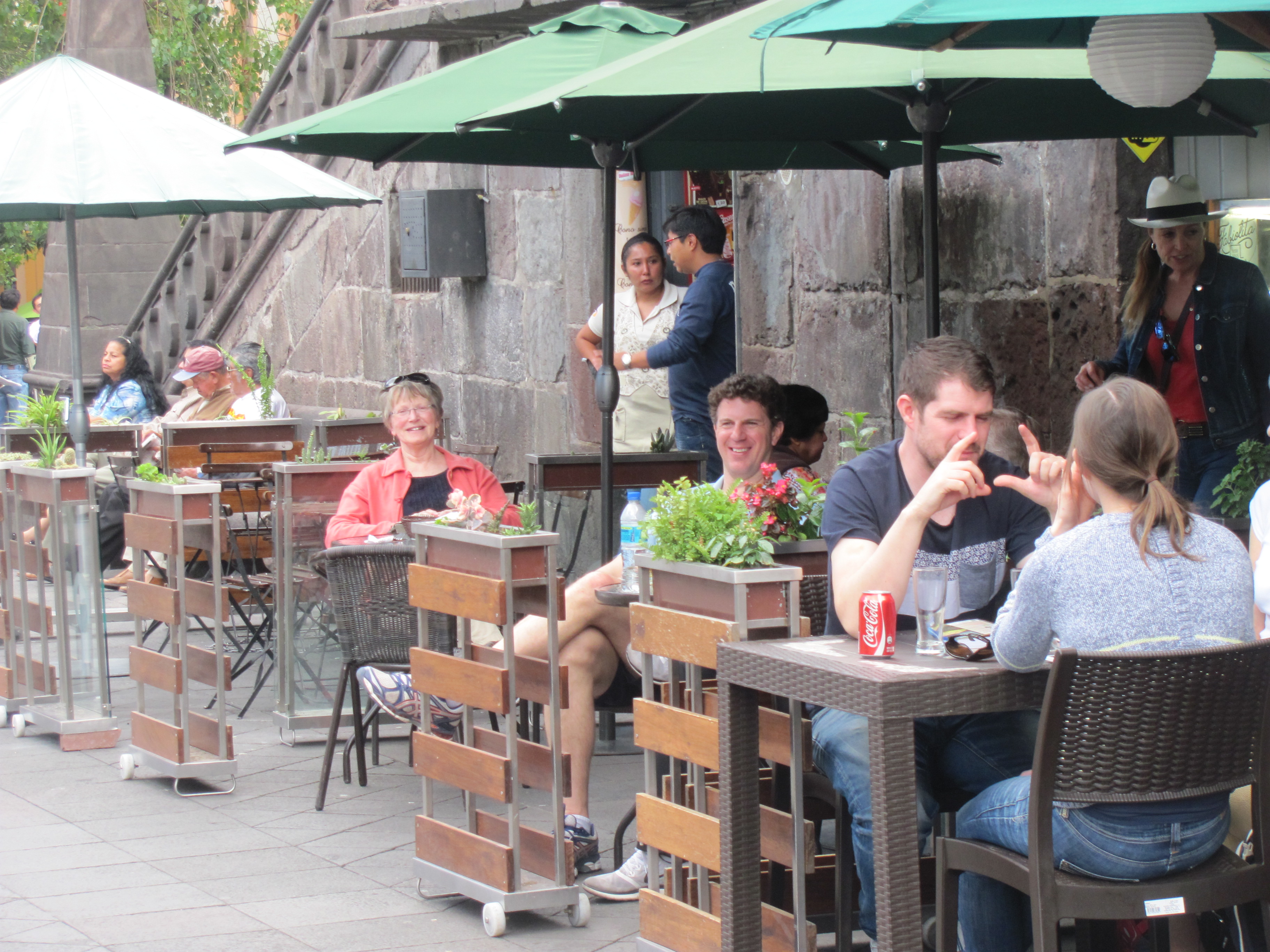
Purely by accident or maybe it was fate, but the next street I take leads me straight to Cafe Goza, the most popular spot in Cuenca for their many specialty coffees all grown in Ecuador. It’s popular with locals and ex-pats alike and is always busy: so busy in fact that it has a security guard standing outside where everyone sits. I’m not sure why this is so, but I’m assuming there must have been a nasty incident there at one time. It’s odd because I haven’t seen much evidence of police in the rest of the city. Better to be safe than sorry I guess when it comes to the safety of the ex-pats. Apparently there are well over 5,000 living here.

2016-02-21 14.45.38

2016-02-21 14.48.49

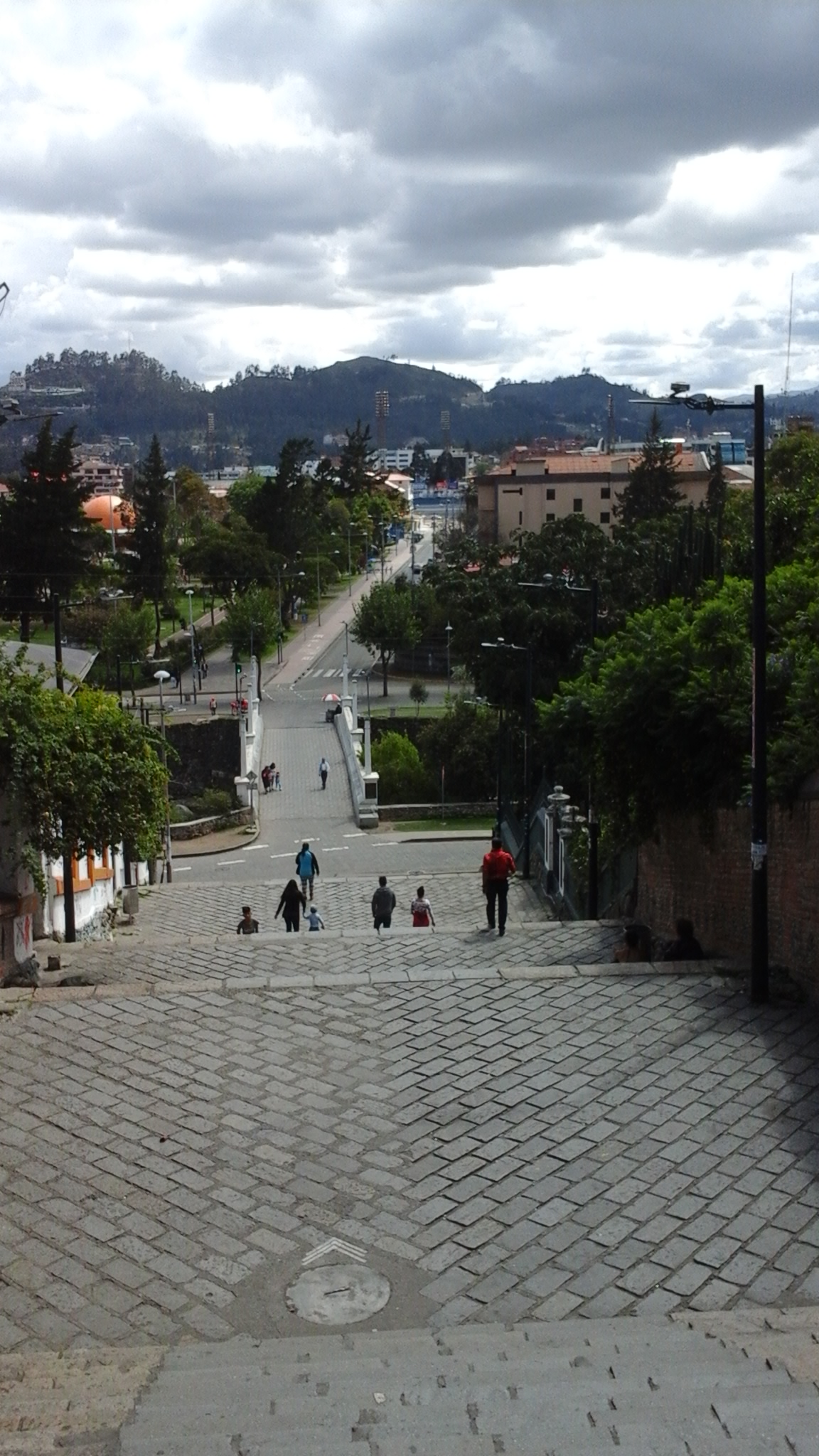
Sated with a cappuccino and some apple cake, I continue my walk, snapping pictures of the old colonial homes, the bridges spanning the river, and stairs leading down to it.

2016-02-21 15.27.27

By this time the sun has come out from behind the clouds to pour its warmth on me. Sitting there beside the quick-flowing river, I take the time to appreciate this environment for possibly the last time and to realize how fortunate I am to be here in this wonderful place. I love people watching and this was the perfect place to do it. Families playing games or splashing in the water, older folks out for a walk with their dogs, young lovers smooching under a tree, and old indigenous women looking for recyclables to cash in for extra money. It was all there; the good and not so good.

2016-02-21 15.46.08

2016-02-21 16.06.17

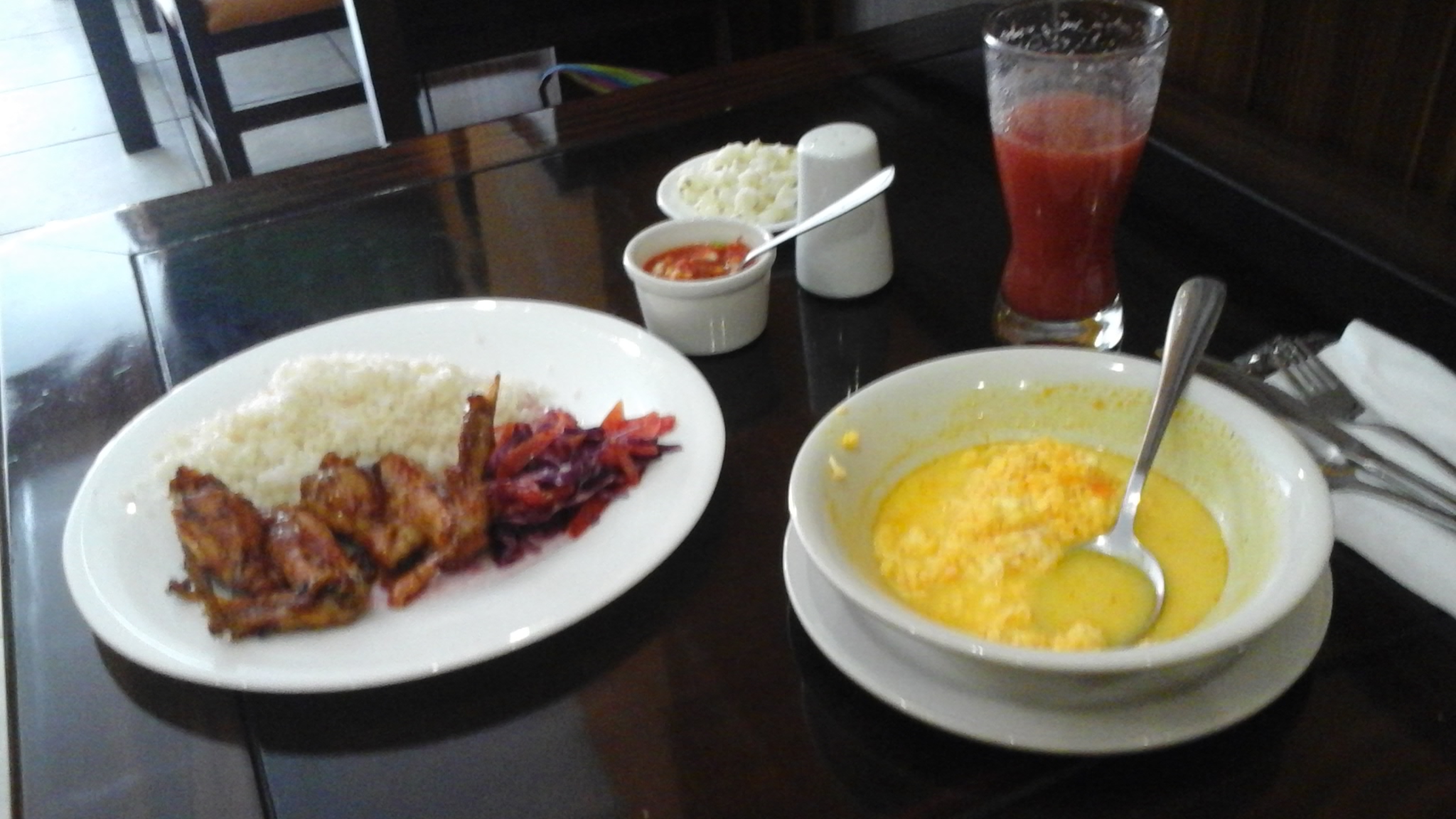
It is time to move on again so I continue west which will lead me back to the centre. I am looking for Avenida Benigno Malo which has become one of my favourite streets. I discovered it for the first time yesterday and after seeing many restaurants offering daily luncheon specials I noted this and remembered to return. I know I might be disappointed because it is Sunday when many restaurants and shops are closed. However, as luck would have it, I find one which is offering soup, BBQ chicken, dessert and juice for the paltry sum of $4.00. I had taken advantage of a similar lunch special or almeurzo two days ago on another street. Such specials can be found in the better class restaurants on some of the smaller streets where foot traffic is lighter. Their portions are substantial and they are usually good. Tourists like me on a budget love them!

2016-02-21 16.39.14

Benigno Malo has a fine showing of the old Spanish colonial architecture which contributed to naming Cuenca a Heritage site some time ago. That’s another reason for choosing to walk this street and not the others. It’s a photographer’s delight. Right in the centre it runs smack dab into the famous Nuevo Catedral or Church of the Immaculate Conception which is another photographer’s gem. Snap, snap! I must have taken over 100 pictures today!

2016-02-21 16.18.20


2016-02-21 16.14.49

2016-02-21 16.12.09

Over four hours have passed since I stepped out onto the street at my hostel. Now I am back in my little room with a full stomach and at peace with this city which I hope I will get the chance to revisit. Once again, it’s time to pack up my bags for tomorrow’s early morning departure and long haul bus ride to Quito, my next stop. This will be another revisit to seek out the places I missed or maybe just to explore those already seen in greater depth with a more seasoned eye. Time will tell.

2016-02-21 17.17.50

Ecuador – A Country of Diversity

It might be the smallest country in South America, but Ecuador packs a mighty wallop when it comes down to having more than its fair share of varied landscape, wildlife, bird species, culture, and climate. It can rightfully boast that it has just about everything that the modern-day tourist is looking for. Fantastic scenery which includes mountains, volcanoes, and beautiful beaches, a vibrant indigenous culture, well-preserved colonial towns, and a moderate climate all contribute to its growing popularity. At one time the main objective of the tourist coming to this little country (about the size of Nevada) was to see the creatures that live on the Galapagos Islands combined with an obligatory stay in the capital city of Quito which they invariably flew into before heading for those islands of Darwinian fame. Very few ever bothered to go further afield. That is all changing. Today’s tourists are venturing out and beyond to see all that Ecuador has to offer. In fact, some are giving the Galapagos a pass because it’s become just too expensive for many pocket books. That is certainly true for me. Those of us on small budgets are looking instead at visiting the Isle of Plata in the southern part of the country where one can see those blue-footed and red-footed boobie birds. It’s called the ‘poor man’s Galapagos’.
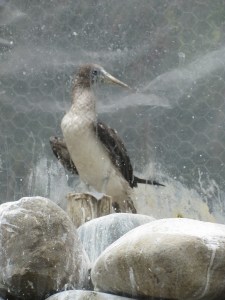
A blue-footed boobie at the Cuenca zoo.

A blue-footed boobie at the Cuenca zoo.

For years I have been reading and hearing about the virtues of this country and why it’s becoming a haven for North Americans seeking to escape the ‘rat race’ and find a simpler lifestyle. Since it has been relatively inexpensive to live here and has such a temperate climate, among many other benefits, it’s fast becoming the ex-pats number one choice for retirement. I wanted to check it out for myself to see what all the brouhaha is about so here I am to verify if whatever pre-conceived notions I’ve had were true or not.

I’ve been here for almost a month and have covered what I think is a fair amount of territory although the younger backpackers wouldn’t agree. I flew from Buenos Aires to Quito where I met up with my travelling companion from Nova Scotia, Cathy Etter. We go back a long way when we first took off for Europe and Israel with our backpacks in 1969. Today we travel with our suitcases!

Our first couple of days in the thriving city of Quito were spent adjusting to the high altitude, the new culture and language, and getting access to money. Let’s say we faced a steep learning curve during those days. At over 9,000 feet above see level, Quito is the second highest city in the world. The best way to cope with this is to drink lots of water and to move around slowly. This is not an easy thing to do when there is so much to see in a limited time frame. Cathy was visiting Ecuador for three weeks only and, of course, wanted to see as much as she could, and I certainly wanted to help her do that. We did manage to master some basic Spanish words and with the help of Lonely Planet’s phrase book we somehow muddled through our conversations with the people we came in contact with. In a big city like Quito this was not such a problem as it proved to be when we got to some smaller places. The money woes for me continued as none of the banks would accept my debit or bank card so I had to resort to using my Visa credit card where I have to pay a higher service fee. I am still waiting to see if my bank can trace what happened to the $400 that I never received the first time I tried to use my card. That on top of the sinking Canadian dollar is causing havoc with my bank account. We have since learned from travellers that it’s best to bring all your  American dollars with you and forget trying to get it through the ATM’s. Yikes! Personally I don’t relish carrying around large sums of money but those I know who have done it haven’t encountered any problems mainly because of their diligence and common sense. Cathy did have an American Visa card but that, too, was not accepted for a million incomprehensible reasons.

In spite of these challenges, we managed to visit some of the city’s offerings. Our first venture was to the Old Town which we could walk to from the La Rosario hotel where we stayed. Quito has many beautiful plazas but the most popular is the Plaza de Grande where you have lovely colonial buildings, cafes, and activities going on all the time. This is the hub of the Old Town where we could have spent the whole day. We found a wonderful little cafe called La Fabiolita where we tucked into their daily Ecuadorian special of lamb, avocado, and rice for about $5.oo. They also served great coffee and their fresh juices like najarillo, mora (blackberry), watermelon, passion fruit, and others I have never heard of, were a wonderful source of nutrients not to mention refresher after all our walking.
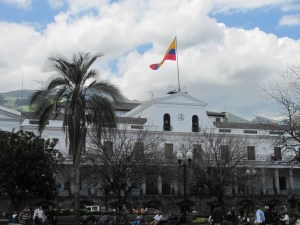
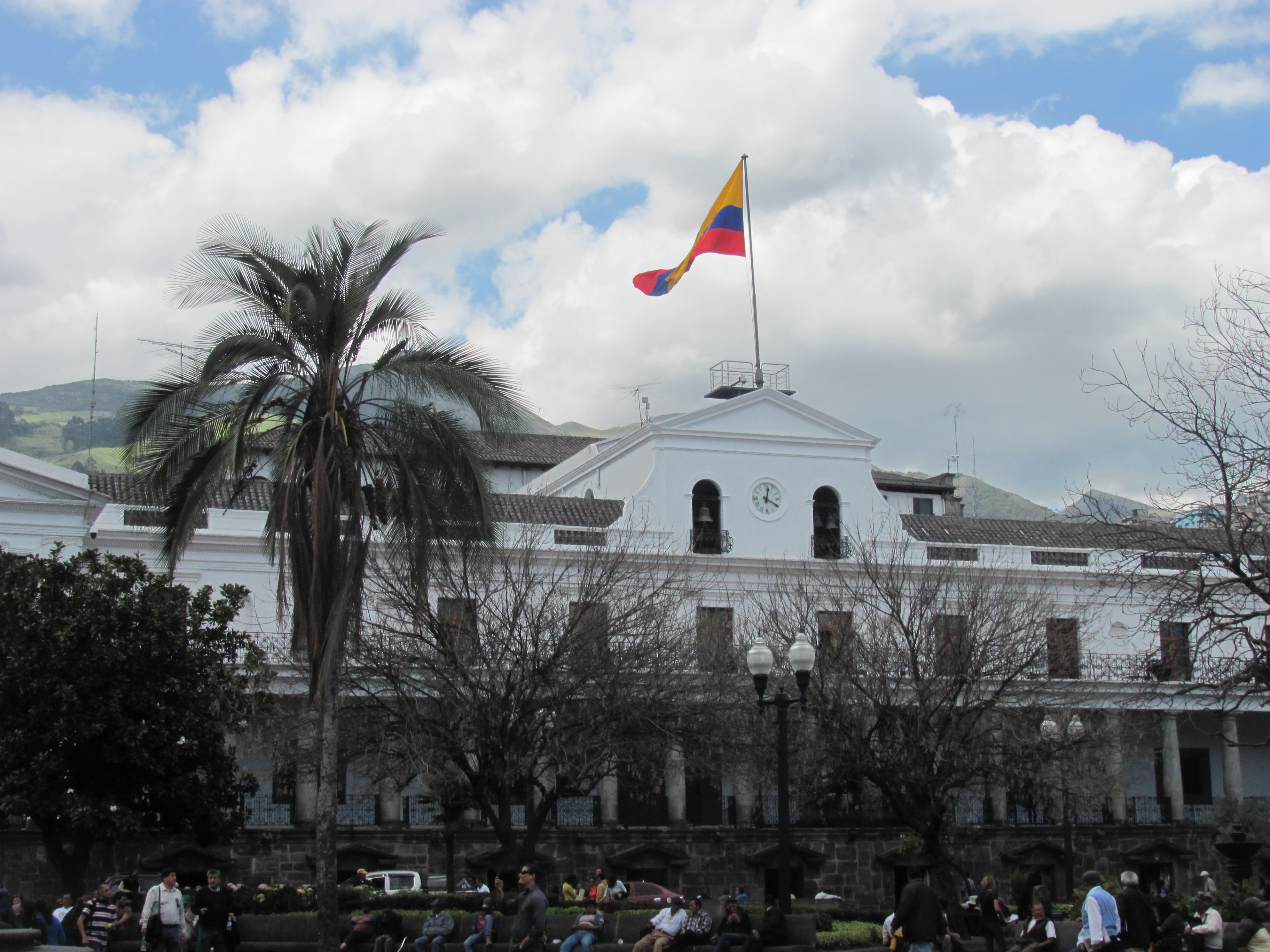
The Presidential offices at the Plaza de Grande in Quito.
The Presidential offices at the Plaza de Grande in Quito.

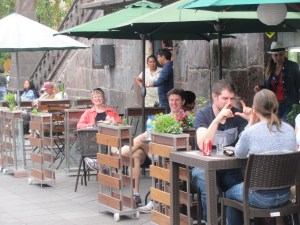
Lunch at the Fabiolita Cafe in Quito.

Lunch at the Fabiolita Cafe in Quito.

Our second sight-seeing venture had us braving the public transit system. This turned out to be a real bargain (much like Buenos Aires) where $.25 would take you to anywhere in the city. The only problem was that most of the time, the buses were so crammed with people that we couldn’t get on them. However, on the Saturday when we visited the Botanical Gardens in the New Town, we were able to hop aboard, and, no, we did not get robbed as we were warned could happen. Common sense prevailed as we took only the money we needed and kept it very close to our bodies in strong bags with several pouches strapped over the left shoulder so the bags were always in front of us not hanging off the right shoulder or in the back. The rule is to never wear a back pack and if you do, don’t put your money in it.
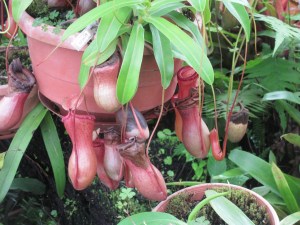
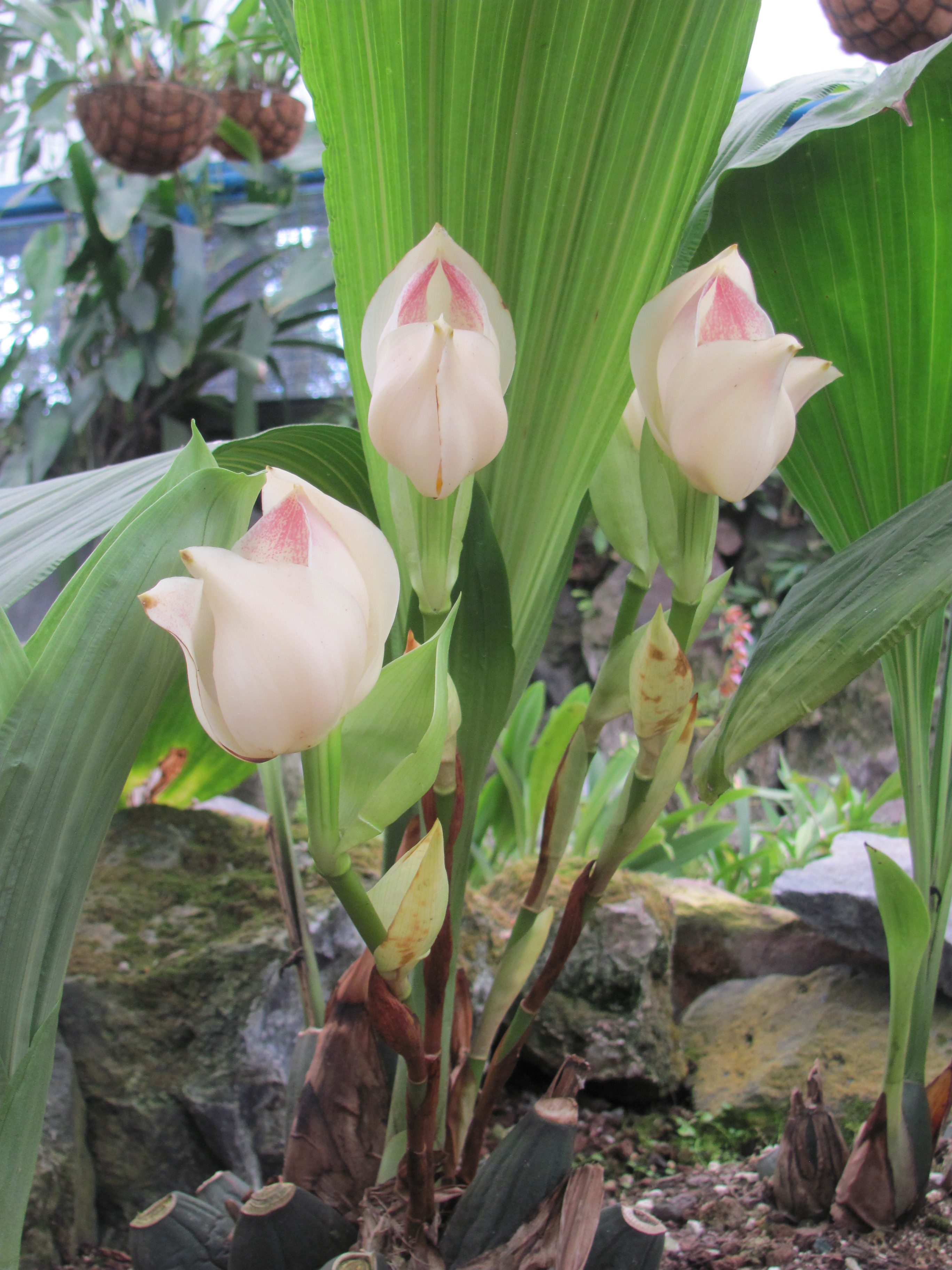
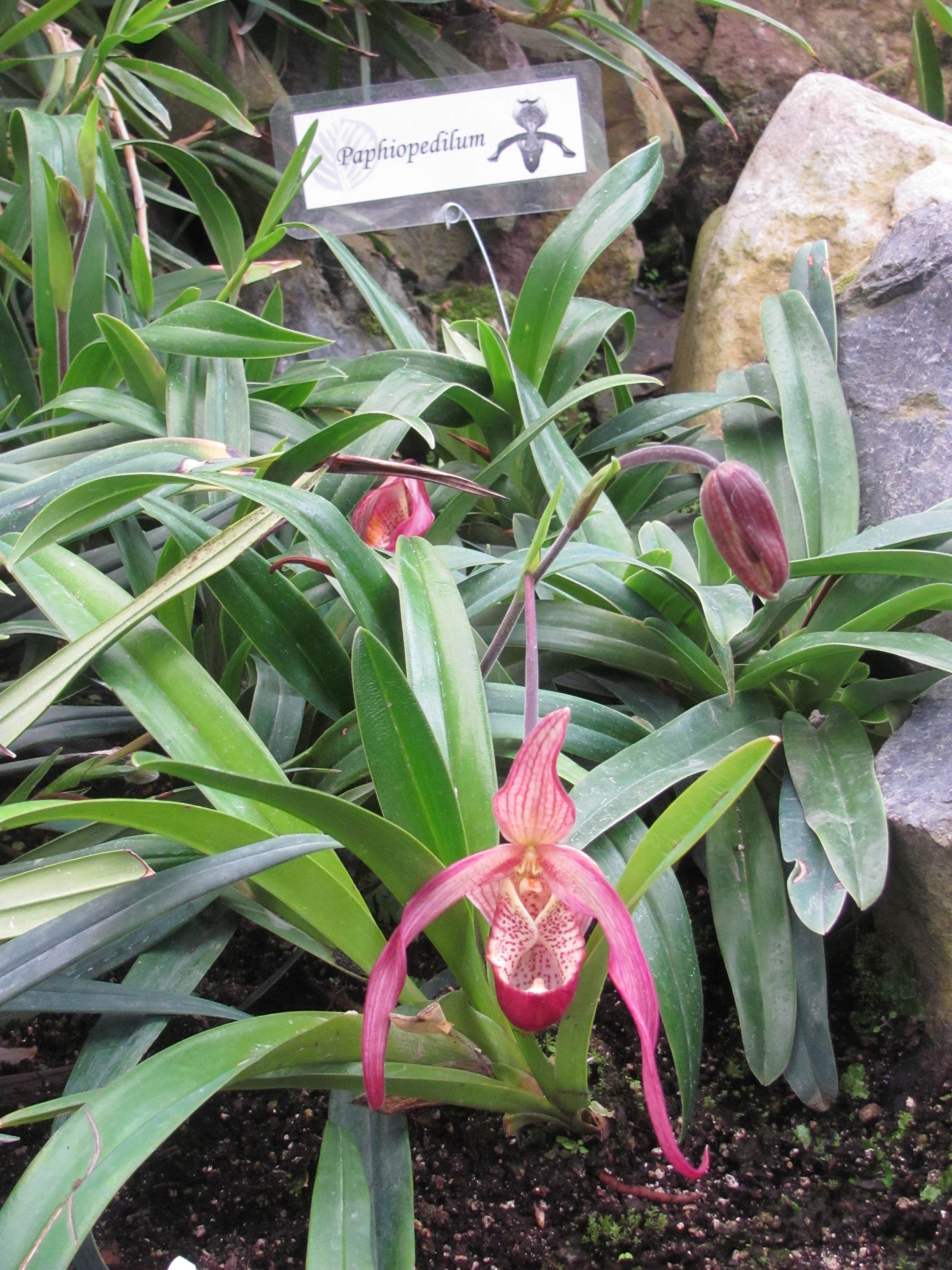
Ecuador has many different species of orchids at the Botanical Gardens.

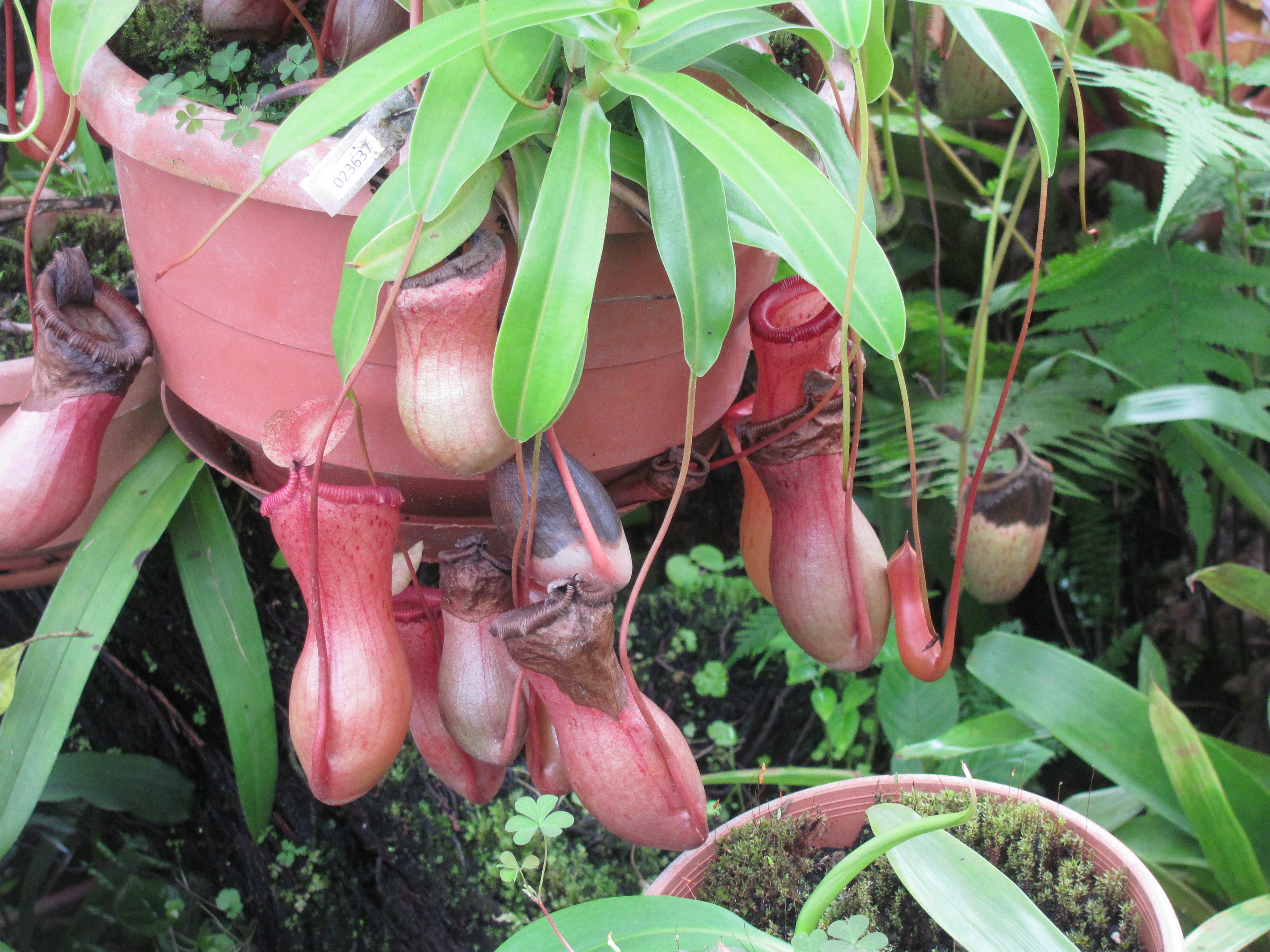
A carnivorous plant at the Botanical Gardens.
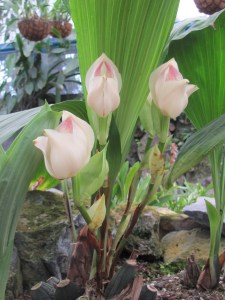
 

One of hundreds of species of orchids grown in Ecuador.
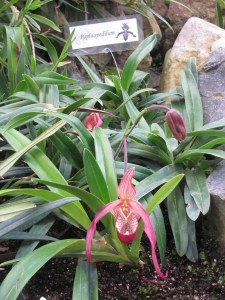
One of hundreds of species of orchids grown in Ecuador.

Another strange looking species.

Another strange-looking species.

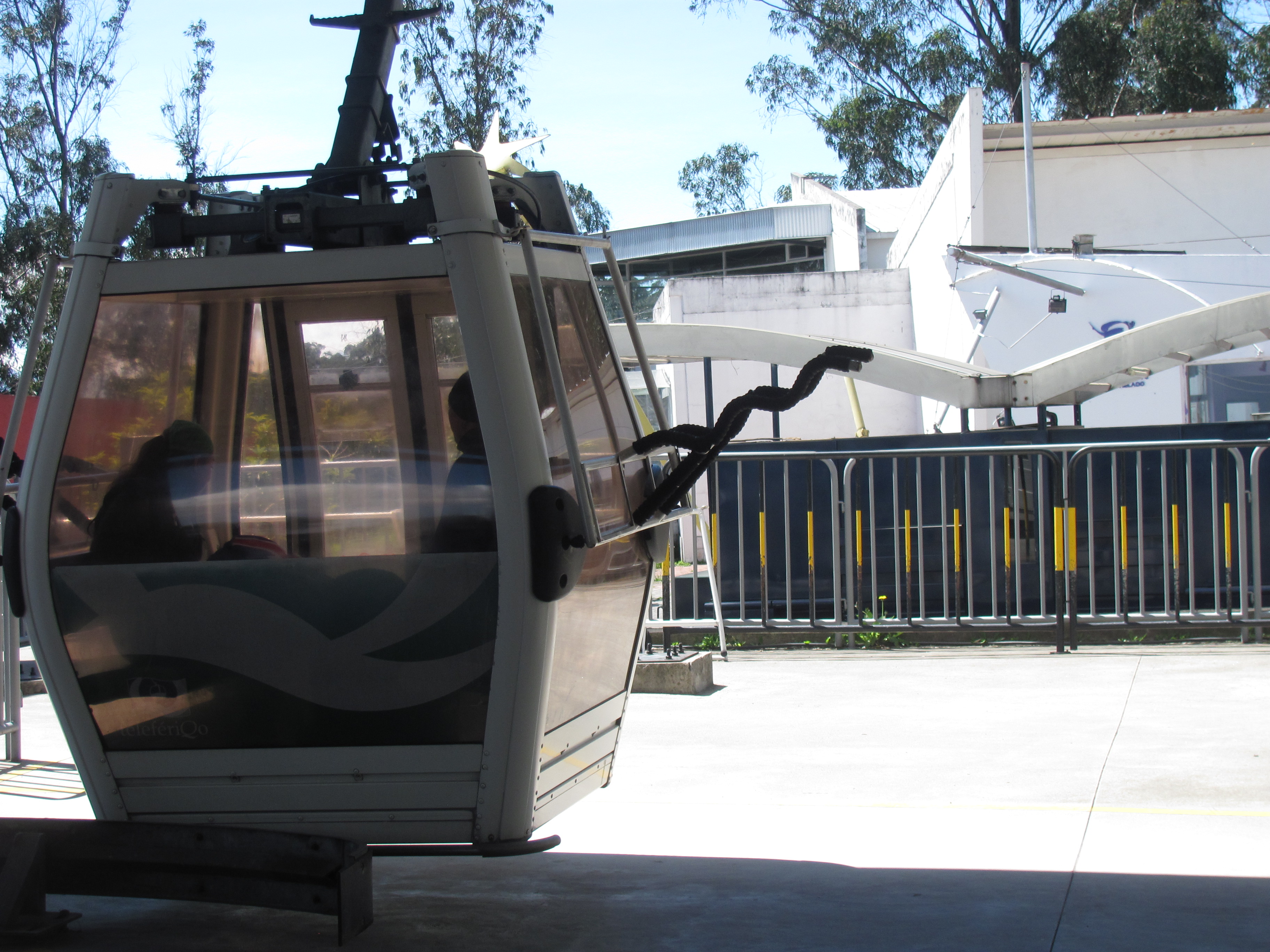
On Sunday we took a taxi to the TeleferiGo cable car which took us high up on the Volcan Pichinchi (over 13,000 feet) which dominates the city. This is one of Ecuador’s more active volcanoes which tends to erupt every so often to let everyone know it isn’t dead. The last eruption was in 1999 when all of Quito was covered in ash.

One of the TeleferiGo cable cars to the top of Volcan Pichinchi.
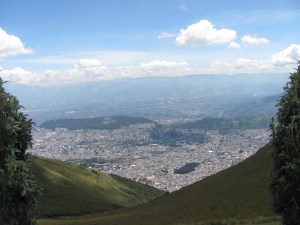
One of the TeleferiGo cable cars to the top of Volcan Pichinchi.

Looking over Quito from the top.
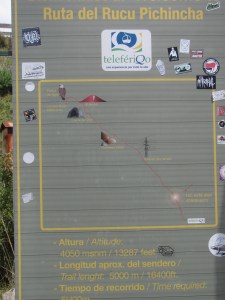
Looking over Quito from the top.

We were going up to about 13,000 ft. above sea level.
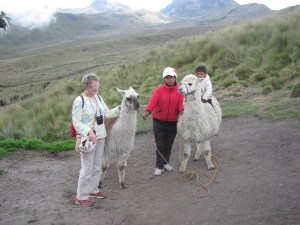
We were going up to about 13,000 ft. above sea level.


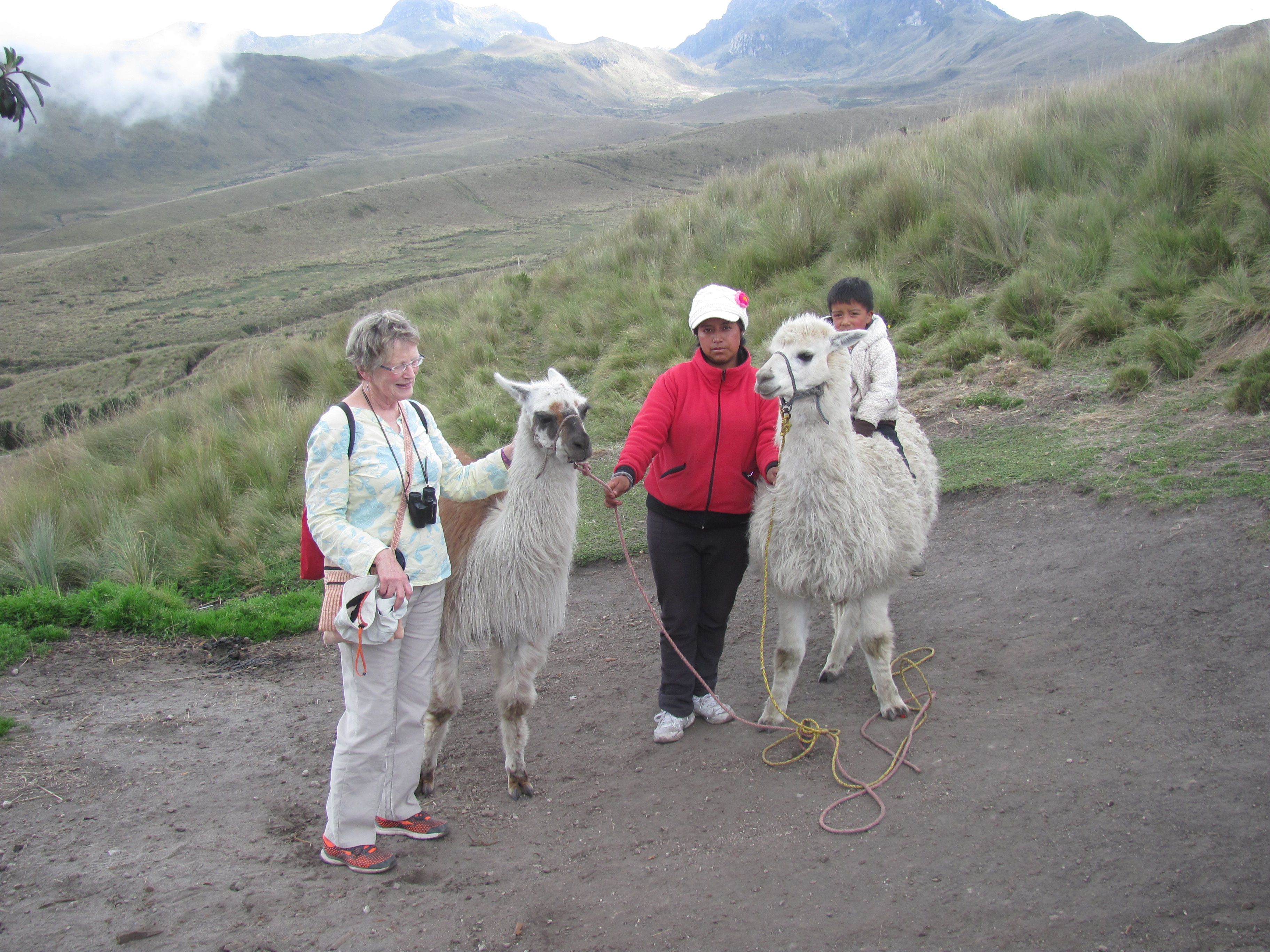
meeting some llamas on the way.

Meeting some llamas on the way.

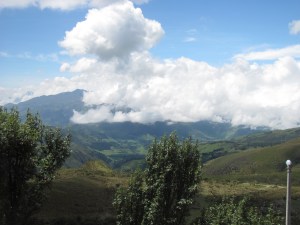
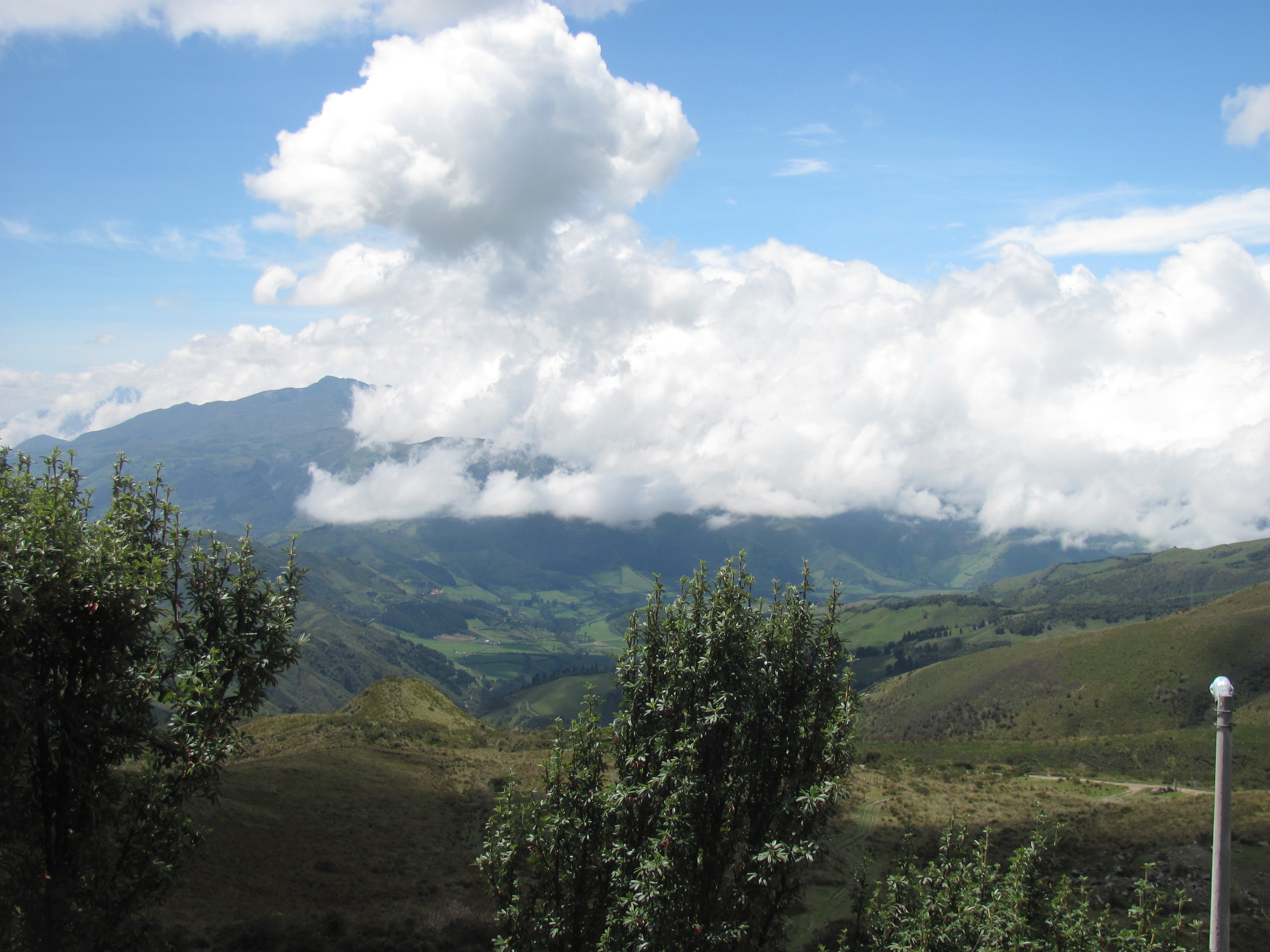
Another incredible view from almost the top.

Another incredible view from almost the top.

After several days leaving behind much more we could have seen and done, we took the bus up to the town of Otavalo, famous for its gigantic Saturday market – the largest in South America. Hundreds of vendors mostly from various indigenous tribes descend upon the town hawking clothing and textiles made from llama and alpaca wool, leather goods, handmade jewellery, and numerous other items which make great souvenirs or resale items. We spent almost a week there shopping and enjoying our rustic cabin which we rented from a lovely lady through AirBnb. Most mornings we were able to sit in her garden with our breakfast and enjoy the many hummingbirds that hovered around us. Although the nights were quite cold, requiring socks in bed, as soon as the sun appeared in the mornings it would warm up very quickly.
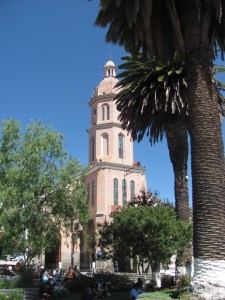
The beautiful main square in Otavalo.
The beautiful main square in Otavalo.

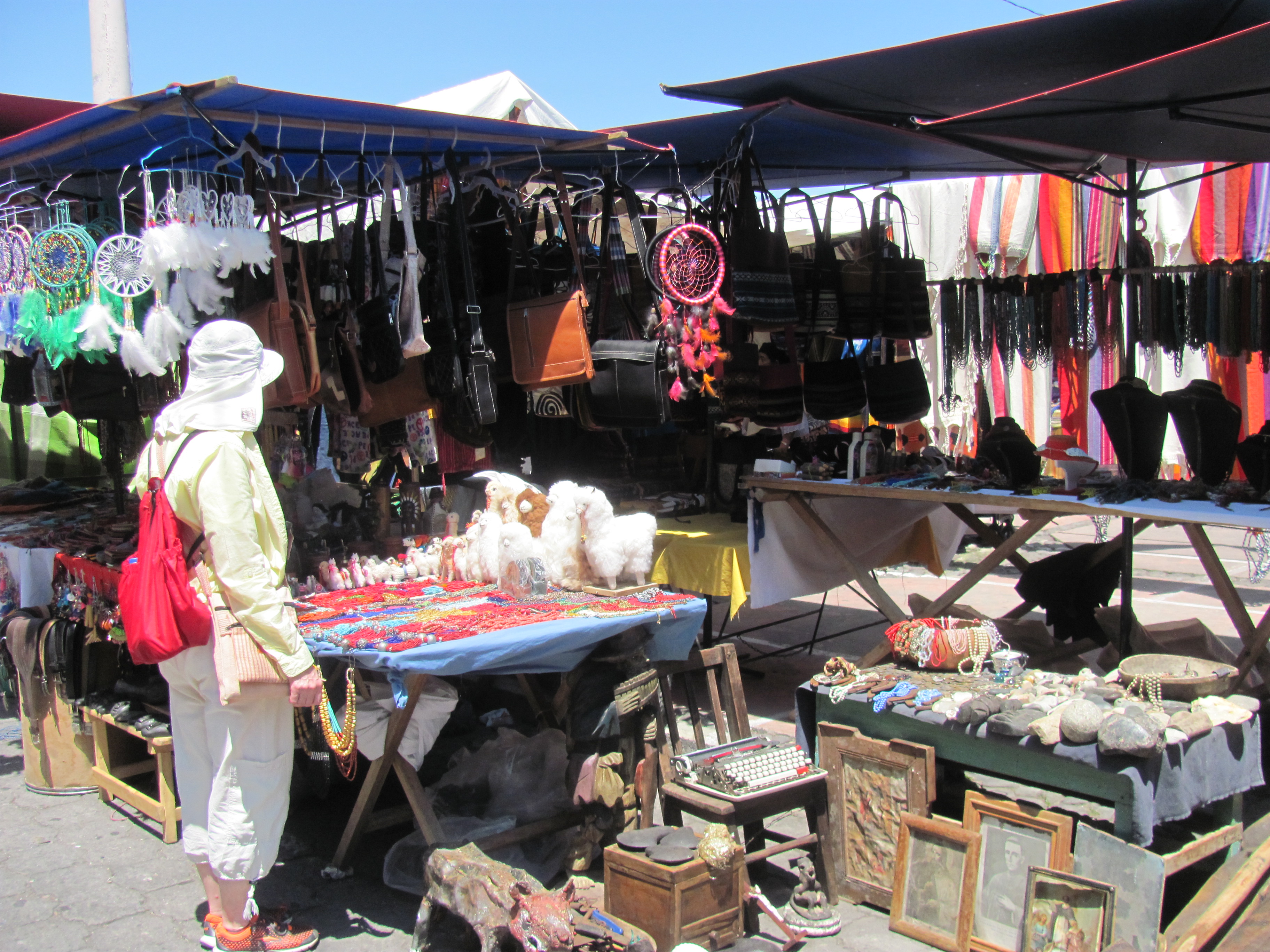
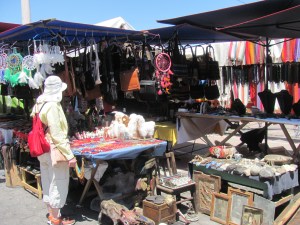
A tiny portion of the market in Otavalo.

A tiny portion of the market in Otavalo.

A vendor selling loving cotton tableware.

A vendor selling gorgeous cotton tableware.

Having fun shopping for face masks.
Having fun shopping for face masks.

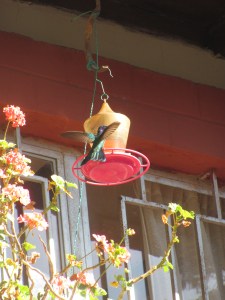
Huge hummingbirds were everywhere in our garden.

Huge hummingbirds were everywhere in our garden.

After a week in Otavalo, we had to work out an itinerary for the remainder of Cathy’s time. On hearing about the heavy rains on the southern coast in the area of the ‘poor man’s Galapagos’, we decided to forego the boobie birds and head south veering west heading into the interior of the Andes mountain chain where the majority of the towns in Ecuador are located. Our first stop was the town of Banos. We arrived late in the day after a very long and tiring bus ride (about ten hours) with many stops including one change of buses. The upside was the fantastic scenery which changed constantly from browns and mostly greens as we wended our way through the volcanic mountains clearly visible on both sides of our bus. I should add that the bus is the best way to go in Ecuador if you don’t want to fly. Trains are almost extinct. Numerous companies have almost the entire country covered and with the government’s drive to build new highways linking all major villages, towns, and cities it’s by far the best way to go. However, it’s best to choose the express buses as we found out if you ever want to get to your destination on time.

Buses at the ready at Otavalo's bus station.

Buses at the ready at Otavalo’s bus station.

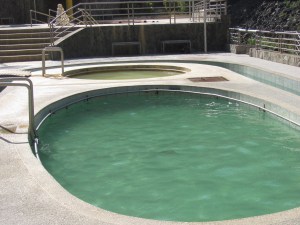
Banos was a good choice for us. Here we were able to indulge in one of the many thermal baths fed by the Volcan Tungurahua which means “throat of fire”. We chose the Picinas El Salado reputed to be the best. It was clean and well run with five pools from the very hot, to varying grades of warm, ending with the cold plunge. However, these thermal baths come with the constant threat of a volcanic eruption from Tungurahua an active volcano which towers over the town. It last erupted in 1999. At that time everyone was evacuated and had to leave their homes for over a year until they got so fed up they staged a revolt and returned against the wishes of the authorities. There hasn’t been a major eruption since, but there are constant rumblings and fireworks still at play. Accompanying such high mountains and volcanoes comes too many waterfalls to count. We had one cascading down beside the place where we stayed. This was Casa Real which I would highly recommend for its fabulous breakfasts included in the price. You can find them on booking.com.

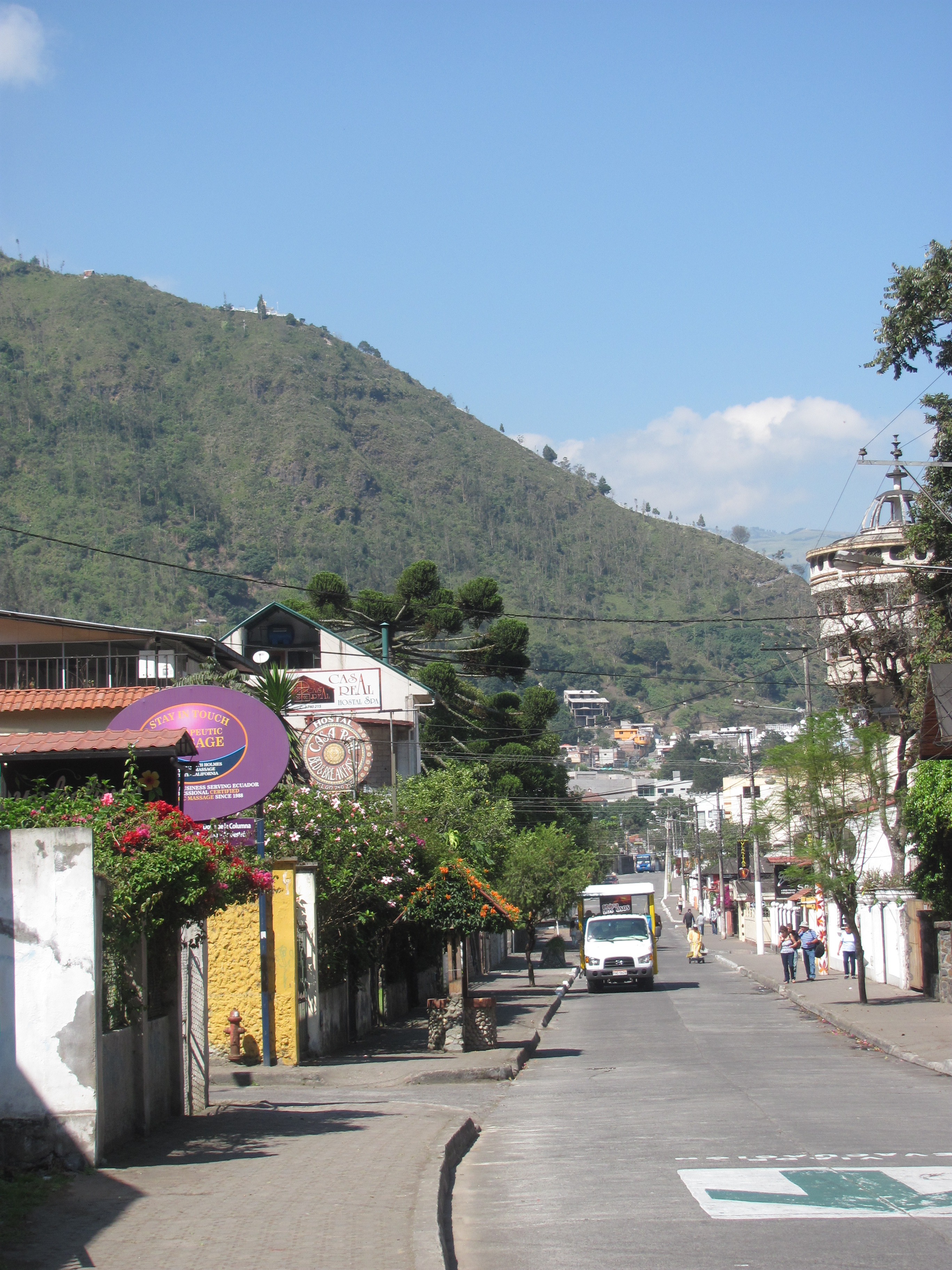
The street where Casa Real is located in Banos.
The street where Casa Real is located in Banos.

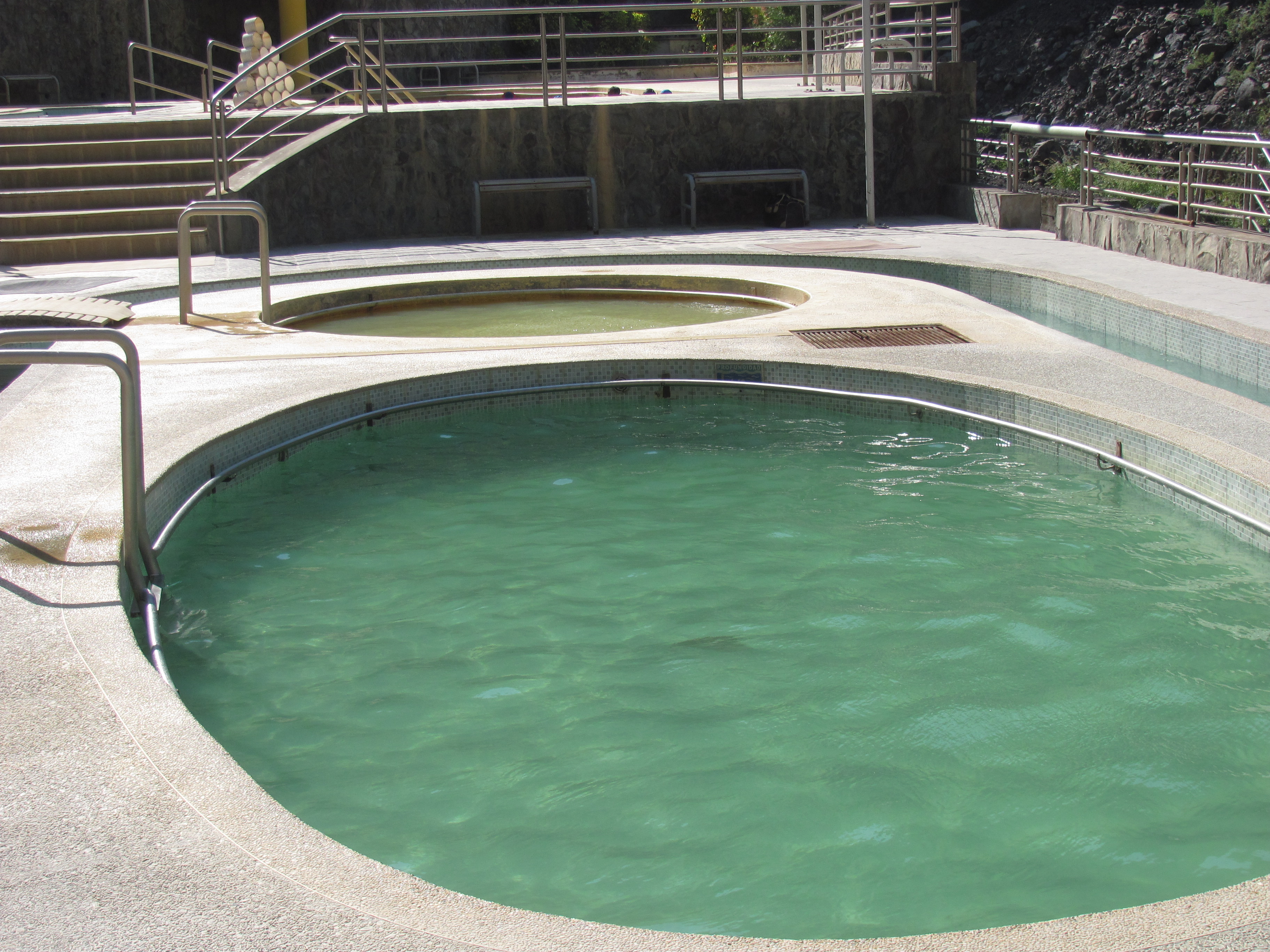
One of the pools at the El Salada thermal bath.

One of the pools at the El Salado thermal bath.

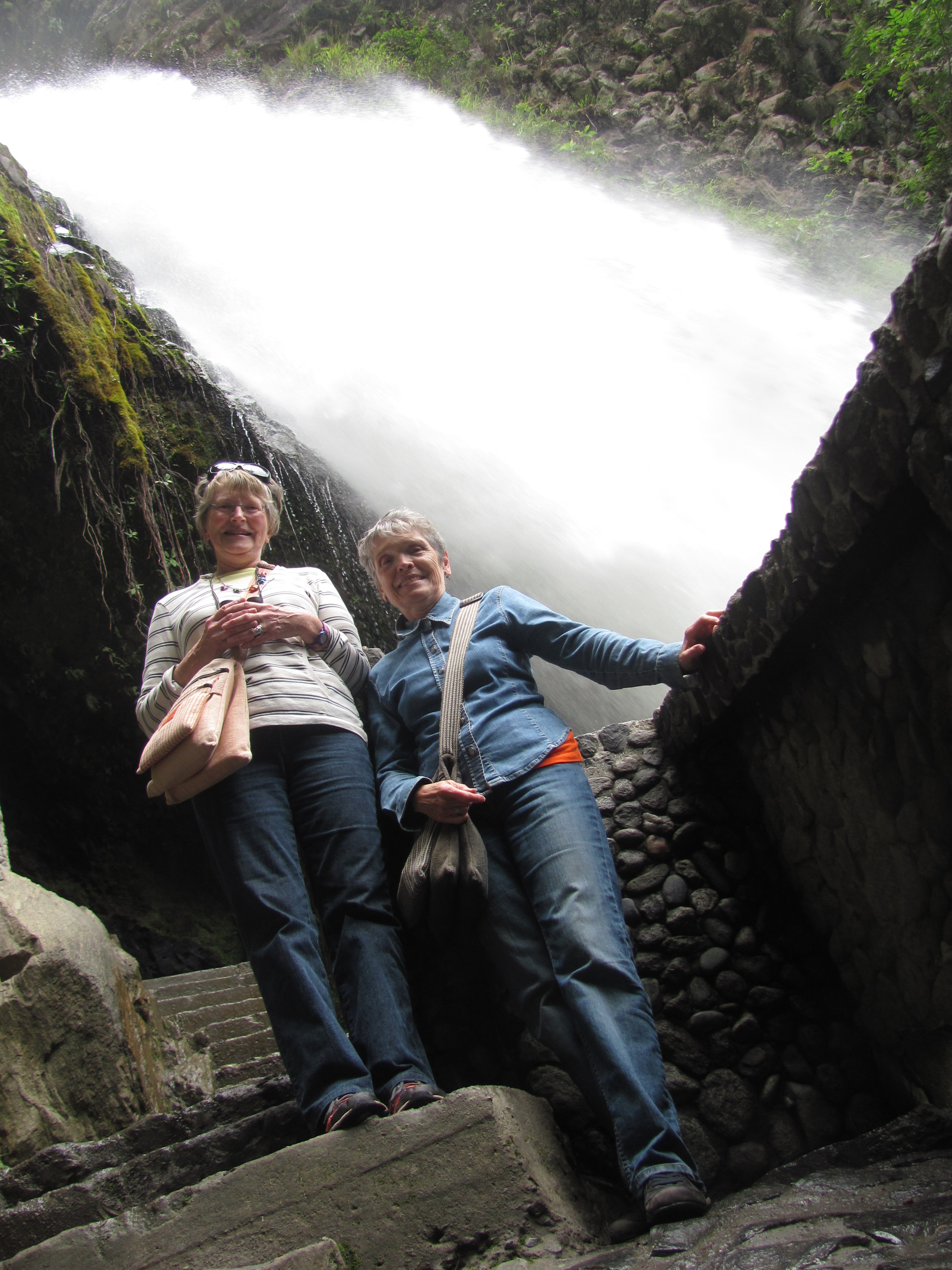
On our second day there, we took a very inexpensive tour called “The Cascades Tour” which took us to some of the many falls in the near vicinity of the town. At the San Martin National Park, we had an opportunity to see the falls and gorges via a cable car which turned out to be quite a thrill for us. Our open-topped bus took us on roads that twisted and turned, at least four long tunnels, and other hair-raising gambits which caused lots of shrieks and gasps. If we had more grit and money, we should have taken the opportunity to do some sky diving. The brave young and less fearful ones on our tour did, and every one of them came back safe and sound and totally exhilarated. They all reported that they would do it again. We realized we had missed a golden opportunity. The finale to our tour was a trip down to the truly spectacular Rio Verde falls where we found ourselves practically beneath them followed by the long trek back up to the top. The climb was well worth it especially since our path was lined with gorgeous tropical flora and fauna. Some we were familiar with like hydrangea but others left us guessing.
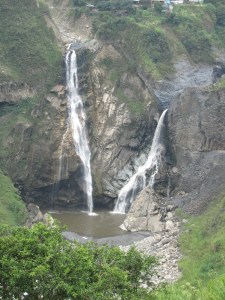
Some of the falls on our Cascades tour.
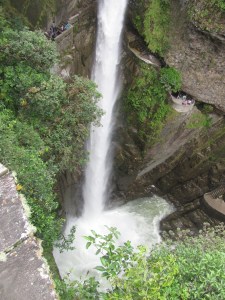
Some of the falls on our Cascades tour.

The more dramatic Rio Verde falls.
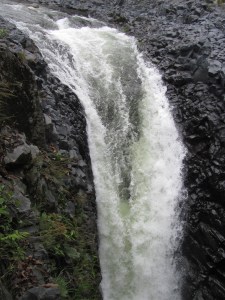
The more dramatic Rio Verde falls.

A close of the falls.

A close up of the falls.

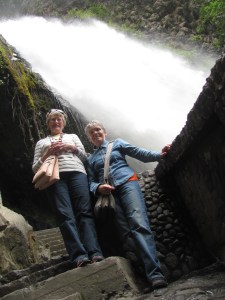
Cathy and me under the falls.

Cathy and me under the falls.

That night we treated ourselves to a dinner at the Taberna Armenia, a new restaurant which has already achieved the notable distinction of Banos’ top restaurant. We would not have known about it if our lovely hostess, Miryam, in Otavalo had not recommended it. Started by a young couple from Russia who now have a 5-month old son, it had to be one of the best meals I’ve ever had. The food was expertly prepared, tasty, and beautifully presented. The whole ambience was perfect. The menu reflected a nice balance of the new fresh flavours of today’s Ecuador with the old tried and true recipes from Armenia. For instance, I had a type of perogie, called pellimeni, stuffed with llama meat. The sauces that came with that were divine. As an extra bonus the young chef, owner, husband, and father presented us with a fruit liquor ‘on the house’ to wash it all down. You can find this restaurant listed and rated by Trip Advisor as #1.
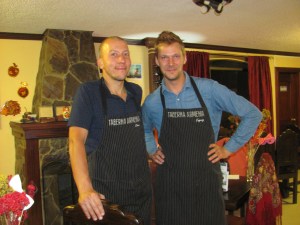
Yvengy (Eugene)and his chef at the Taberna Armenia.

Yvengy (Eugene)and his chef at the Taberna Armenia.

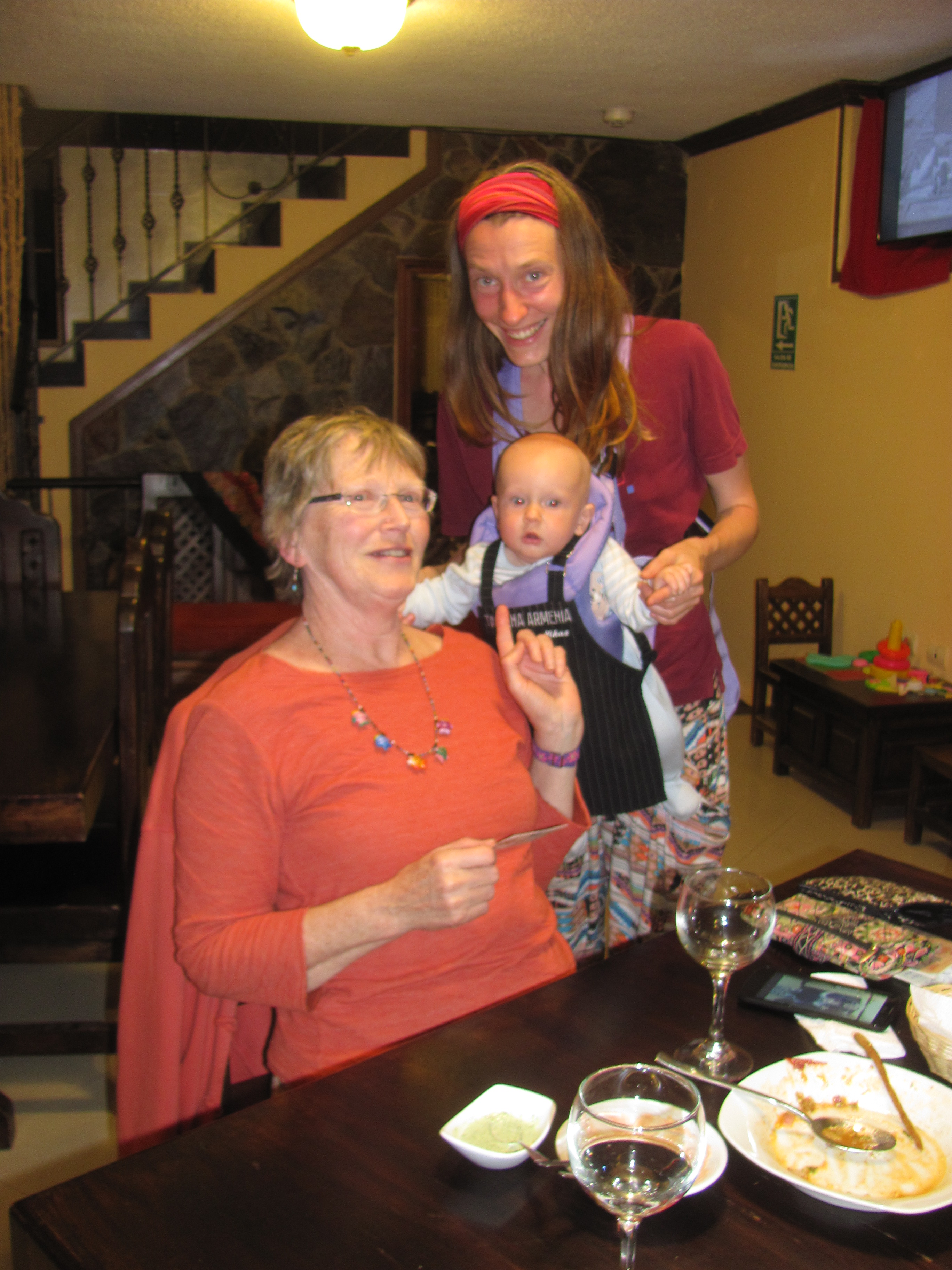
Natalia, her son, and Cathy at Taberna Armenia.

Natalia, her son, and Cathy at Taberna Armenia.

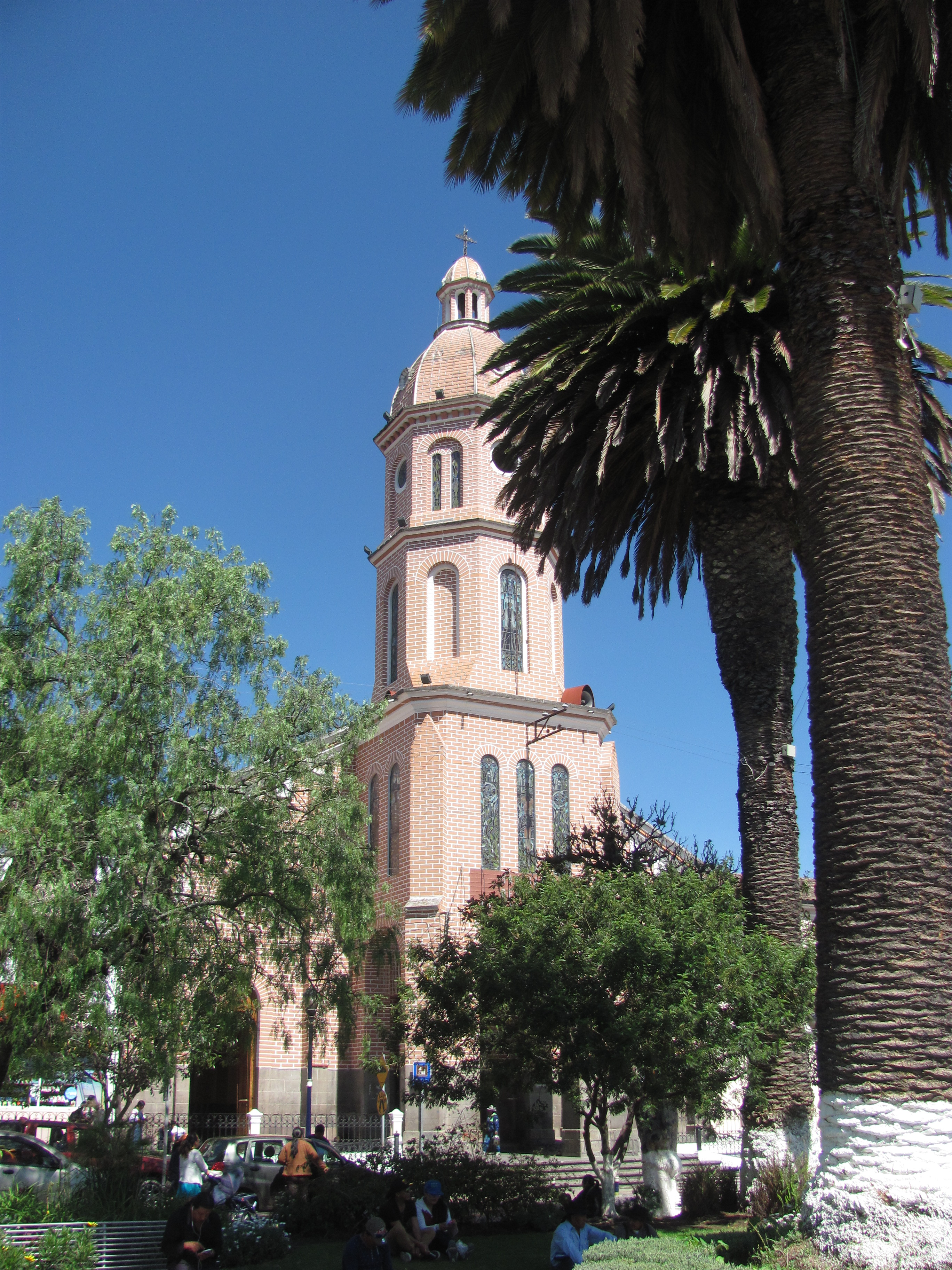
After leaving Banos we were subjected to another long, arduous bus trip further south to the colonial city of Cuenca, one of Ecuador’s fastest growing ex-pat spots. This Heritage Site is not only attracting North Americans looking for a more affordable lifestyle, but also many tourists. Although Ecuador’s third largest city, it is still not so large that you can’t walk around the old part with its cobblestone streets and well-preserved colonial buildings. It’s main focus is the Parque de Calderon right in the centre dominated by two churches: the Catedral Vieja(1567) and the Catedral Immaculate Conception (1885). We attended for free a wonderful concert at the old church. A Spanish piece by Rimsky-Korsakov succeeded in feeding our souls with some much-needed music. We had the ex-pats to thank for that evening. We had hoped to find some folklorica or native Ecuadorian music but had no success.

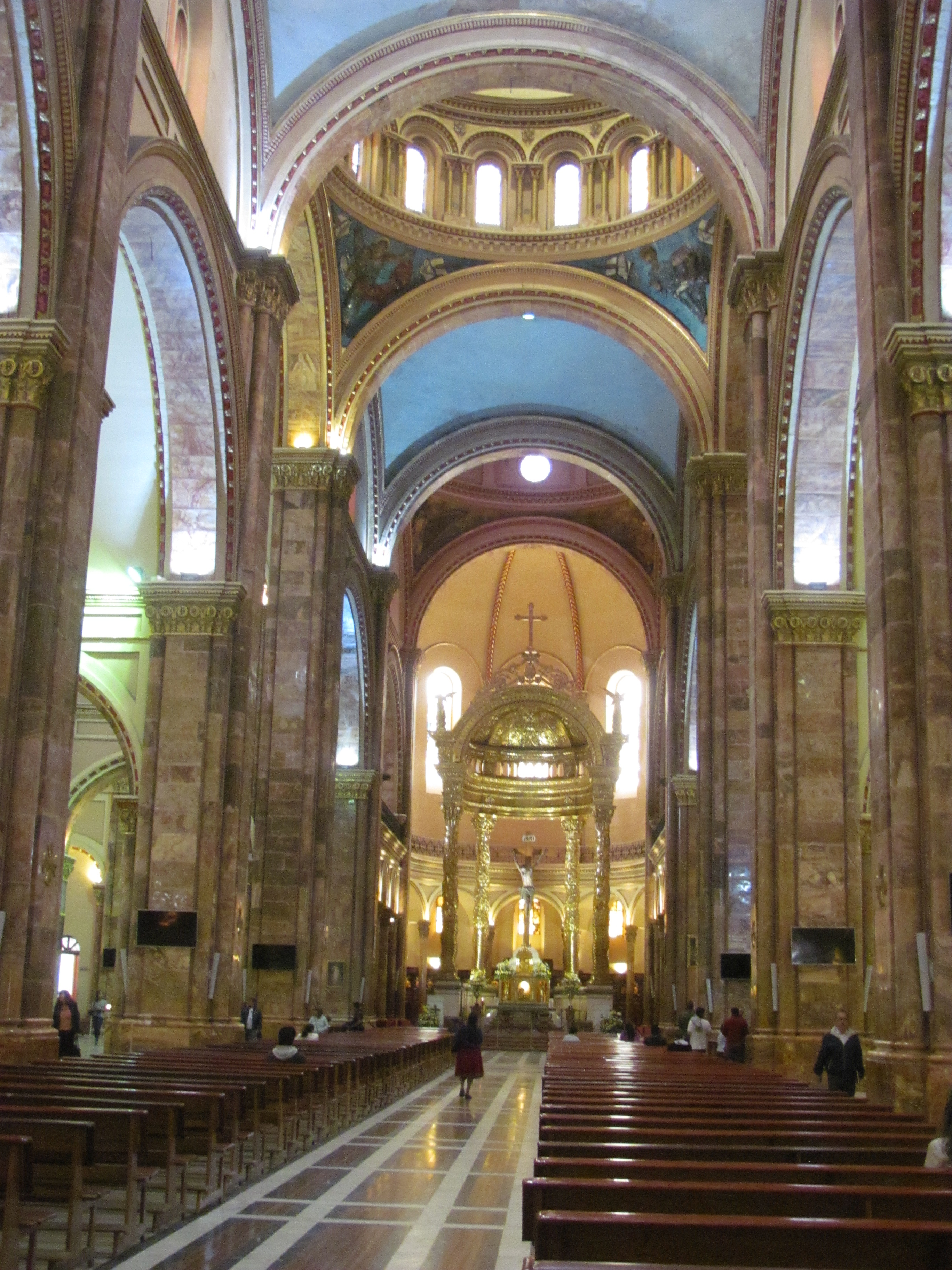
The interior of the Immaculate Conception church in Cuenca.
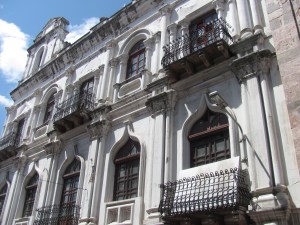
The interior of the Immaculate Conception church in Cuenca.

Some old colonial architecture in Cuenca.

Some old colonial architecture in Cuenca.

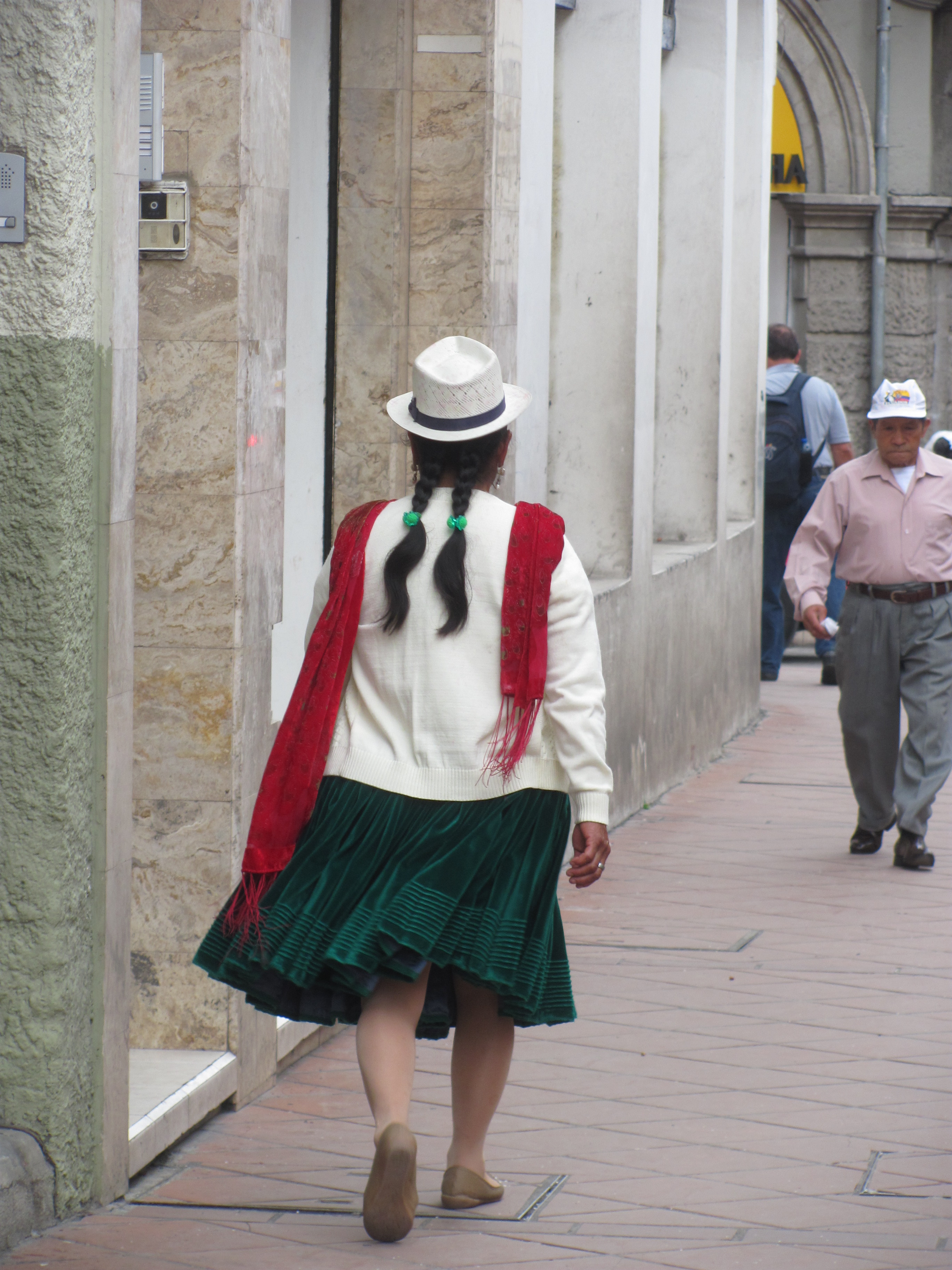
An indigenous woman in Cuenca. She has two braids whereas in Otavalo the women only wore one.
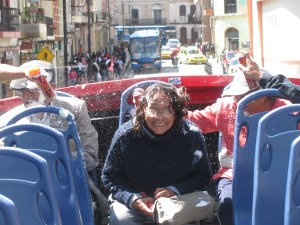
An indigenous woman in Cuenca. She has two braids whereas in Otavalo the women only wore one.

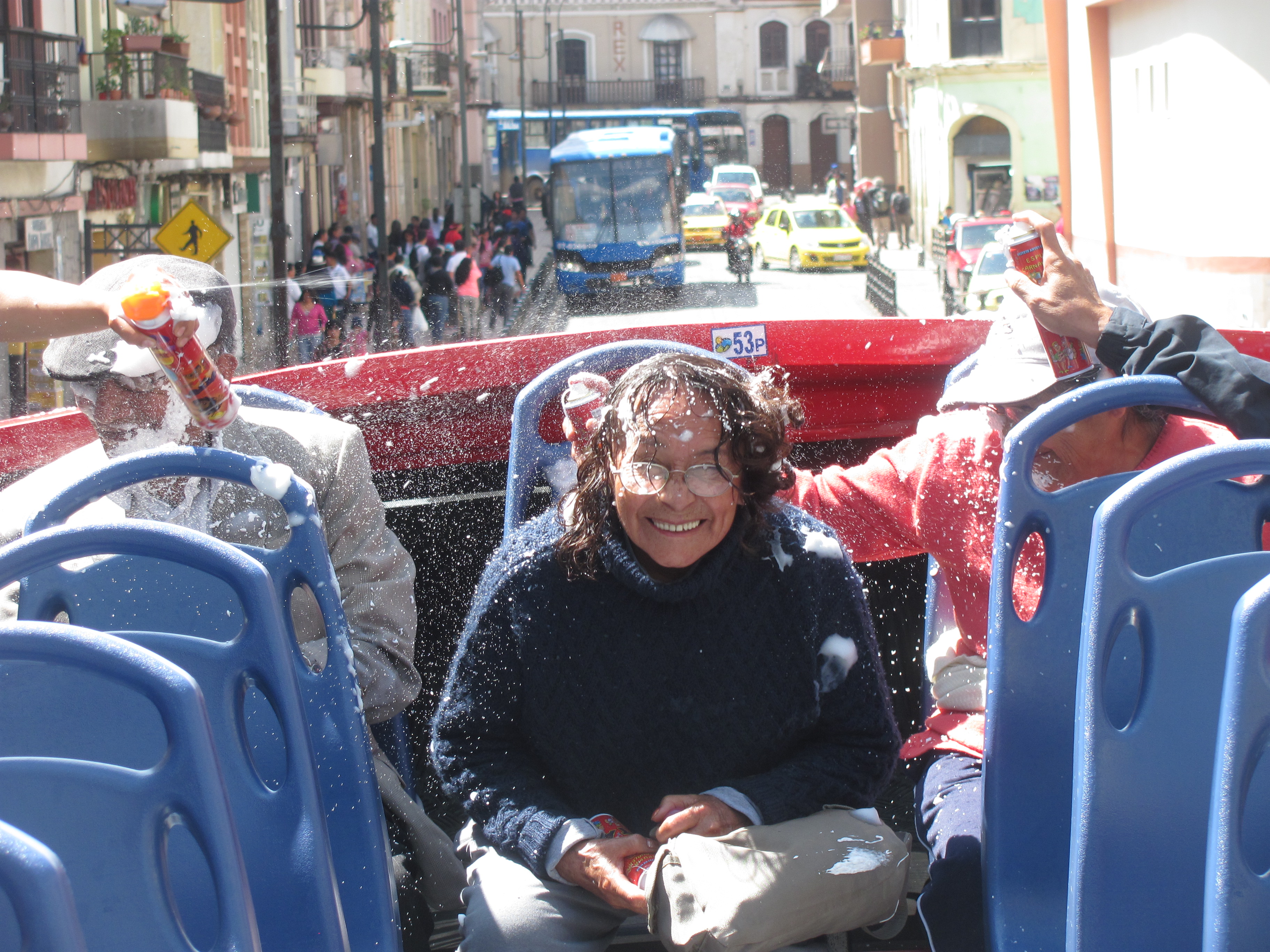
A local family celebrating Carnival week on our bus tour. Squirting foam and throwing water is their idea of fun!

A local family celebrating Carnival week on our bus tour. Squirting foam and throwing water is their idea of fun!

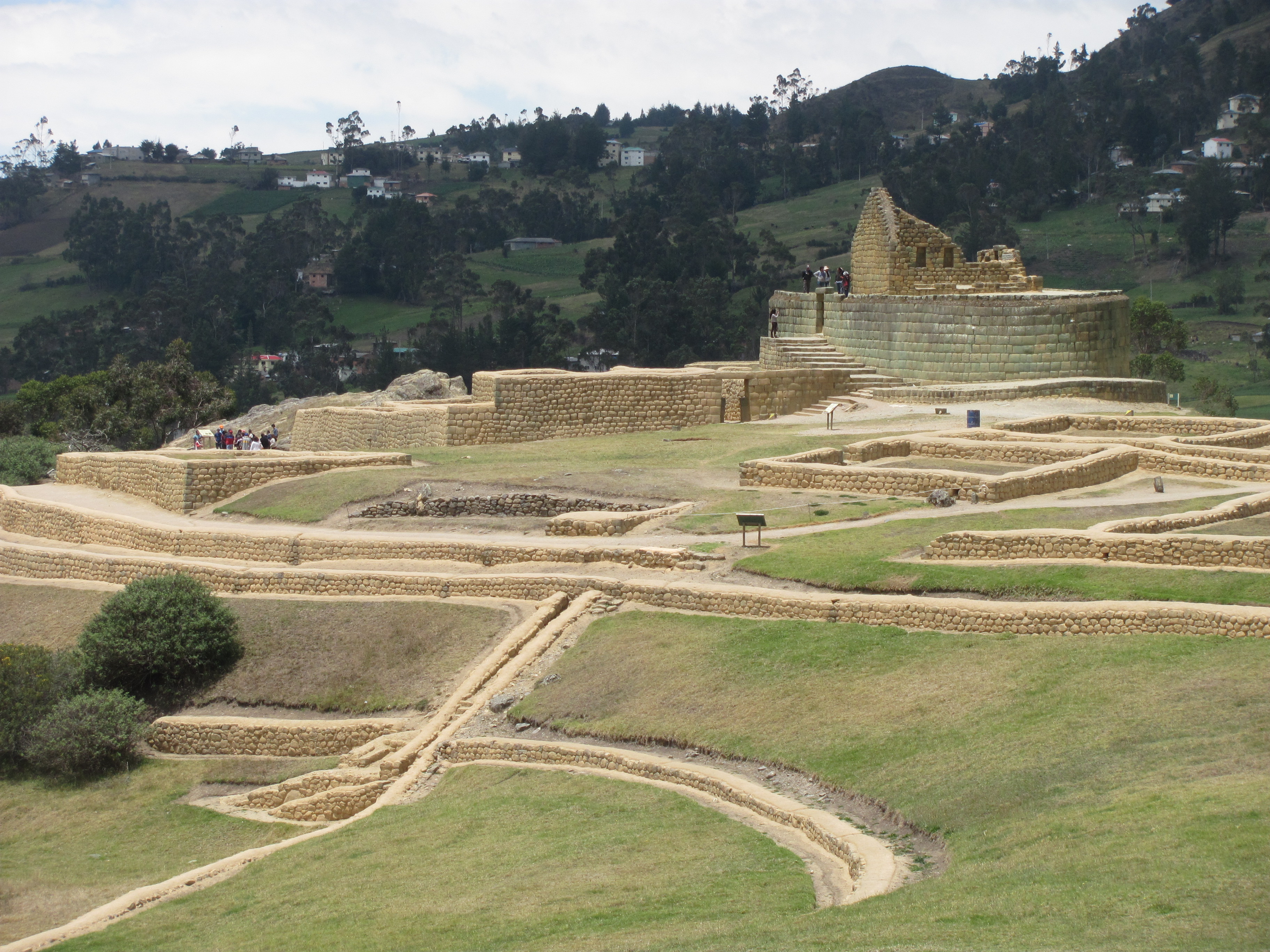
After acquainting ourselves with the southern part of the city via an open-topped bus tour and simply walking about on our own, we decided to take the bus to Ingapirca, the site of ancient Inca ruins which we were told were about an hour and a half bus ride away. Ingapirca was originally the seat of the Canari civilization, a matriarchal society, which was gradually and insidiously taken over by the Incas, a very aggressive people, in the 1400’s. This would have been the same time the Incan civilization was inhabiting Manchu Pichu in Peru. The final ruination of Ingapirca occurred when the Spanish wiped it out in the 1500’s. Nevertheless, the foundations and partial walls of the homes and other buildings are a good representation of the kind of stonework that the Incans used with absolutely no masonry.
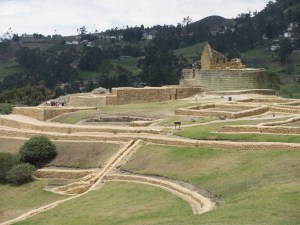
Incan ruins at Ingapirca.
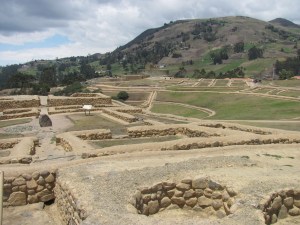
Incan ruins at Ingapirca.

The ruins showing some of the storage basins.

The ruins showing some of the storage basins.

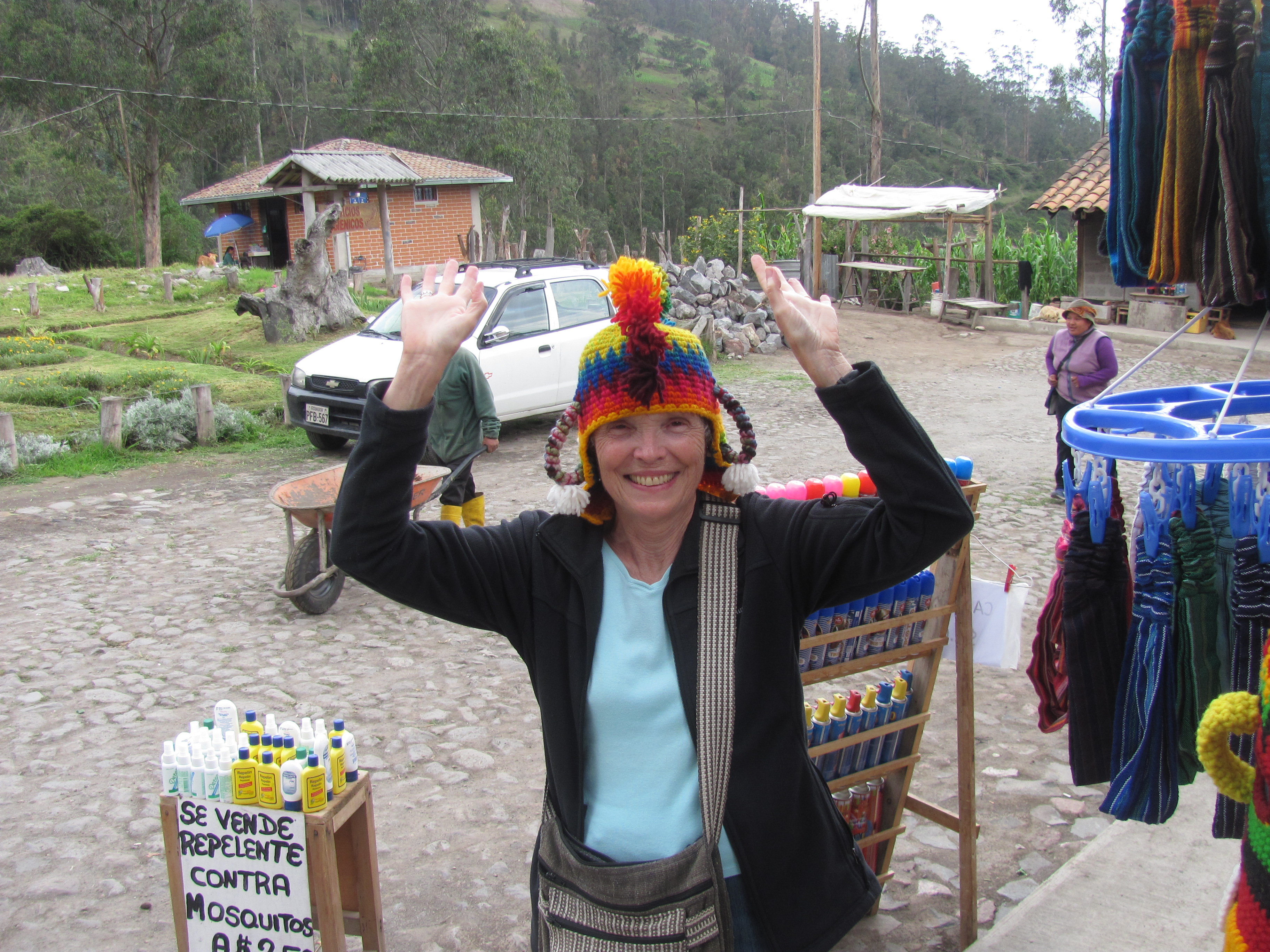
To get there we grabbed the only bus running on the Sunday at 9 a.m. and didn’t get to our destination until two and a half hours later, not one and a half! Since the last bus back to Cuenca left at 1 p.m., we soon realised we wouldn’t have much time to explore the ruins. Little did we know that the only way to get to the ruins was by a guided tour which wasn’t scheduled to begin until 12:15. Do the math and you will see we had just three-quarters of an hour for our tour. The thing was, neither of us bothered to do the math and neither did some of the others, so you guessed it: we missed that bus by about 15 minutes! Now ordinarily this would not be a big deal anywhere else if we could speak some Spanish and those who spoke it would be more patient with us, but in Ecuador nothing is so simple. Fortunately, one person from our group who was using the bus was an Ecuadorian who spoke fairly good English so we gave her and her daughter the task of finding out when we could get a bus back to Cuenca. We found out that there would be another at 3 p.m. so there it was: we had another 2 hours to kill! We were not allowed to go back in and finish our tour. Fortunately or unfortunately, depending on how you look at it, there were lots of vendors around just dying for us to spend our money so that’s just what we did. Actually, it turned out quite nicely for me because it had turned cold as often happens in Ecuador, and I was in need of one of those warm, comfy looking llama pullovers I had been seeing since our days in Otavalo. I was glad I finally succumbed. It made the wait go so much easier being wrapped up in the warmth of that new sweater. The only downside was that it made for a long day not putting us back to Cuenca until 7 p.m.

Two days later, Cathy’s three-week holiday came to an end. She flew back to Quito to get her flight back to Canada, and I stayed on for a few more days at a new hostel in the new part of Cuenca to recoup from a cold and get a much-needed rest. I am much better now that I am in the warm, more tropical climate of Vilcabamba in the south. Now I have no more excuses for not writing more frequent posts for my blog. I will definitely keep you more up to date with the impressions I am forming of this diverse and interesting country.
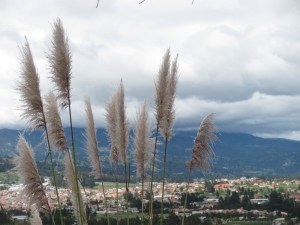
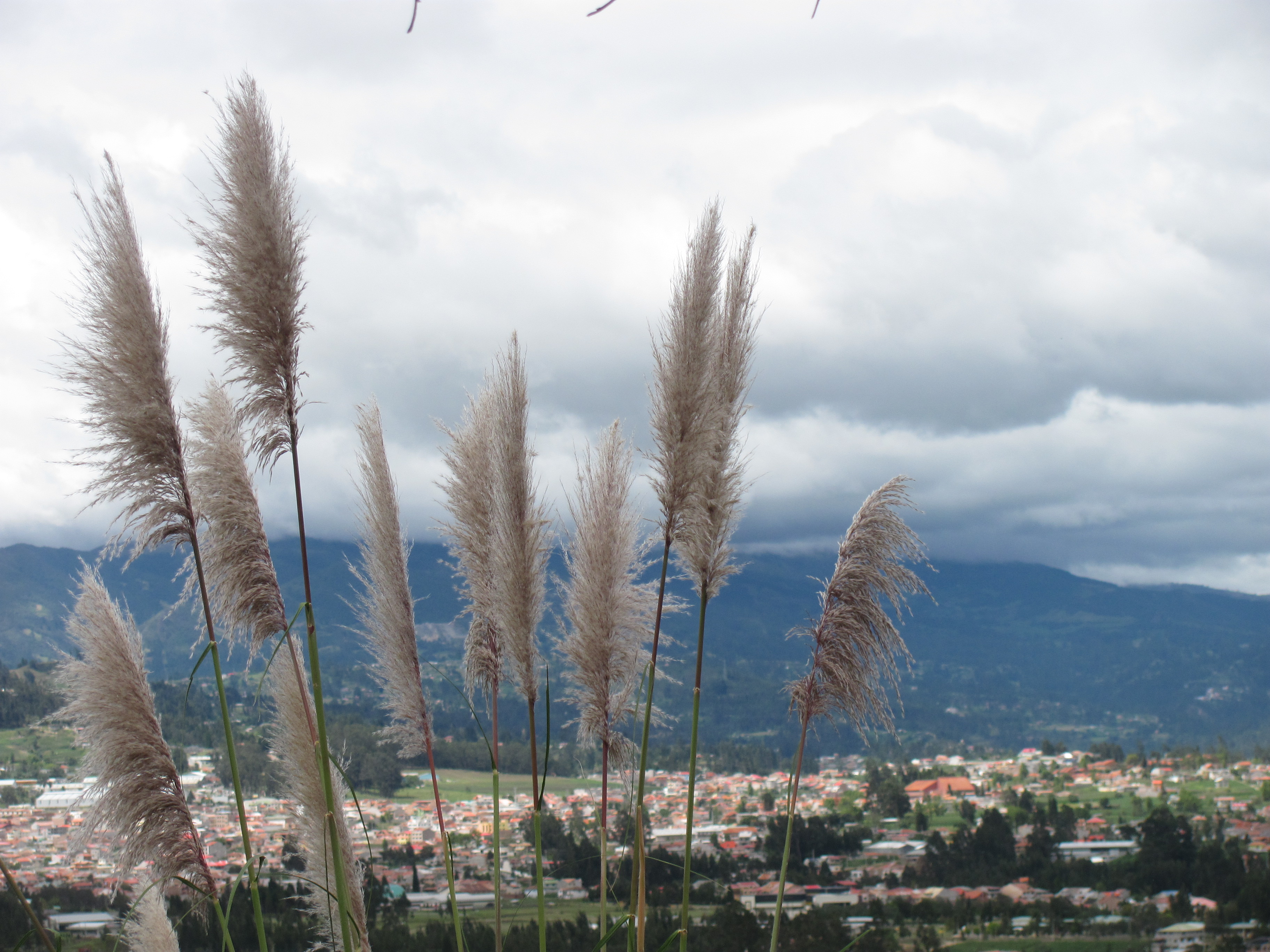
Over looking Cuenca from the zoo.
Over looking Cuenca from the zoo.

“Oh, My Aching Feet”

“This is the wrong form. I can’t accept this,” says the guy at the boarding gate desk at Pearson Airport in Toronto, after scrutinizing the reciprocity visa form I had just passed to him. I think the first thing that popped into my mind was why the heck didn’t I heed the little voice inside which said to me when I was applying for this visa to Argentina, “Is this all there is?” Somewhere in the process of filling out my information I thought I recalled that there was the word ‘forms’ and not the singular, but I could only find the one I had in my hand so this had to be it. At the time, I did think this rather odd but didn’t dwell on it as more pressing issues took over.

That’s all he says to me. “What should I do,” I asked after we stand there momentarily looking at each other. “I am not going to miss my flight to Buenos Aires because I haven’t the right form. It says right there that I’ve paid for it. Won’t that do?”

“We need the authorization number so go over to the Customer Service desk to get the proper form printed off,” he replies. “If you hurry, you can make it.” By now I am beginning to feel the first pangs of panic and my voice probably reflected that as I realized I hadn’t a clue where that desk was or how to find that missing form even if I did know where it was. He tells me that if I take a short cut through the Duty Free shop and hurry that I can probably make it back in time for my flight. Probably! He doesn’t seem too concerned so I think perhaps this has happened to others. In fact while I was waiting at the gate in good time to board my plane, many reminders were given to us, the passengers, that this reciprocity visa was required. Obviously many of them weren’t even aware of this so I felt pretty smug that at least I had mine. Little did I know!

I start to run through the throng of people still waiting to board, telling myself to stay calm and that this will turn out all right. The plane just can’t go without me. I see the desk not too far away but also see that all three reps are busy with customers. I presume they are the unfortunate ones who have missed their connections due to the icy weather conditions in Toronto which had already delayed my flight from Ottawa by two hours. They don’t seem to be in as much of a panic as I am so I bravely announce that I need help right away with printing out my visa form for my flight which is just about to take off for BA. One of the girls picks up on the urgency of my situation long enough to tell me to grab the nearest computer, go into my account and bring up the form. By now my mind is drawing a big blank. What account? After a deep breath, some common sense finally clicks in. I try to get into my g-mail account but the computer isn’t co-operating. I ask the girl for help but she replies that she isn’t very computer savvy. Excuse me but am I hearing her correctly? Finally, a young fellow appears who is obviously aware of my panic and inability to function properly so steps in to help. He manages to calm me down and together we find the account which by then I remember setting up to get the form(s). Behold, there is the elusive second form which I had missed when I applied several days ago. It was way down the page and hardly visible as far as I could tell. No wonder I missed it! He quickly ran it off and after a hasty heartfelt ‘thank you’ (if I had the time I would have given him a hug) I ran for my gate via the Duty Free. By now I’m convinced that more than a few minutes have passed and that the plane has probably taken off. Then I hear my name being called and realize they’re waiting for me! The Duty Free staff are now aware of what’s going on so all come to my rescue pointing me in the right direction to my gate. God bless them all! The area is totally deserted as I approach. All the passengers are on board. I race down the ramp. Please don’t close those doors I silently pray. Instead the crew greet me as though all is normal and calmly direct me to my seat. Such an overwhelming feeling of relief washes over me. I quickly give thanks to all seen and unseen beings who have helped to finally get me on my way.
The rest of my flight was totally stress free. They fed me lots of food, I watched a couple of movies, and even got some much-needed sleep. The next morning I woke up to the captain announcing that those of us on the left side of the aircraft should raise the blinds and take a peek at the view of the Andes below us. We were making a quick stop in Santiago, Chili, and there below us were miles and miles of brown mountains iced with a smattering of snow on its chain of peaks. What a wonderful introduction to South America!2016-01-11 11.17.13

As I write this, I am exactly into the fourth day of my visit to Buenos Aires. In some sense, I feel as though I am in another world way down below but as I get more settled this sophisticated city seems no different from any other European city especially Paris. I understand now why it’s called ‘the Paris of South America’. I should also mention that not only does it look like Paris but it’s almost as expensive.

Here are some things I have noted so far and wish to pass on for anyone who may be thinking of visiting this city:

  1. Bring some American dollars to tide you over until you can find a bank that takes your bank card. My friends and I found out that many banks won’t accept them. So far a bank displaying a big red ‘B’ near the door is the best bet. Money changers, which are now legal in Argentina, like American dollars and Euros but wouldn’t even consider my Canadian money. This is true for right now but in Argentina such things as economy and money can change on a dime.
  2. The cheapest and best way to get from the International Airport to the city centre (about 45km away) is by bus and taxi. The company I used was TiendaLeon located right at the arrivals door. For $15US the bus took me along the main highway to somewhere on  the outskirts of the city. From there I was transferred to a mini van taxi which brought me right to the place I am staying in Palermo. They were all efficient and courteous. If I had taken one of the many taxis that were lined up I would have paid $40.
  3. Bring a good pair of walking shoes, or sandals preferably at this time of the year which is their summer. The city is huge (like Paris) and is divided up into many areas. Palermo where I am staying is further sub-divided into its sections i.e. Viejo, Soho, Hollywood,. There is a subway system which unfortunately doesn’t cover the whole city and buses to go where the subway doesn’t. I have been relying mostly on my feet to take me to where I need to go. I can see more that way. Unfortunately, my lousy sense of direction has caused me many additional steps.  However, I do find that motorists are fairly courteous and seem to obey all the traffic signs. It’s certainly a big improvement over the SE Asian cities I’ve visited.
  4. Buenos Aires, as I had predicted, is not a cheap place to visit, especially in the touristy area where I am staying. Accomodations and restaurants, including food if you eat in, are high. They still haven’t reached our level but with the low value of our Canadian dollar, they are getting close. Transportation by public transit is an unbeatable deal, however. It costs only 5 pesos to go any distance on the subway which is about $.75
  5. If you want to learn more about the city BA has a great deal in their FREE Walking Tours – one in the morning and one in the afternoon both to different parts of the central part of the city. They are available every day come rain or shine. My friends and I took the morning one on our second day here and found it very helpful in learning BA’s past and present. It’s a good way to orient yourself to such a huge city which can be overwhelming at first.
  6. It also helps to know some Spanish. I have found a course on-line, called Memrise, which is helping me a bit for the everyday words one needs but it’s not enough. Many Argentinians know a little English so we manage. However, I have noticed that signs and menus are almost always in Spanish. Thank goodness many Spanish words are similar to our English words. Apparently Argentinians speak a lot like the Italians so my husband who can speak Italian should find it easy to get around when he arrives in March.
  7. Finally, Argentinians like to think in terms of ‘big’. Our walking tour guide took us to Avenue de Julio which they claim is the widest avenue in the world. In fact, he said that Argentinians like to think they have the biggest and best of many things in the world like steaks and soccer.

Probably the best part of my days here so far is waking up each day to the sun. Was it less than a week ago I was slogging around in the ice and snow in Ottawa? My first day here was overcast at about 28 degrees but the last three have been sunny with clear blue skies and temperatures hovering at 30 to 32 degrees. Yes, it’s hot but not unbearably so as there is little humidity and some soft breezes. Today I stayed close to Casa Aire Palermo where I am staying to give my aching feet a rest. This bed and breakfast is owned and run by a young couple with an adorable one year old son who smiles all the time. It’s an older home with about five rooms which they let out and comes with a common kitchen and living area for the guests’ use. To keep within my budget I have been limiting my meals out and taking advantage of their kitchen. Immediately outside my room I have access to a small garden where I can sit at any time of the day. You can find this great place on booking.com my favourite site for locating great places to stay around the world. They have never let me down.

As I look back over this week, I am still coming to grips with how it could have taken a turn for the worse when I was beginning my journey at the airport in Toronto. I would have liked to have handled the situation without losing my cool and almost having a panic attack, but luckily for me it was the beginning of a trip which so far has exceeded any expectations I might have had. I am just so thankful to be here learning about a new culture, meeting up with old friends from Dubuque, Iowa whom I met seven years ago in Bangkok, and enjoying the warmth of the sun. Life is indeed good!

A few pictures taken on my Walking Tour of Buenos Aires

The Theatre Colon opera hall.

The Theatre Colon opera hall.

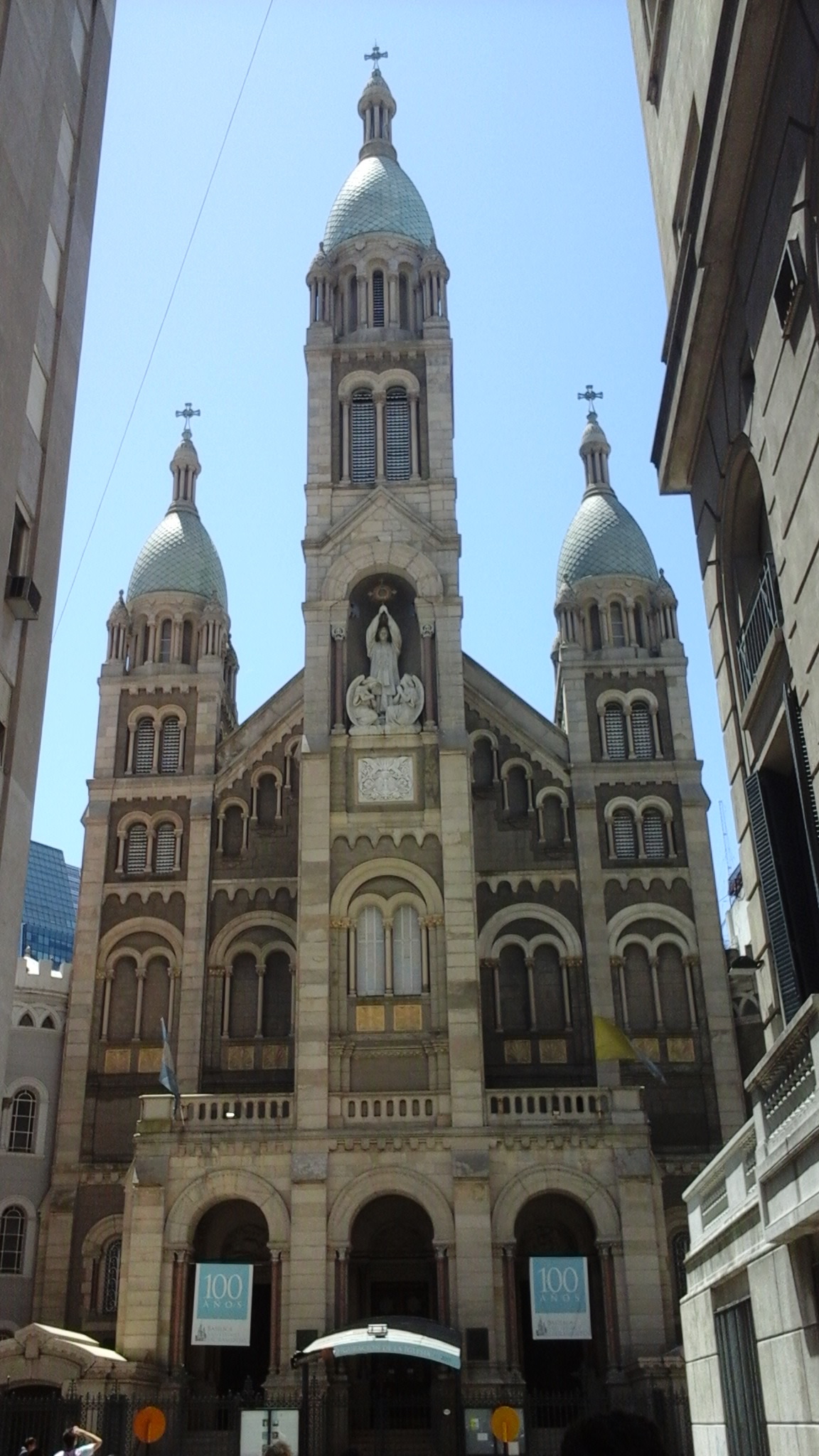
The most beautiful Catholic church in BA

The most beautiful Catholic church in BA

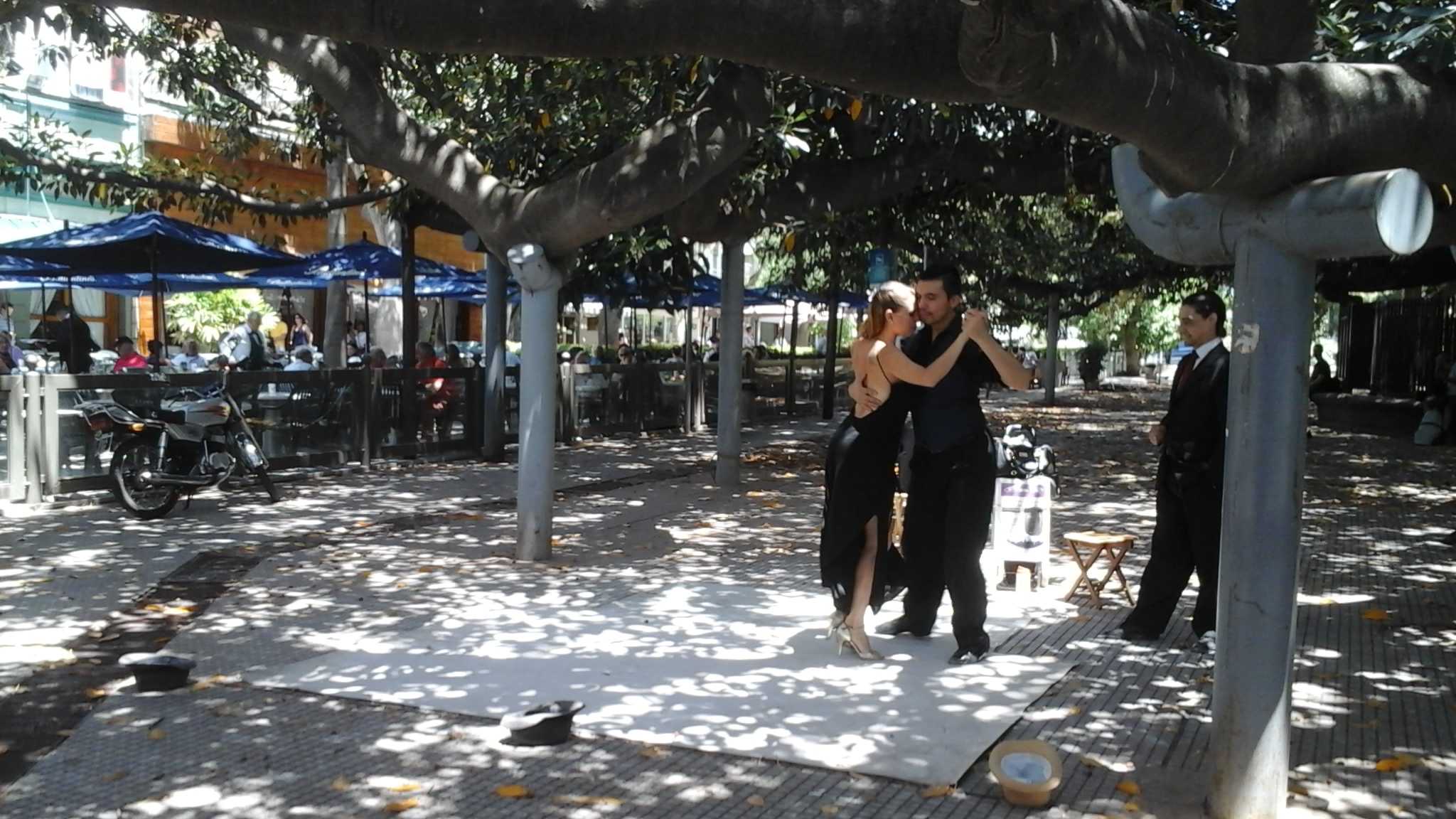
A tango in the park.

A tango in the park.

Our tour guide displaying his skills at guitar playing and singing.

Our tour guide displaying his skills at guitar playing and singing.