A Precious Gift

Isn’t it human nature to want to have a day all to yourself where you have not one ‘must do’ to deal with – a day where you can do whatever you want to do? When I am home I often dream of doing this but somehow never get around to it. Even here in Chiang Mai so far away from my home and husband and the responsibilities that come with both, my mind is filled with a myriad of things to do calling for my attention. How is it that we get so programmed into always doing stuff we really don’t want to do resulting in never really fulfilling that dream?

About a week ago on a Sunday, I must confess to waking up feeling a bit lost and even panicky because I didn’t have anything pressing on my ‘to-do’ list. My thoughts went something like this: ” Should I just forget the list and do some sight-seeing? But I’ve seen all those things that tourists are supposed to see!” my mind protested . “Then perhaps I should spend the day reading all those books I never got around to reading at home, but where can I find a quiet place in Chiang Mai to read?” The one thing I was certain of was that I didn’t relish the thought of spending such a beautiful, sunny day in my room! After this brief mind torture, a flash of insight prevailed, and I realized that here was a golden opportunity knocking at my door – a whole day at my disposal to do whatever my heart wished and wherever my feet led me.

I hastily put myself together and flew out the door ready to face the day. At this point, I didn’t have a clue what I would do with this gift of a day just for me, but the one thing I was sure of was that I needed a substantial breakfast. Breakfast up to this point had been juice, yogurt, cereal, and rye bread in my room.

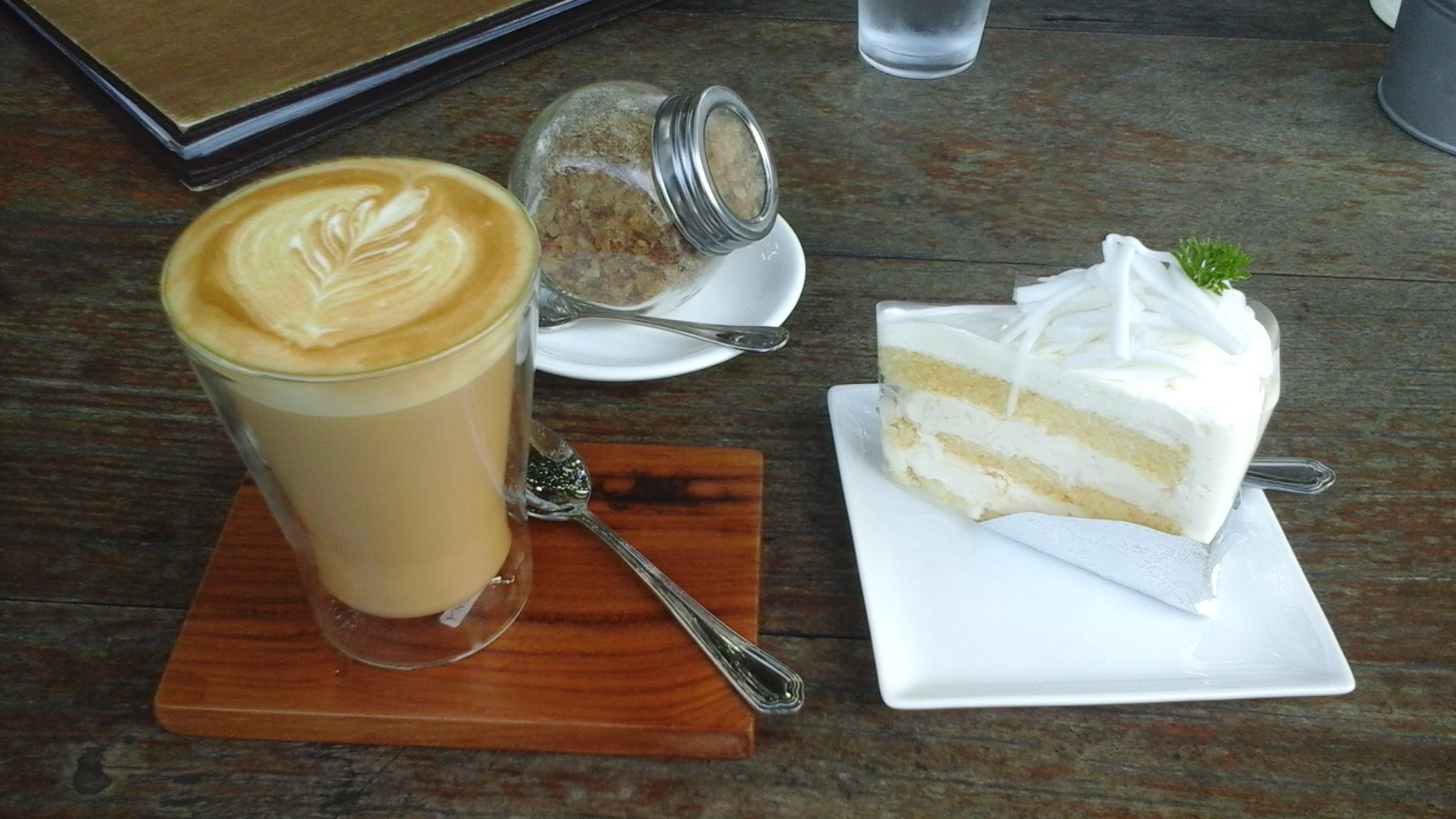
Right away I decided to seek out the restaurant (Good Morning Chiang Mai Coffee) where I breakfasted last year on a Sunday. Back then it inspired me to write a post titled “Sundays in Chiang Mai”. Although their service this time was slow and disorganized because of its popularity with both the back pack and ex-pat crowd and staff that aren’t equipped to handle them, the quality of the food is still there. My appetite was eventually sated by a large french toast with butter and syrup, fruit, and good coffee. By the time I was finished, it was almost noon and beginning to warm up. I left and found my feet taking me to the south gate to take a look around there.  I was impressed at how lovely the fountains in the moat looked. It was at this point I realized what I was going to do with the remainder of my day. I would walk all the way around the moat! This would be long trek but it wasn’t a hot day, so I knew if I was ever to do it then this would be the best time.

I should digress here and give you an idea of how this city is laid out and why the moat that encases the inner city is such an essential part of old and modern day Chiang Mai. This city of now over a million and a half people is composed of the old part or inner city and the newer outlying part spreading in all directions. The inner city where I usually stay and where most tourists congregate is surrounded by a moat and some of the remains of a defensive wall over 700 years old. I read that the moat is about two kilometers all the way around but to me it felt like many more. Here is a map of the inner city.

A map of the inner city and my route from start to finish.

A map of the inner city and my route from start to finish.

In 1296 when the wall and moat were built to keep out the Burmese and Chinese who were the Lanna Kingdom’s greatest enemies, this was an ideal set up to keep the citizens safe. I am not so sure how practical having this moat is today for the traffic in this city. The streets running along both sides of the moat accommodate one-way traffic with turnoffs allowing the traffic to get to the other side. However, the drivers often have to do considerable backtracking to get to their destinations. Since there are no traffic lights, the traffic is always continuous and fast making it hazardous for pedestrians trying to get to the other side. Nonetheless, no one can deny that this moat is what makes Chiang Mai unique. The ‘powers that be’ who run this city know this so maintenance is a top priority. The numerous fountains are nearly always doing a wonderful job of spouting up a lovely spray of water thanks to the pumping stations which seem to be well maintained. Every day the work force can be seen scooping out any debris that accumulates both in and out of the moat. Their efforts do not go unnoticed, especially by visitors like me, and I suspect by most of the locals as it has served them well not only in the past but today as an added tourist attraction.

If you wish to follow me further on my walk around the moat and inner city to get a bird’s eye view of Chiang Mai, then simply click on the first image below. Enjoy your tour!

My Four Days in Bangkok

Except for the first time I visited Bangkok in 2008, on subsequent visits I never bothered to linger too long in this huge sprawling city. Maybe it was because of the jet lag which invariably comes with such a long flight over to this part of the world from my home in Nova Scotia. How do you deal with a teeming city of over eight million people where there are literally thousands of things to do and see when you are tired and your whole body is out of whack? Many visitors to Thailand have come to look upon Bangkok as merely a jumping off point to the more laid back areas, such as Chiang Mai in the north or one of the country’s beautiful beaches in the south.

This year I am travelling solo without “hubby” so I decided to renew my acquaintance with Bangkok by revisiting some of the places I saw eight years ago and to take in a few new sites.

My first significant change was to find another place to stay rather than the Atlanta Hotel on Sukhumvit Road which is primarily noted for its large, glitzy malls as well as its rather sleazy Nana area, one of Bangkok’s famous red light districts. This time I booked myself into the Uma Residence, a new boutique hotel in the Dusit area, which isn’t too far from the Chao Phraya River in the older and more residential part of the city.

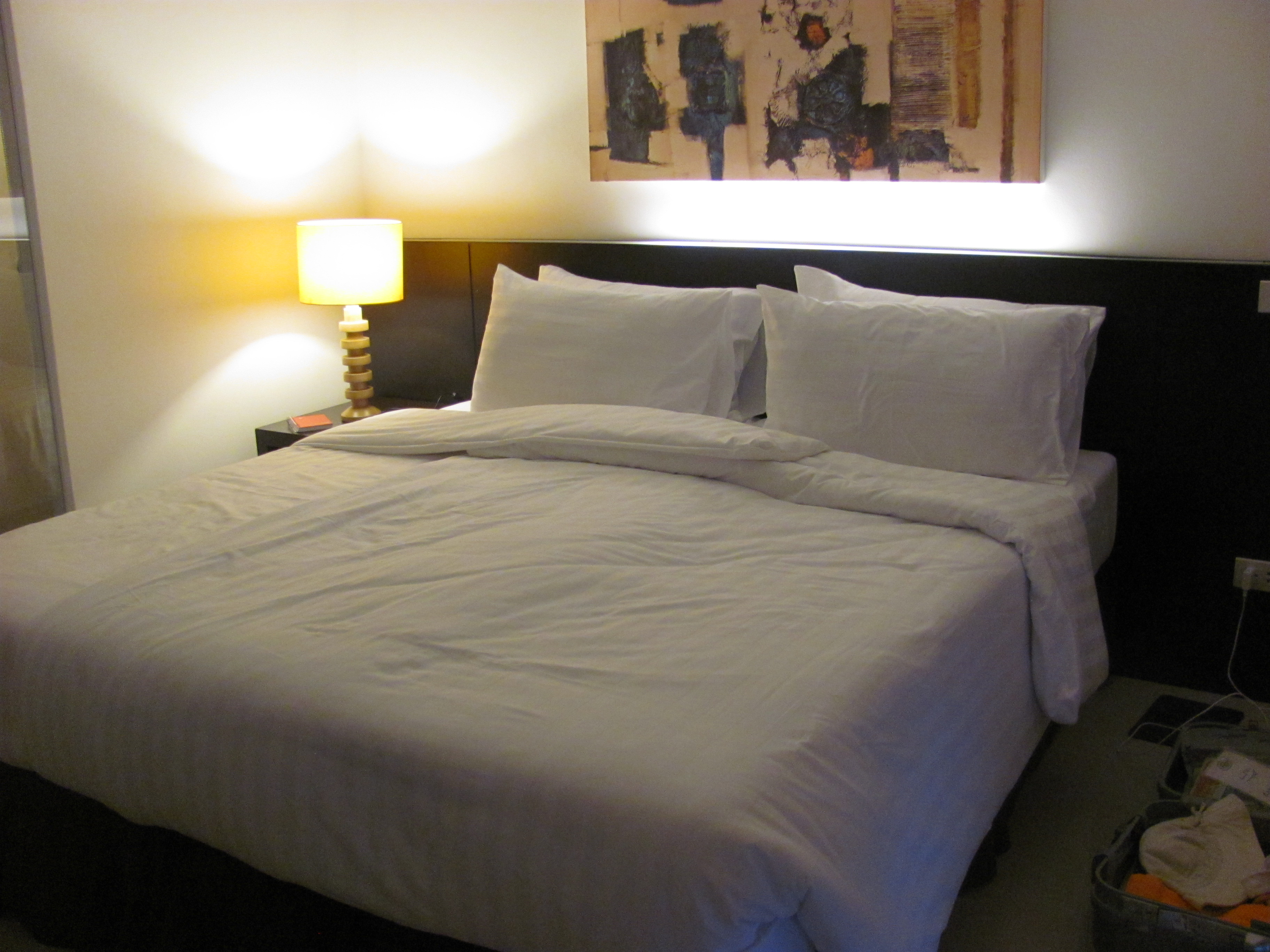
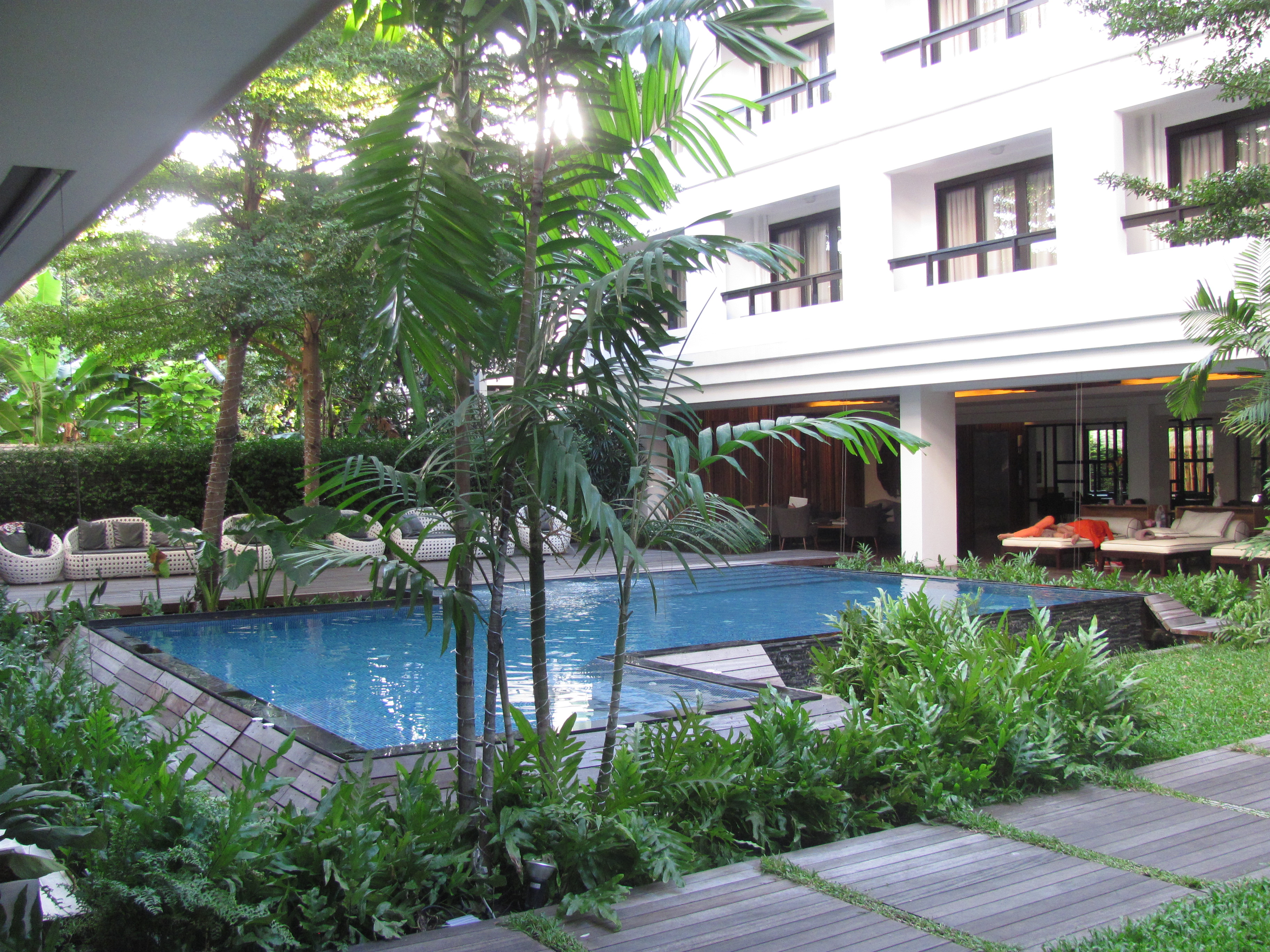
If you happen to find yourself in Bangkok at any time, I would highly recommend the Uma as a great place to stay especially if you have a modest budget and want a decent bang for your buck. Taking advantage of their opening special (it opened in June), I received one night for free after a three night stay resulting in a nightly cost of $28. For the price of a budget hotel, I received accommodations that were the equivalent of a 4 star hotel. My room was tastefully decorated with pictures on the walls, which is a rarity in Thailand, and an extremely comfortable bed. They even provided me with a dressing gown, slippers, and a hair dryer. However, it was the outside of the hotel which I found the most inspiring. In the centre of the grounds was an inviting pool with more than enough lounge chairs, tables, and couches to relax in. To top this off, they provided us with cookies and all types of coffee or hot chocolate (from a machine) which was surprisingly good, for FREE! The Bangkok Post was available every day so I was able to catch up on all the latest Thai news since I left in March. Coffee table books were scattered here and there for additional reading. To make it even more like home, there was a cute Christmas display with Santa and all his reindeer. There are over 100 rooms at Uma but they were not all full so at times I felt like I had this place to myself. Another plus was that it is located off a busy street on a small soi ( lane) so it was exceptionally quiet compared to the Atlanta or any other hotel in Bangkok. Even the rooster who woke up early like all roosters do didn’t bother me as he simply added to the country atmosphere. As I revelled in my comfy sofa with a cappuccino and newspaper, I began to wonder if I really was in the city.

Entrance to the Uma Residence hotel.

Entrance to the Uma Residence hotel.

My comfortable room.

My comfortable room.

The pool and gardens.

The pool and gardens.

Christmas display.

Christmas display.

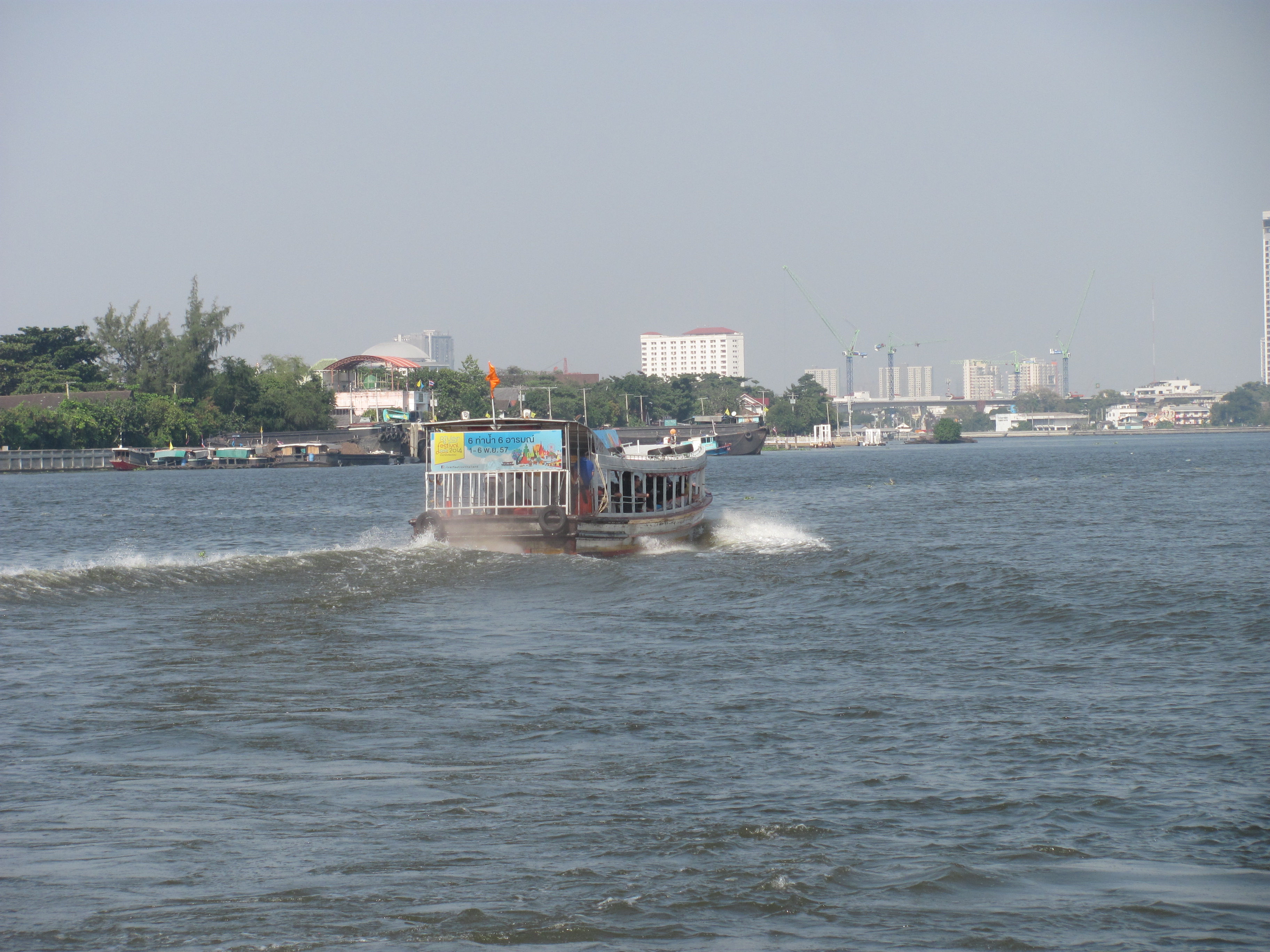
My one complaint about this hotel would be the distance to the nearest BTS Sky Train stop which as I found (because I did it) had to be more than 5 km. away leaving me only the option of using a taxi. To make matters worse, not all taxis would pick me up so I had to be somewhat aggressive in hailing one down. One of them refused to take me to my hotel because it was out of his way. However, the upside to this lack of transportation was that I was within walking distance to the Chao Phraya River, a large river that still functions as a part of Bangkok’s rather chaotic transportation system. Numerous boats of all shapes and sizes ply up and down the river all day and night providing visitors with an alternative to taxis, tuk tuks, the subway and the sky train. This is a great way to travel and see the sights in Bangkok. For the first time, I visited Chinatown and had fun finding my way around the maze of narrow streets and sampling some of their street food. I was told that the best time to see it and the river, too, is at night when every thing is lit up.

Chinatown

Chinatown

One of the ferries that transported me down the Chao Phraya River.

One of the ferries that transported me down the Chao Phraya River.

Another popular spot near my hotel is Khao San Road which was dubbed by a Thai writer as “a short road that has the longest dream in the world”. This street has been immortalized by the hoards of backpackers who have been coming to Thailand for the past 30 years looking for a cheap room and board, cheap and sometimes pirated goods of all kinds, and a thriving nightlife. Most stayed for only a few days before heading out, but unfortunately, there were those who were looking for that elusive dream that they couldn’t find back home, so got trapped by what Khaosan had to offer. Everything was for sale and it was cheap. It wasn’t unusual to see a few lost souls wandering the street at any time of the day with a beer bottle in hand as I did on my first visit several years ago. However, this time, there seemed to be a different vibe. Many of the old buildings have been renovated, and I didn’t spot anyone wandering aimlessly around with beer can. Even the quality of the copious amount of merchandise seemed to have improved along with the prices, of course! Khaosan appears to be undergoing some kind of change for the better. However, let’s hope it can keep some of its past which would be the reputation it has for providing people a place to be able to walk a short street crammed with so much to see and enjoy.

Khao San Road - famous backpacker row.

Khao San Road – famous backpacker row.

Including Ronald!

Including Ronald!

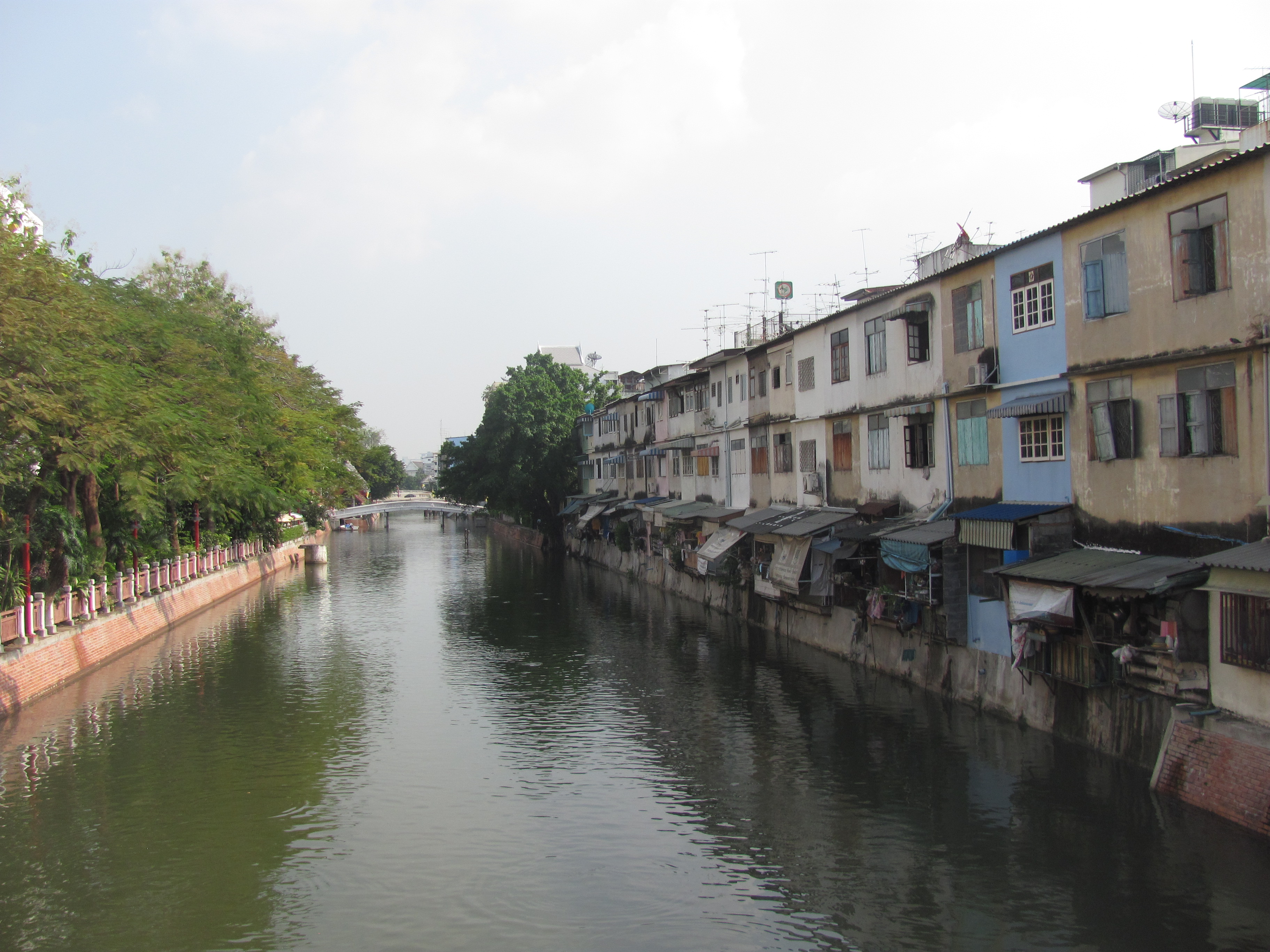
You can get a really good feel for the Thai way of life as it is today as well as it was in the past in this area called Dusit. Bangkok was built in the central part of Thailand along the Chao Phraya River in the 1700’s on a low-lying plain. An extensive system of canals was built for drainage to assist the agricultural activity of the area at that time resulting in its claim as “the Venice of the East”.  Over the years as the city began to spread outward in all directions, many of the canals were paved over to make roads for the increasing traffic. As an aside, Bangkok today has over 7 million cars for its population of just over 8 million! Needless to say it has a real problem with traffic which in spite of every mode of transportation possible, there is still no real solution. The one which no one wants to face would be to ban people from driving their cars forcing them to rely more on the transportation which is available even though it isn’t perfect. Perhaps it’s a good thing that some canals still remain and are used by the residents as an alternative to the horrendous traffic, and by the tourists as an opportunity for them to get a taste of the traditional Thai lifestyle. Unfortunately, the canals or klongs are quite polluted and the disparity between the rich and poor living quarters can be a bit unsettling for some.

One of the remaining klongs.

One of the remaining klongs.

A modern Thai home facing the canal.

A modern Thai home facing the canal.

Older homes of the not so wealthy.

Older homes of the not so wealthy.

Markets and street vendors galore are another familiar scene in many parts of Dusit. I was running into them everywhere I went. Fresh vegetables, fish, flowers, and all kinds of merchandise can be bought without ever having to set foot into a shop. Most business is done out in the open. Most of my meals came from various vendors near my hotel, and I didn’t get sick! In the past I’ve gotten sick from eating in restaurants but never from street food! It’s also cheaper to eat this way, and for a solo traveller this can solve the problem of eating alone in a restaurant. Some of the food vendors do provide tables and chairs but they are almost always occupied by locals because most Thai eat out rather than at home.

Vegetable and fruit street stall.

Vegetable and fruit street stall.

This lady sells her fish from baskets which she can take anywhere.

This lady sells her fish from baskets which she can take anywhere.

A flower stall near Payap pier where I got my ferry.

A flower stall near Payap pier where I got my ferry.

There were many more sites to see and things to do in my newly chosen area if I had planned for more time. The Grande Palace, the Wats Pho and Arun, the Vimanmek Mansion, the largest teak house in East Asia, and the Dusit zoo are just a few of them. Hopefully the Uma Residence will continue to offer their wonderful special for it is undoubtedly a little piece of heaven and the perfect place to chill out after a hectic day on the streets of Bangkok.

Thailand Again?

“Are you going back to Thailand again? When are you leaving? What is it that draws you there?”

These are the three questions I can expect to be asked this time every year as I ready for my big trip over to Thailand. As most of you probably know my answer to the first one is an unequivocal “Yes, I am going back again.” In reply to the second question, I am leaving on December 9th from the Robert L. Stanfield Airport just outside Halifax arriving in Bangkok on the 11th causing me to lose a day. This will be my eighth visit. When I mention this, many then throw out the third question of WHY I would choose to go to the same country for eight years in a row?

The first time I was asked why I keep returning, I really had to give some serious thought to my answer. With little difficulty, I answered with these main reasons: the warm climate with lots of sun, the Eastern culture, and the friendly people. Over the years my reasons have multiplied so the aim of this post is to help you understand what calls me back each year to this beautiful and exotic country.

TO ESCAPE WINTER

This is undoubtedly a top priority for me and Thailand offers this in spades. Our winter months coincide with their dry season which is invariably sunny and hot. December and January are the most comfortable months.  After that it starts to heat up and can be quite humid as its near the equator. However, I will take this any day over howling winds, sleet and snow  which have become a steady diet in Victoria Beach in Nova Scotia. To give you an idea of just how important this is to me, this trip will be the second time I am going solo leaving “hubby” in Florence to shiver in the raw cold that it offers in winter. No thanks! I have been there twice and loved the city but could never imagine spending a winter there.

FRIENDLY PEOPLE

It was probably after our first whirlwind trip in 2008 when we were on our way home that I knew without a doubt that I would return again and the next time would be longer. The gentle smiles of the Thai people with their genuine greeting of ‘Sa wa dee ka’ accompanied with a wei ( a forward bow of the head with hands together) did it for me. I sometimes wonder where they get all their patience especially with us tourists who are coming in droves often failing to leave a positive impression. We live by the clock over here in our Western world and the Thai don’t. They also don’t understand why we let little things like being overcharged for a tuk -tuk ride get us so angry.  The Thai are usually more than happy to help us out if we run into any difficulty, and the ones we have met are honest to the nth degree. Hubby has left his wallet, camera, and glasses at various places over the years and never once did he not get them back.

THE THAI CULTURE

About 95% of the Thai population practices the Theravada form of Buddhism. Unlike all other religions, it does not emphasize how or what we must believe but more on how we can better ourselves in this life by carrying out positive actions in the way of the Buddha. The wats or temples are open all the time and everyone is welcome so unlike our churches which are for the most part only open on Sundays. Buddhism is a way of life practiced every day not just on Sunday. Since their time is not the high priority it is in our society, to visitors it appears the country is in a perpetual state of organized chaos which somehow to our utter surprise seems to work. The Thai take things in their stride and simply laugh at those visitors who get upset over things that don’t work out according to their agendas or code of perfection. Needless to say this laid back attitude does wonders for my stress level. This along with the sun improves my well-being considerably.

EASE OF LIVING

Thailand is now considered by the modern-day standards of our world as a developed country making it a relatively peaceful and welcoming country to outsiders. It’s probably the only country in the world that can claim a succession of military coups over the past 20 years which have been mostly peaceful. The two largest cities, Bangkok and Chiang Mai, are now world-class and have all the amenities of the Western world. There is poverty and there is great wealth, but there is also a growing middle class. All of this along with the multitude of gorgeous beaches make this an easy place for ex-pats to live there and for visitors to hang out. People always ask me if I feel safe there. My reply is that I feel safer there than I do at home.

COST OF LIVING

Most people are really surprised when I tell them that I can live cheaper in Thailand than I ever could in Nova Scotia. This is especially true in the winter time. I don’t have to heat my home or feed fuel to my car. In addition, my food, accommodation, and transportation are all cheaper here. I usually rent a fair-sized room with a fridge, TV, and air-conditioner for about $275 a month. It’s much cheaper to eat out than in so I have no cooking to worry about. I get my room cleaned and sheets changed once a week. What more could I ask for? It’s really an extended holiday since I can do all those things such as reading and writing that I never can find enough time for when I am at home.
DENTAL/MEDICAL SERVICES

Thailand is quickly becoming a mecca for those people who seek expert and inexpensive dental and medical services. I have been taking advantage of their dental services every year having had crowns, gum surgery and expert cleaning done to keep my teeth healthy. This time round, I am scheduled to have two crowns put in probably to the tune of $500 at most. The last crown I had done several years ago cost me about $200. Here in Annapolis Royal I would have to pay about $1200 per crown. I have never had any medical work done but for my friends who have, they all report having a very positive experience and are highly impressed with the quality of service. It’s not surprising that Thailand is being noted as a good country to go to for a medical holiday.

MARKETS AND SHOPPING

Over the years I have noticed a marked increase in the number of markets available now in practically every town of fair size. Chiang Mai where I hang out for most of my time is a shoppers haven for not just craft markets but for those who have money to spend and are looking for world-class shopping. In the past two years, three new classy malls have opened up, and it’s not just tourists who frequent these malls with their upscale shops and cafes but more and more Thai, especially the youth. The Thai people love to shop as hubby and I witnessed last Christmas while in Bangkok.

ACCESS TO OTHER SE ASIAN COUNTRIES

The Suvarnabhumi International Airport in Bangkok is now rated one of the busiest in Asia and the 16th busiest in the world. It is the main link to all other Southeast Asian cities. Because Bangkok is a large cosmopolitan city rivalling all other SE Asian cities, it has become the favoured jumping off point for tourists to other parts of Asia. I think many tourists would agree with me that returning to Thailand after a jaunt to any of the other Asian countries is somewhat akin to returning home. Is it the people who inhabit this country today or the long history of a strong and independent race who have never been under the rule of some foreign power that makes this place a safe haven for all the adventurous souls who roam the world? Who really knows but I’m game to bet that most travellers feel the same way as I do.

RE-UNITING WITH OLD FRIENDS

Over the years I have made friends with other travellers who go to Thailand again and again for many of the same reasons as I do. We may skip a year or two but we all manage to somehow meet up again and share past travel experiences and discuss all the advantages of the kind of lifestyle we have adopted over the years. We aren’t exactly ex-pats because we don’t live there year round but we are becoming close to it. Chiang Mai has probably one of the largest and most active expat societies in the world composed of many people from the US, Britain, Canada, and other European countries. It started off with mostly older retired couples and singles looking for a warm country which isn’t too expensive to live in, but more and more I am discovering many young people who have decided they don’t want to be a part of the ‘rat race’ or simply haven’t been able to find appropriate work in their own country so have chosen to become what is commonly known now as ‘digital nomads’. They are working their way around the world and like the older folk are discovering that Chiang Mai is a nice place to settle for a while.

In just twelve hours, I will be heading out for my long journey over to Thailand for my eighth time. I will arrive in the early morning of the 11th after approximately 30 hours of flying time with breaks in Toronto and Amsterdam. It’s too much time in the air, but I always try to make the best of it with the latest movies, reading, and some sleep if I’m lucky. I usually manage to beat any serious jet lag by taking a homeopathic remedy called “No More Jet Lag” which doesn’t help me sleep while on the plane but does eliminate all the side effects of flying long distances, such as fatigue, sleep disorders, and general discomfort. I am usually back to normal after a day or two and ready to enjoy what is becoming a second home for me. I no longer can imagine spending a winter here in Nova Scotia so long as I have the choice to go to some place like Thailand.

A “Words of Wisdom” Walk

Life can be full of some pleasant surprises when we stop to listen to our hearts and be open to the suggestions of others. This happened to me a couple of days ago while having lunch at Nest 1, a restaurant and resort near the small town of Chiang Dao in the mountains of Northern Thailand.

I need to go back a bit and explain how my husband and I ended up at this particular restaurant in Chiang Dao in the first place. Back in January when we first arrived in Chiang Mai, we met a lovely young American couple who told us about this little spot up in the mountains about an hour and a half drive from Chiang Mai. They spoke so enthusiastically of it that I made a mental note to not forget about it and to research it as a possible place for us to escape to in March at the height of the hot, dry season. We followed through and ended up spending four glorious days there.

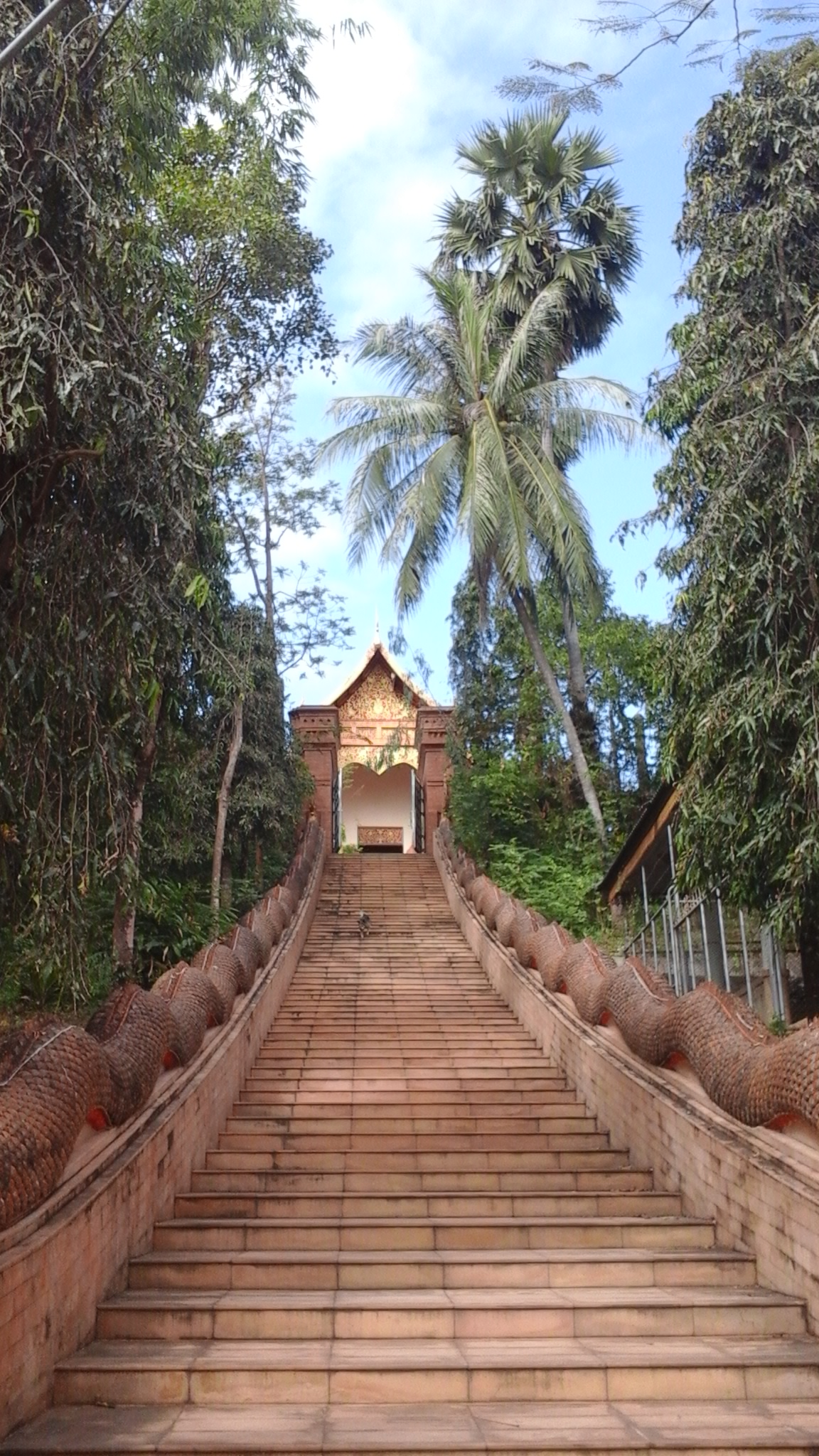
Our escape turned out to meet our expectations except for the one thing that, unfortunately, you just can’t avoid this time of the year in Northern Thailand – the haze from the fire burning ritual that the farmers practice every year. The government is trying to discourage it but with little success. With this one exception, we thoroughly enjoyed the invigorating waters of one of the many hot springs in the area,  the ‘oh so cool’ nights accompanied by deep sleeps, a market to beat all other Thai markets that I have seen for size, and finally, the “Words of Wisdom Walk” which prompted me to write this post. How did this happen and why this title? I must give credit to our attentive and very knowledgable waitress who served us lunch at Nest 1. Her enthusiastic description of the 310 step walk up to a landmark monastery nearby had me hooked. To work off the lunch, we took her suggestion and started up.

Our inspirational and very helpful waitress at Nest 1.

Our inspirational and very helpful waitress at Nest 1.

The Chiang Dao market.

The Chiang Dao market.

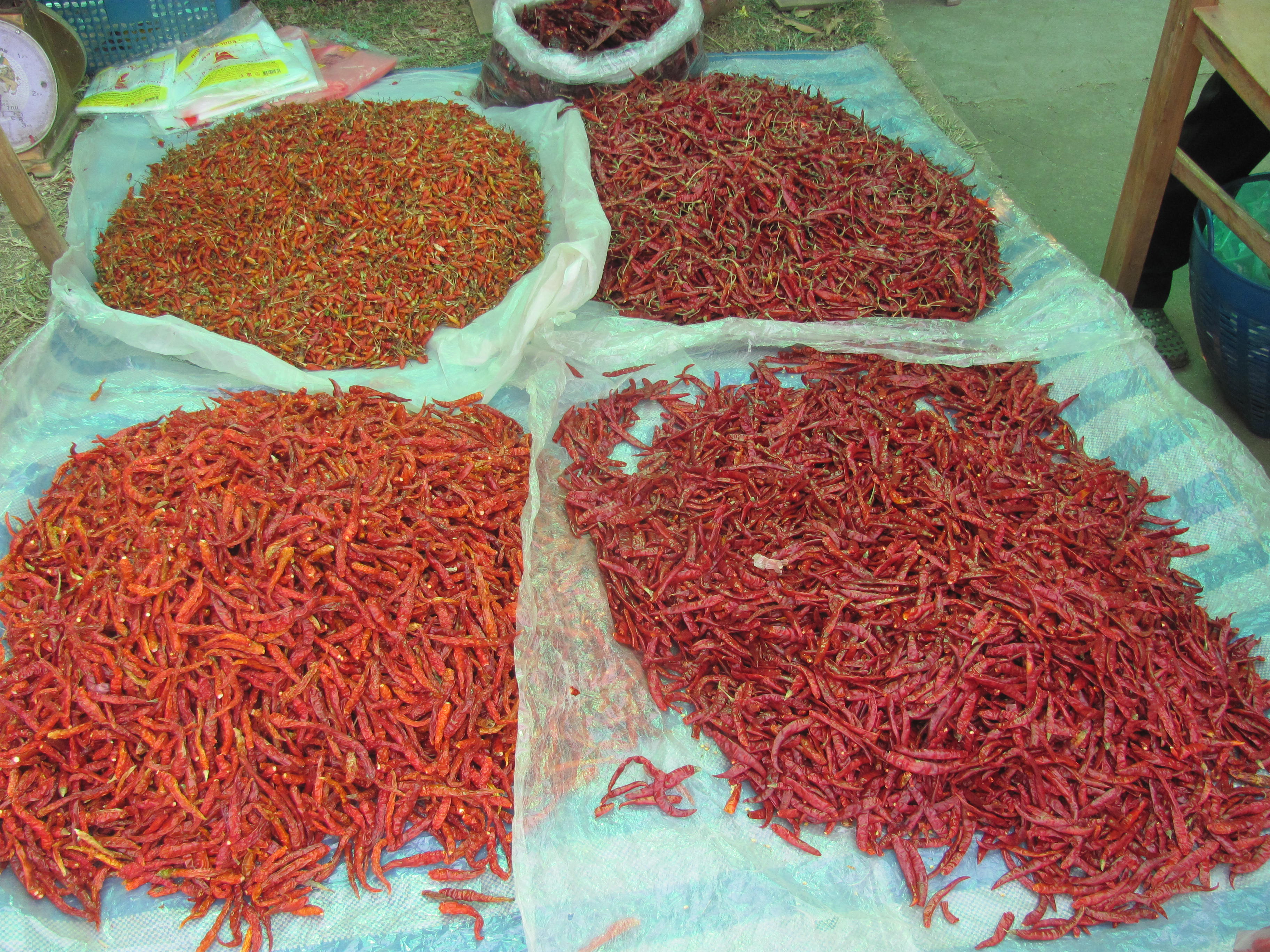
Some chilli anyone?

Some chilli anyone?

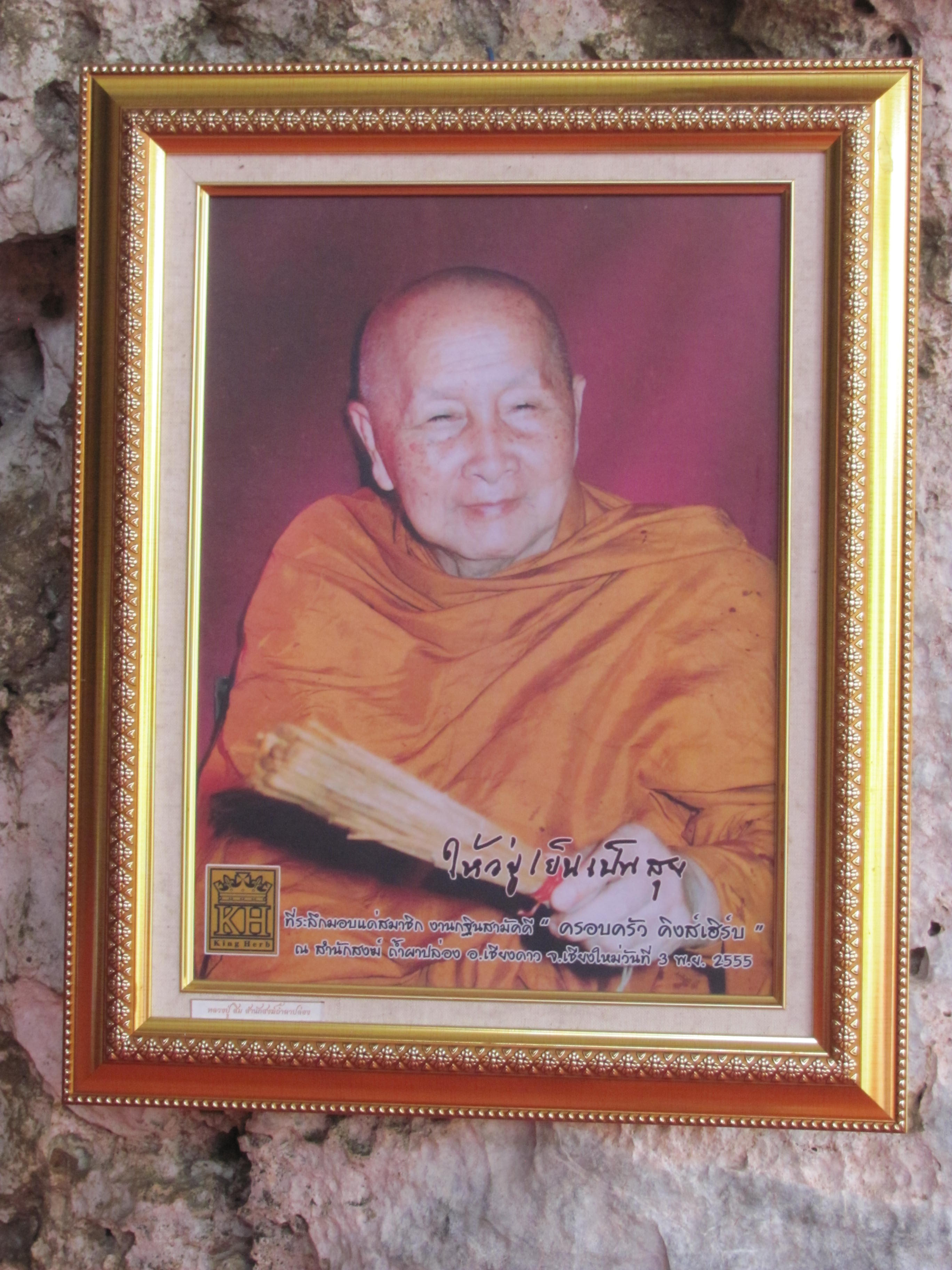
The Tham Pla Pong temple was built into the mountain that hovers over Chiang Dao some time in the early 1960’s as a memorial to a monk from this area who devoted most of his life to the monk hood for well over 60 years.Chiang Dao - March 2014 046

The monk to whom this temple is dedicated.

The monk to whom this temple is dedicated.

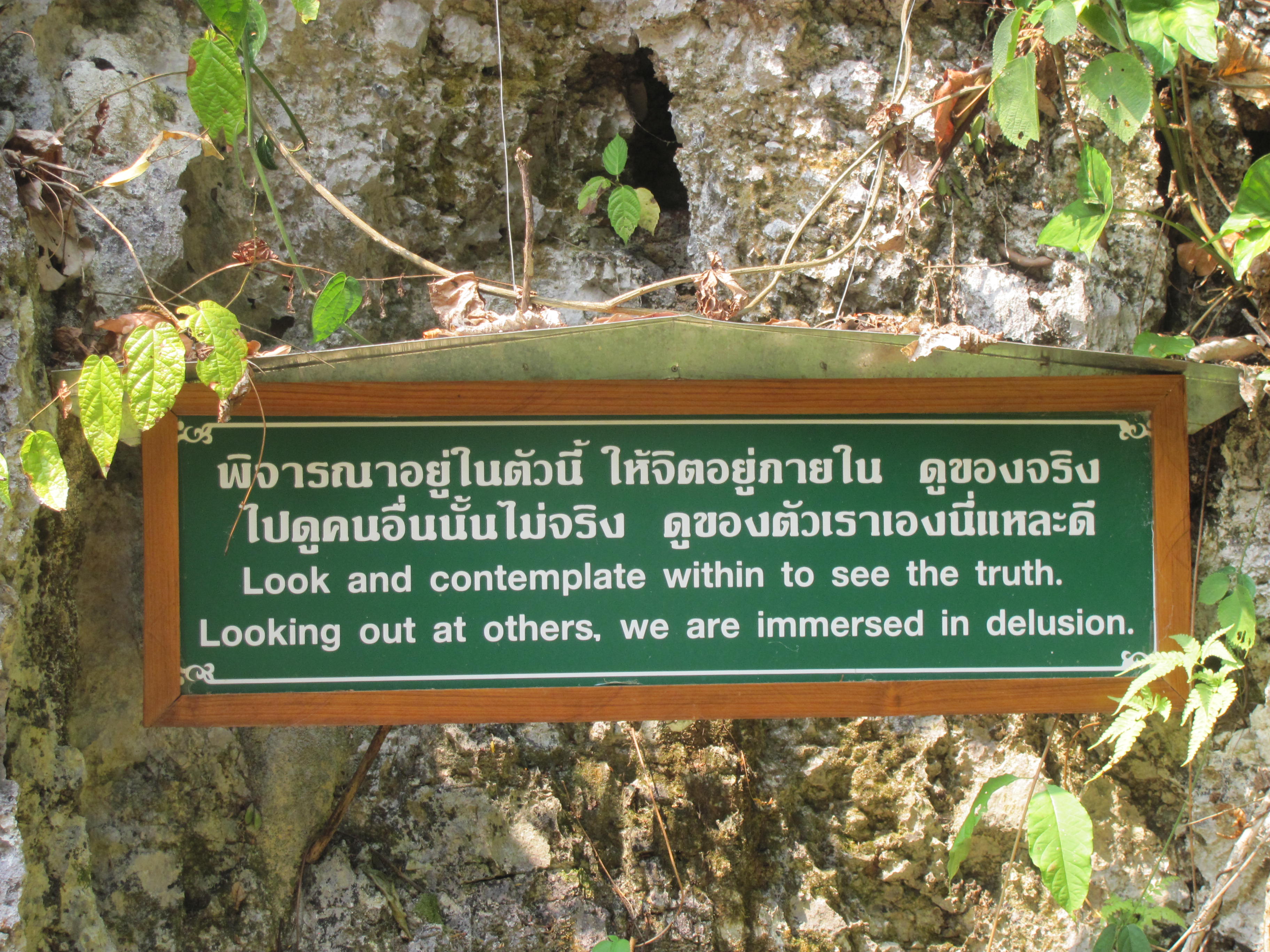
Although the temple is beautiful as so many of the Thai temples are and the scenery from the top was spectacular, the best part was, believe it or not, the climb up those steps. On both sides of us and at about every tenth step, we were confronted with an inspirational saying from the Dhamma, the Buddhist term for his teachings, to spur us upward. I couldn’t help feeling a wonderful sense of peace envelop me as butterflies flitted around me, and strange bird songs echoed through the trees. Even though Thailand is in the midst of their dry season, the foliage all around not only looked very green and healthy, but also very familiar. I quickly realized I was seeing many of the common house plants that we have at home, such as the philodendron and the ‘wandering jew’ all looking much more beautiful in their natural habitat. Below are some pictures of those ‘words of wisdom’ that spoke most clearly to me and the ones that I and probably most of us need to be reminded of from time to time.

Just think how much better our world could be if we could practise this one more often!

Just think how much better our world could be if we could practise this one more often!

Another favourite!

Another favourite!

And so the work begins!

And so the work begins!

After a seemingly quick and easy descent, I felt rejuvenated and strangely enough quite at peace with myself and the world. I realized I had just experienced a wonderful form of meditation achieved by mental focus and physical movement in harmony with the surroundings of nature. I really don’t think meditation can get any better than this because it sure beats sitting in the lotus position trying to still my thoughts in a room by myself.

The Big “C” in Cambodia

It was Joseph Mussomeli, the American ambassador to Cambodia in 2005, who gave this warning to all visitors to the country:

Be careful because Cambodia is the most dangerous place you will ever  visit. You will fall in love with it and eventually it will break your heart.” 

Upon reading this, my mind flew back to four years ago when I met an American at the Atlanta Hotel in Bangkok who poured out his heart over his disenchantment with teaching in Cambodia. His problem wasn’t with the students whom he found to be respectful as all Cambodian students are to their teachers, but it was the corruption within the system from the top down to the teachers and even the students themselves. Every one seemed to be “on ‘the take” from the Education Minister who was a directly appointed by Hun Sen, the Prime Minister, to the department heads who accepted bribes in the way of new cars and big houses, the teachers who demanded money from their students to supplement their meagre incomes, and even the students who fought to find money to buy copies of their exams and in some cases their results. The losers in the system were the students whose parents couldn’t afford to pay the teachers’ demands, and the students who really learned nothing since most of their time was taken up with getting those good results. How can a country move ahead when its educational system is in such disarray?

This is a good example of how the country has been run since the days of Pol Pot and the Khmer Rouge. From the powers that be at the top, to the teachers and doctors and, yes, even some of the many NGO’s that have invaded this country, corruption lurks and is mostly responsible for the poverty that is seen throughout the country. I hesitate to blame it all on corruption or the big “C”  as there is the aftermath of the trauma left by the massacre of over two million people. Yet on second thought, perhaps even this would not have been so devastating if there had been more money put into mental health to give the population the necessary tools to deal with their demons. Instead,much of the money that has been allocated by the donor countries has unfortunately gone into the pockets of the government officials. The incredible fact of the matter is that natives and ex-pats, including some NGO’s, are all well aware of what has been going on, but most are reluctant to talk about it let alone do anything about it … until quite recently. From what I’ve read and can imagine from such a system that if you are honest and speak out against it, you might have your heart or some other part of your anatomy broken, but if you are a fearful sort, you will most probably close your eyes to it all. Unfortunately, the great majority of the people in this country have fallen into the latter category which isn’t surprising given Cambodia’s brutal recent history along with the ancient Khmer class system of king and slave.

The big C issue is not just peculiar to Cambodia, it hovers over most of SE Asia. Since December, we’ve been witnessing the protests occurring in Bangkok for the same cause as the protesters are fed up with the corruption they see in their present government. The same is happening in other places around the world – the Ukraine, India, and Pakistan to name a few. It is so easy for those in power to be corrupt and just as easy for us who aren’t to simply ignore it or pretend it doesn’t exist. However, I think many of us are willing to take the risk and say enough is enough, even in countries like Cambodia where there is the all too likely risk that you can be shot down by a motorbike whizzing by in the dark of night. The people there will tell you about at least one incident or more that they know of where this has happened.

After all I’ve learned through my reading and talking to native Cambodians and foreigners who work there, I do have some faint feeling of hope that the past and present way of doing things will change but ever so slowly. I have seen Siphon and Mach at the Meas Family Homestay trying to make a difference slowly but surely. They are strong believers in getting their community to keep the good part of their culture such as the weaving and the working of their land, but at the same time endeavouring to bring the changes which will matter to their community if they are to rise up and make life better for themselves. Doing what they want to do and not buying into the game of bribery, they are beginning to gain the respect of their community. Their after school program is a good example because here we saw an eager bunch of kids coming to their school voluntarily to learn, not just English, but a good example of how their lives could go if they choose. Then there is, Rotah and Sithan, the young couple running the Learning Centre at the garment factory on the outskirts of Phnom Penh, who worked diligently for ten years to get their NGO status the legitimate way and not the old way which is to hand over more money to get more quickly to the top of the list. They are very proud of what they are doing and trying to pass this on to their students.

Finally, there are the street protests by the garment workers that took place in January. Unfortunately, six were killed and over 100 were thrown into jail and still to be released. However, they are not giving up and are planning further protests. It remains to be seen how the government will deal with this in future. About a week or two before we arrived in Phnom Penh, the garbage collectors went on strike. They were actually given a small raise, just enough to keep them quiet, but they were not able to get medical compensation which is what they desperately need since they aren’t paid enough to pay for the bribes many of the doctors demand to compensate for their low salaries. In spite of all of this, it’s encouraging that Cambodians are beginning to stand up for themselves for the first time. It’s about time, but they will have to do it with small steps and low expectations when dealing with a government that says it’s concerned about the state of the country’s affairs but shows little action to prove it.

On our last day in Phnom Penh, my husband and I squeezed in one final thing to do which was a visit to L’Institute de Francaise for an art show that our journalist friend told us about over breakfast that morning. We are so thrilled that we took the time to go because here I saw another hopeful sign from not only the paintings hanging on the walls, but also the dancing that we were fortunate enough to see as some of the artists rehearsed for an upcoming show. Actually it was these paintings below that inspired me to do this piece on corruption or the big C as I prefer to call it. To me corruption is like cancer: it can ruin a country as it can ruin a person if we allow it, but with a little bit of  help and a change in our thinking it can be beaten.

Disease of a Society - Bo Rithy, Cambodian artist

“Disease of a Society” – Bo Rithy, Cambodian artist

Disabled Nation

“Disabled Nation” – Bo Rithy

Heartfelt expression from a Cambodian dancer.

Heartfelt expression from a Cambodian dancer.