How I Dealt With the Effects of Climate Change in Laos

Having to deal with climate change has never been on most travellers itineraries in the past, but I am betting it will be in the future if it isn’t already. I know it will be on mine. When Luang Prabang was experiencing erratic weather such as it did last week, most people I talked to were trying to ignore it by calling it a fluke or quickly changing the subject if it was brought up. Their intention was clearly on what to see and where to eat and not the weather.

Last week when I was packing my bags to catch the bus to Vientiane, the capital, I realised that I really didn’t want to leave Louang Prabang. I wanted to stay and experience the city bathed in sunshine and warmth. I wanted to explore some more of the Hill Tribe villages further north. I wanted just to linger a little while longer and savour its charms and slow pace of life. I have to confess I felt short-changed for I had only two measly days out of nine with clear, sunny skies. The others were dull and grey with maybe a few feeble  rays of sun trying to break through here and there. The worst of it was that each day the temperature dropped a little bit more…down to as low as 10 degrees! Not expecting this kind of weather left us tourists basically shivering in our shorts and sandals.

Over the years I have learned to adapt to travelling to this part of the world by taking as few clothes as possible …. just what I think I’ll need. Other than what I wear when I leave Canada is all I will have for any kind of warmth. So for the time I was in Luang Prabang, it was this outfit every day except for those two days of sunshine. At least I didn’t have to waste precious time deciding what to wear. Instead an easy routine set in: just grab those jeans, a long-sleeved top, my one and only fleece cardigan, my runners with my one pair of socks, and a scarf, which I broke down and bought at the Night Market, and get this on as quickly as possible in the morning. I must confess, I had to resort to wearing this outfit to bed on the night the thermometer went to below 10 degrees. It felt more like zero to me… worse than my  old drafty house in the dead of winter in Victoria Beach.

The five-star hotels probably had some kind of heating source, but my guest house certainly did not, and why should it? This kind of weather is not the norm for Laos. Yes, Luang Prabang is in the mountainous north of this small country where cooler temperatures can prevail in the dry season but apparently not as intense as what I experienced. The one blessing I did have for those cold nights was the fluffy white duvet on my large queen – sized bed. I was able to double it up and make a comfy little nest out of it to help keep me warm. Usually the places I stay will supply you with just a sheet and a light blanket which is quite enough for warm nights so I was lucky to have that duvet.

On our coldest day, I just couldn’t bear to be in my room at my computer making plans for my upcoming travels, blog writing, or wading through E-mail. I had to find a warmer place to do my computer stuff and keep moving. With this goal in mind, I set out. Although my guest house had Lipton’s tea and instant coffee available for breakfast, I have to admit that a cup of good coffee is the best way for me to start off my day. With that in mind, I headed for Le Benneton Cafe which became one of my favourite places to relax and savour a really good cup of coffee along with the newspapers to catch up on the latest Lao news. Fortunately, they provided thick plastic covers for the doors to shelter us from the cold making it warm and cozy. Most eating places were all open so weren’t much better than my room.

After tearing myself away from there, I decided to visit Mount Phousi (meaning sacred hill) in the centre of the city to climb up the 328 plus steps leading to the top. This hill which is over 100 meters high is graced with a golden pagoda which cannot be ignored as you approach the city or from wherever you happen to be while there. Once up to the top, you are rewarded with a panoramic view of the region including the two rivers…the Mekong and the Nam Kham. It’s not surprising that it has become the perfect place to view the rising and the setting of the sun. I regret not experiencing either but at least it helped to warm me up and give me some much-needed exercise. Furthermore, I had avoided the crowds who go up to catch the perfect sunset or not so popular sunrise picture and had the place to myself.

With the stair climbing under my belt, I decided to go to the nearby Indigo Cafe for a bowl of their pumpkin soup. This was definitely a soup day. I wasn’t too disappointed except for the rather small bowl which was, however, accompanied by a delicious, healthy roll.

The next thing on my agenda was to indulge in a massage and hot sauna. The only place that had a sauna as far as I could find was the well-known Red Cross Massage Centre. It wouldn’t be everyone’s first choice for indulgence and pampering because there were absolutely no frills. Everything was basic, but it supported a good cause, and I wanted that sauna to help draw out the toxins which were contributing to my cold brought on, no doubt, by the erratic temperatures. I was on a mission to outwit the weather. As I had hoped, the sauna did the trick even though there were at least a dozen near naked women packed into a small room. The heat and close body contact set up a curiously funny but intimate atmosphere, not just for me but also the young Lao women who were with me. I felt like we had really bonded even though we didn’t share the same language. I love their sometimes child like sense of humour where they take delight in such little things. The Centre does have separate saunas for males and females but that’s it. Everything else is shared. If you are taking a sauna, you must basically fend for yourselves by bringing your own towel, or a sarong as I did, for a cover. The massages were mostly good I would say based on what others told me on Trip Advisor and word of mouth. My masseuse had very strong hands which made things a bit too uncomfortable for me at times. However, she apologized and did try to lighten up when I let out a groan every now and then. It wasn’t one of my better massages; however, the whole experience gave me what I wanted. I felt better afterwards and definitely warmer.

My day ended with a hot and too spicy Laotian soup for me. Nevertheless, I managed to have one of the best sleeps in a while as I bunked down in my day clothes under my duvet tent. Having to deal with the effects of a changing climate in Laos had not only turned out to be my most memorable day of all, but may mean that I will have to revisit this charming and most beautiful country in southeast Asia.

Click on the pictures for the captions.


Luang Prabang – Still a Precious Jewel in SE Asia

Sometimes waking up in the wee hours of the morning can be a positive experience. Studies have shown that it is often the most creative time of day for many people. I don’t know what part creativity played in my waking up at this time a few days ago, but what I do know is that it led to witnessing an attraction that has become one of the prime reasons tourists are flocking to Luang Prabang in Laos.

After nine years since my first visit to Luang Prabang, I am back again to see what changes have taken place. I am anxious to discover if this charming UNESCO city has managed to weather the scourge of too many tourists descending upon it, or if by some miracle it has managed to escape that and still be the peaceful place it was back in 2009.

Perhaps several days isn’t enough time to give it a thumbs up for managing to maintain its equilibrium but so far so good. This little city of about 55,000 souls appears to have kept its charm and is still fairly laid back compared to many other SE Asian cities. How has it managed to achieve this when others are struggling to keep up with the onslaught? I would guess it’s mainly for these reasons:

  •  possessing 33 of the most beautiful wats anywhere in this part of the world, not only creating a learning centre for young Lao men and Buddhist scholars, but also a number one tourist attraction.

  •  featuring its original shop houses still in good condition dating back to the time when Luang Prabang was one of three kingdoms ruling this part of SE Asia, thus, enabling it to qualify as a UNESCO heritage site.

  • providing a tranquil environment created by the green forested mountains which surround it, numerous waterfalls, and two rivers…the Mekong and the Nam Kham… which meet up in the middle of the city to form a perfect confluence.

    The Nam Kham River on its way to the Mekong.

In 2009 I was one of the few tourists who managed to drag myself out of bed to witness the daily monk walk for collecting alms. What was once an overlooked daily religious event carried out every day in the wee hours of the morning from 5:30 to 6:30  by the monks has these days morphed into one of Luang Prabang’s top tourist attractions. This is not surprising considering how our world in just nine years has changed. The growth of our social media and the technology that drives it has been the stimulus for increasing the number of tourists who have put this event high up on their list of ‘must sees’. This has, in turn, given the locals in need of income to entice their visitors to shell out money for food to fill the alms pots carried by the monks. The result has seen some nasty incidents of improper tourist activities like snapping ‘in your face’ pictures of the monks…many are just young boys. It’s no surprise that such shocking behavior creating such a circus-like atmosphere has not gone down well with some tourists and locals.

The picture at the top of this page is a close up of the monk walk taken by me in 2009. Unfortunately, my camera would not co-operate in taking pictures this year in the dark.

I don’t know if the unusually cold morning we had here a few days ago proved this observation made by so many others over the past few years to be erroneous or not, but I am pleased to report I did not see any of this. The mini-vans, which pulled up along the route where I happened to be standing to unload eager tourists, was done with a surprising silence. I actually found it all quite eerie to see everyone walking around in the dark. We all had our cameras ready for when the monks would pass and the offerings made, with everyone respectfully staying a good distance away from them. I also witnessed how those tourists wanting to take part in the ritual of offering alms…sticky rice… to the monks were being instructed to do so in the reverent manner that such an occasion calls for by some locals.  As for the problem of other foods going into their pots such as packaged goods with questionable nutritional value being sold by local vendors to visitors and locals alike, this is a problem still to be solved. I read in the local newspaper that there is a movement afoot to address this problem by encouraging vendors to make their own edible gifts with rice and natural ingredients to sell rather than peddling the junk food which will undoubtedly cause more harm than good. Many of the monks have been throwing it out or giving it back to the vendors for them to sell again. The proposal is a good one but could be difficult considering all the people involved. At least it’s a start in the right direction which hopefully will have an outcome that will continue to honour this age-old custom.
Physically the character of the city hasn’t changed a great deal. The wats I have seen so far haven’t been altered and are as beautiful as ever. 

The old shop houses lining the main street and the riverside streets are still there looking better than ever. Being a UNESCO city has forced this issue which the local authorities and property owners are adhering to. To accommodate the growing tourist trade, many of the buildings have been renovated into lovely boutique inns and more upscale restaurants. The Three Nagas where we enjoyed a gourmet meal in 2009 is still there but the prices have more than doubled. The cost of food has risen substantially every where, but good prices and good food can still be found beyond the centre and at the Night Market. An authentic Lao dish can be found on the street, especially side streets, for 15,000 kip which translates to about $2.50 Cdn. I can easily keep my daily food expenses under $20 which includes a delicious Lao coffee with a baked goodie at one of the many cool cafes. Also, Sysomphone Guest House where I am staying helps my budget by providing a decent breakfast as part of my accommodation costs. 

So far I have not discerned any tremendous changes to the environment in and around Luang Prabang. Having two rivers running through it is definitely a plus for this city. How fortunate that the mighty Mekong River and its smaller tributary, the Nam Kham, should meet right in the centre and that they have maintained their beauty with no over development. The streets running along side of each of them are lined with quaint hotels, oodles of restaurants, and numerous spas and massage parlours. Furthermore, it’s all kept relatively clean making them a joy for tourists to stroll along either night or day.

The mighty Mekong River

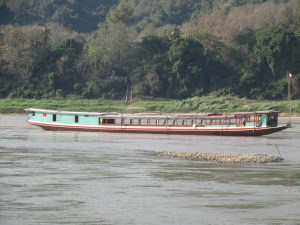
This type of boat is a common site on the Mekong used by tourists and locals.

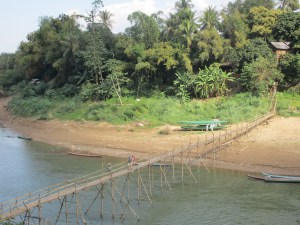
With rivers there have to be some bridges. The one which has garnered the most tourist attention is the old Bamboo Bridge spanning the Nam Kham. Every year it has to be replaced after the high water levels produced by the wet season have washed it out. On the other hand, it does provide a safe walkway for the locals living on the other side and for the tourists who want to go over to observe how they live. Most of them are small farmers just eeking out a living who have no qualms to having visitors come over to see how simple their life is. For us it gives us a closer view of how the majority of people in this poor country still live. Only in Laos is it so common to see how the two can exist so closely together.

Bamboo Bridge for walking crossing the Nam Kham River.

I am not only impressed with how the city has maintained its true natural character but equally amazed at how the people have accepted all its visitors. They are generally friendly and try to be helpful. Furthermore, their English skills are pretty darn good for which we can thank the monks. Many young boys who would never have had the chance to learn English in the public schools have received their schooling with English as the main subject from the monks. Seizing the opportunity to better their circumstances, they are choosing to enter the thriving tourist sector. For now, this is a win-win situation for tourists and locals alike. I wonder and so does the guide I had for a tour to a Hmong village yesterday about what the future holds for them.
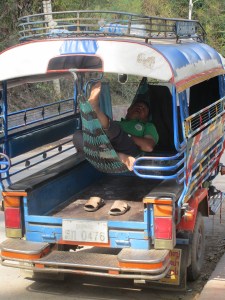
Waiting for a passenger – the Lao version of a ‘tuk tuk’.

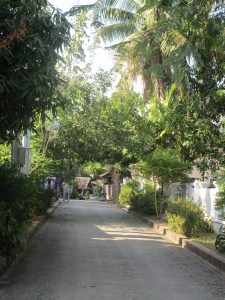
One of the city’s lovely tree-shaded streets.

A Day For Learning and Fun at a Thai Hill Tribe Village

Last week I had the good fortune to visit a Hill Tribe village in Northern Thailand. This trip was not arranged by a tour agency, but by an industrious Thai family who want to help the Hill Tribe people to adjust to our changing world so they won’t be left behind. An opportunity surfaced when Nui, the brother of my friend, Toi, came up with the brilliant idea to organize a cooking class with sticky rice as its star and his sister, a creative cook, to direct the show.

Every February the Karen, Lisu, Arka, and Lahu tribes in the Mai Suai district have a Sticky Rice Festival to celebrate their culture and to make a little bit of merit. It’s no surprise that food becomes the main draw with the help of sticky rice, a staple in this part of Thailand. To add more excitement to their celebration, they hold a contest to determine which village can produce the most creative use for sticky rice.

Continue reading

Chiang Mai’s Race For Tourist Dollars

“What is old is new again.”

Some noteworthy person must have said this somewhere or at some time so I can’t take the credit for coining this. However, whatever its origin, the words aptly fit my impressions of what is happening in Chiang Mai right now.

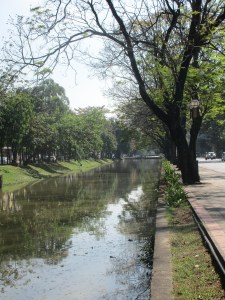
This Northern Thai city is undergoing a restoration and building boom, at least in the inner city which is that part surrounded by a moat. If you want further information on the moat and the remains of the wall that defines the character of this ancient city, then do refer to the blog I posted three years ago: click on  A Precious Gift

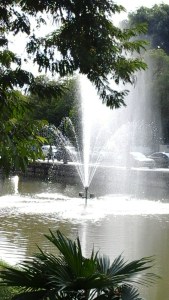
A past picture of the moat with fountains on.

Where are the fountains this year?

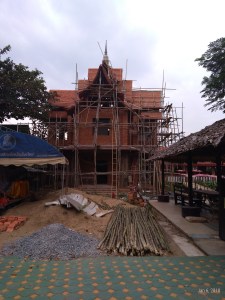
The first sign of the changes occurring in the inner city, the most touristy part, surfaced as I walked down Phrapokktao Rd. and spotted a few wats undergoing huge renovations. Wat Jedlan captured my interest so I decided to take a closer look at it. I wasn’t disappointed and wondered how I had managed to miss in on all my previous visits. The grounds are spacious and beautifully manicured. However, the buildings are old and in need of repair so, hence, the restoration.

Massive construction going on here.

The next day as I headed to the Sunday Street Market, I noticed that Prah Singh, Chiang Mai’s largest and wealthiest wat, was sporting a glamorous new outfit in gilded gold.

There is definitely a sense of competition going on between the numerous wats in this fair city. They are unabashedly out to get the tourists’ dollars not just with visitor donations but lately by charging them fees to enter. Chedi Luang, the second most sacred and grandiose wat in Chiang Mai, is one of those doing that. The lineup of people waiting to enter reminded me of those horrendous lineups you have to contend with in cities like Rome or Paris. I hope it never gets to that, but then with the droves of Chinese tourists coming here, this could happen.

If a wat doesn’t charge entrance fees then they may resort to renting out some of their valuable land to vendors for selling their wares during the big Saturday and Sunday Night Walking Street Markets which grow larger every year. Click on Shopping the Markets in Chiang Mai

Prah Singh’s entrance to Sunday Market.

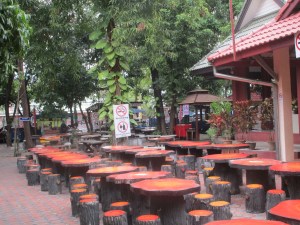
Another wat renting out a rest and eating area for market shoppers.

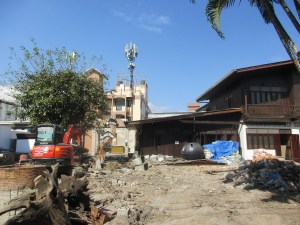
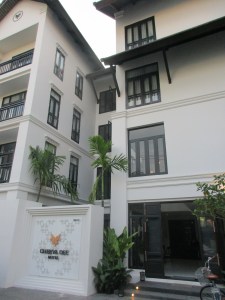
It’s not just wats that are getting a make over: it’s also the accommodations and restaurants in this city. Hearing that at least two of the guest houses I used to stay in…Pachkit House and Baan Nam Sai.. were now facing the wrecking ball, I made it my quest to check both of them out. Sure enough they are both receiving major new face lifts.

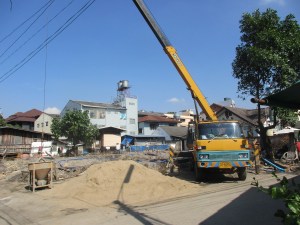
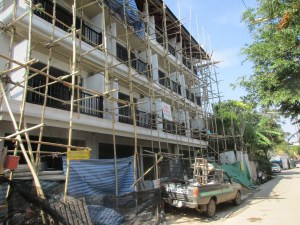
Destroying the old Pachkit house for the new.

What’s left of the original.

How can this be happening? In most cases, it’s about money from China which is enticing to family owned businesses who want to retire and leave the hard work to those who have the money and plans for the future. Thailand faces the same problems as all developed countries these days…an aging population along with earlier retirement. China on the other hand which also faces an aging population, but also a thriving younger middle class and a much larger population, is looking for other places to visit where it’s cheaper and exciting. Thailand and in fact all SE Asia is one of their first places to go to before they hit Europe. Those entrepreneurs who have the money see Thailand and its neighbours as great places to invest in since all of them are still bringing in huge amounts of tourist dollars from the West.

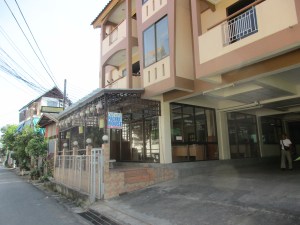
What all this change means for us flashpackers…what older backpackers have been dubbed… is less inexpensive accommodations at our disposal. The little family run guest houses are being converted to what is commonly known now as boutique hotels which are smaller and less expensive than the 5 stars but still far more than the traditional guest house.

One of the flourishing boutique hotels.

For backpackers who are younger with a minimal budget, there are the hostels where they must share a room with others in a more communal setting. Still entrenched in my old ways, I avoid these and look for the small guest houses. When I first started coming to Chiang Mai it was easy to rent a room on a monthly or a weekly basis but not so now. If I want to stay in the centre, I will most likely have to pay by the night. Those places offering monthly rates are more likely to be found out in the suburbs and even those should be booked early because they are snatched up quickly. Here you can find a condo or house to rent, but as I discovered last year has its disadvantages. Transportation is the biggest drawback unless you are the adventurous sort and rent a motor bike to get around. My post from last year titled “Is Chiang Mai Losing Its Allure” will give you a better idea of the pros and cons. Click here Is Chiang Mai Losing It’s Allure?

My condo apartment out near the airport from last year.

Like most people when I first saw the construction and heard the jack hammers, I was a bit disgusted. How could Chiang Mai yield so willingly to the tearing down of their storied past for the new opulence of the future? On second thought, I realised it’s simply their way of surviving. If they don’t join the wave of the future where there is literally a tsunami of Chinese tourists descending upon them, then they stand to lose a big chunk of their economy, and like all countries they can’t afford to do that. Sure all this change will just lead to other problems but somehow they will find a solution for them and so on it goes. What would CM or any of us do if we never had problems to solve? Now here is some food for thought….

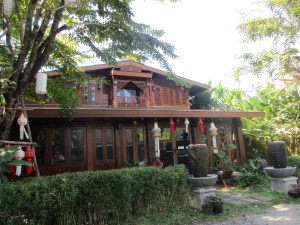
A typical Thai building still standing.

Let’s hope it doesn’t meet a similar fate.

Making way for the new.

How Our Changing World Is Affecting Our Travel

Anyone who travels afar these days can’t help but wonder or worry….a little… about how our fast changing world is affecting how we travel. I know I am noticing some changes not always for the better. For me, who is in her senior years and often travelling alone, it’s becoming more of a challenge.

The rapid evolution of our technology which has had a drastic change in how we communicate has probably had the greatest impact upon how we now must travel. When I started my travelling in 2008 I did not have a cell phone or Smart phone. I did not have a computer or an E-reader. The only piece of technology I carried was my new digital camera bought the year before when I lost my Fuji camera with film while vacationing in Cuba.

Now I travel with a cell phone… which may soon have to be traded in for a Smart phone…. a tablet with and E-reader, a small laptop computer, and a camera, along with  other ‘must-haves’ such as, chargers, USP cords, adaptors and other technological gadgets designed to make my travel easier….or so I am led to believe. Frankly all these gadgets just make me more stressed. I admit I am a dinosaur when it comes to all the new technology, but I am forced to get on board with it all. If I don’t have a an app for this and that, I am often left up the  creek without a paddle. Internet cafes are fast disappearing the way of the Dodo so I can forget trying to find a place where I can get a copy of anything, such as proof of my booking at a hotel or an airline ticket. Folded paper maps that you can hold in your hands are scarcer than hens teeth. Now I am supposed to find my way around with Maps Me. A young man I met on my travels last year downloaded this app onto my tablet. I tried it out while in Viet Nam, but found it so confusing that I ended up going east instead of west for more than five kilometers before I discovered my mistake. I needed to see the whole picture of the area not just a partial one in order to get some proper orientation. I needed a map!

Today, changes in our climate are having some effect on where and when I travel. Our earth is definitely feeling the effects of global warming. Granted, we are noticing more weather extremes here in North America than the countries in SE Asia where I have been travelling to. Thailand, Cambodia, Laos and Viet Nam are on or near the equator, making the effects of climate change more subtle. Nevertheless, I have noticed that the time period in Chiang Mai in the north of Thailand for comfortable weather with clear sunny days is getting shorter every year. Now we are lucky to get two months of this kind of weather before the intense heat and humidity set in. By mid February it’s getting too hot for me to stay any longer forcing me to leave for a more moderate climate. To arrive back in Nova Scotia before April is too soon since our winters are long so making a stop in one of the countries in southern Europe has helped to solve this problem. The downside to this is that it’s more expensive than any of the countries in SE Asia.

One of the many wats or temples in Bangkok.

Furthermore, it should come as no surprise that the cost of travel is creeping upward in most areas. What this means is that unless I have more money to increase my budget, I am compelled to limit my travel and opt to stay in one place. The more travelling and sight-seeing I do, the more I spend. Everyday living expenses in food and accommodations have increased over the years but not too drastically. It just takes more careful planning to keep my costs within my budget. In Thailand it’s still cheaper to eat out than it is to eat in. But, for how long? In Bangkok, the present government is cracking down on street vendors forcing them into markets or out of business entirely. This will definitely make a difference in the cost of meals for those travellers who thrived on eating authentic Thai street food at fabulous prices.

Street food in Bangkok.

Surprisingly, the cost of my airfare over and back has not increased by much, if at all, depending on when I make my bookings… the earlier the better… along with the help of a good travel agent. You can easily book a round trip fare from Halifax to Bangkok starting at $1200 and upwards depending on the class and flight times you prefer. However, if you break your flight up with short or long layovers as I do because I want to stay awhile in Europe, then you pay for the privilege. When doing this, it’s best to enlist the help of a travel agent.

Although the cost of flying hasn’t varied much, the days of leisurely air travel, which once travellers could look forward to, are fast disappearing. Most will agree that air travel is becoming more and more challenging. Increasing numbers of passengers, overwhelmed and poorly trained customer service personnel, more competition among the airlines, uncertain weather conditions, ever-changing technology, and strict security due to the threat of terrorism have all taken their toll on what used to be fun way to travel. We have all heard of the horror stories resulting from cancelled flights and missed connections. Just read the testimonials given by anyone who has experienced this, or better still talk to those you meet. Everyone has their story. I encountered all of the above when travelling westward over to Thailand with American Airlines, but since I changed my direction by heading east via Europe, I have had fewer problems. I have been lucky…so far.

Another reality…I hesitate to even mention this… is that I am not getting any younger. By eating well and remaining active, I have so far avoided having to rely on any medications, thus, eliminating the problem of carrying prescription drugs. Vitamins and other alternative health foods are available in most of the countries in SE Asia, and the ones that aren’t or are simply too expensive, I take with me. I confess I don’t get any kind of health insurance as the Thai medical system is not only inexpensive but in most cases very good. The other SE Asian countries are iffy and in some cases bad. I have accepted the fact that if I should need medical care, I will simply pay the cost because any type of medical insurance today would cost me more than the cost of my flight over and back. Taking extra caution on where I go within the countries I visit and limiting my movement by not trying to see it all, helps me keep my costs down and eliminate any possibility of getting sick or injured.

Despite the changes and challenges of travel today, it doesn’t seem to be affecting the number of people who are on the move. Tourism is up in most parts of SE Asia as it certainly is in Europe and here in North America. Many of us would agree that it’s the Chinese Effect. This huge country with its strong economy has put them on the move…young and old alike. I think it’s a good thing as it is the best way to gain an education especially for the young who will inherit the problems our world is facing. From my own experience, I count travel as one of my most valuable educators. However, now as an older traveller, I question just how it can contribute to my own personal growth.

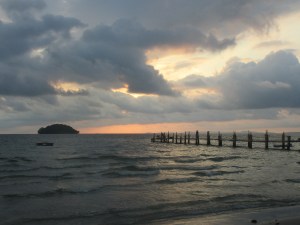
Sunset in Laos

Supposedly with age comes wisdom gained through our long life experience, but does aging not also come with greater challenges to our capacity to be more resilient in our physical and mental abilities? If this is so, then am I not going to be affected more by the changes taking place in the world.

I can’t help pondering this dilemma after ten years of travel. The monumental changes in how we communicate, move around, and the increasing number of people travelling these days have all upped the ante to my own personal challenges. Travel was easier ten years ago. Was that because I was younger and more naive to its challenges, or was I simply that kid in the candy store exploring and savouring all the new countries and cultures I visited all the while relishing the new-found freedom that came with it? Perhaps now the time has come for me to turn my focus away from the fun and freedom of escaping our winters to concentrate on how to be of more service at home in this troubled world we find ourselves living in.

Early morning monk walk for breakfast – Luang Prebang.

Laos